Math Dash Chats: Boost Classroom Discourse

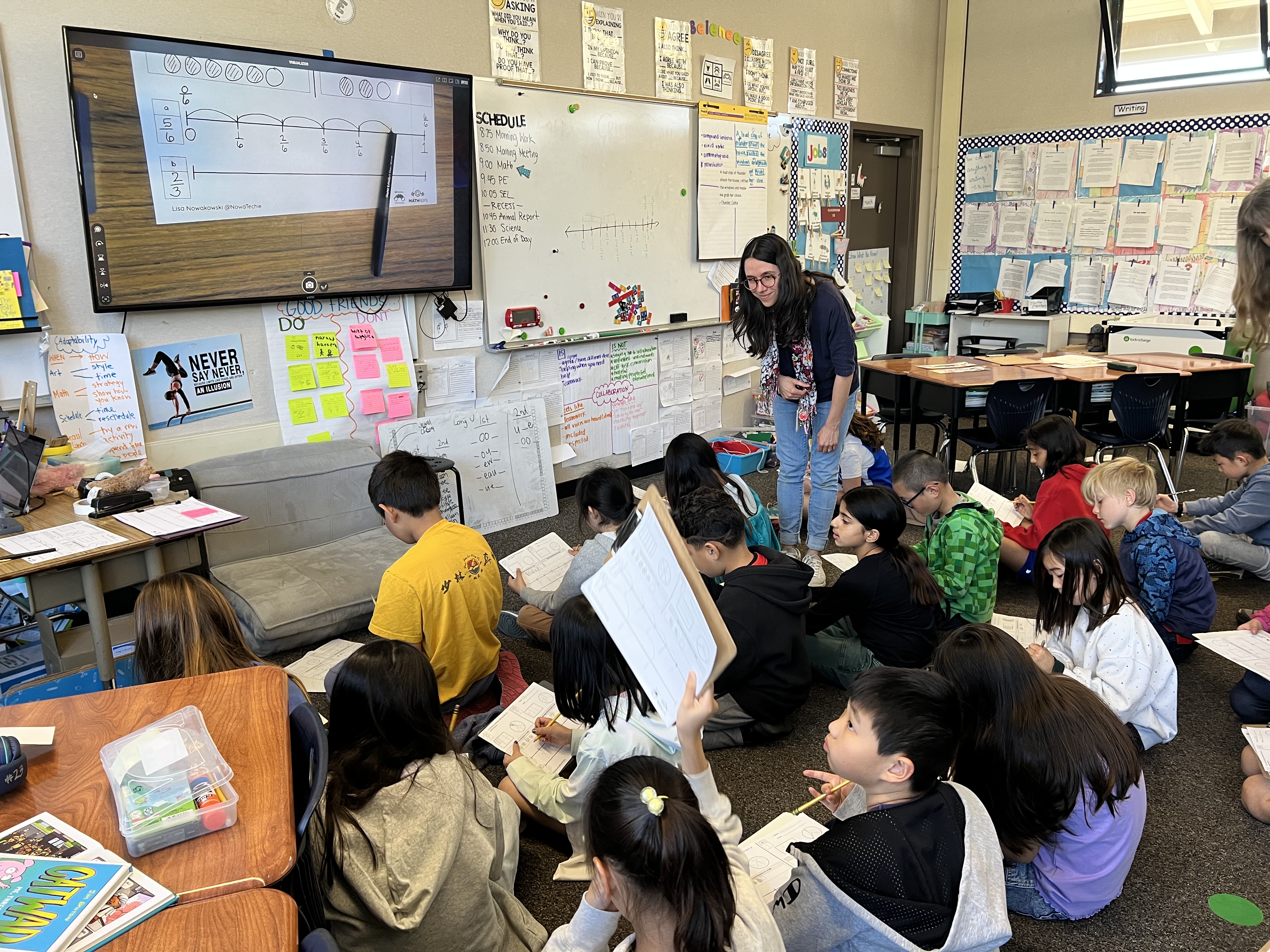
Earlier this year, a simple idea sparked a solution to a common challenge in many classrooms: how to review math concepts and encourage student conversation when time is short. This led to the creation of Math Dash Chats.

Our district, like many others, was grappling with a noticeable gap in our curriculum—a lack of dedicated time for math discourse. We know that talking about math helps students solidify their understanding, but with so many standards to cover, where do you fit it in? I created Math Dash Chats for 3rd Grade, as an instructional coach who works closely with 3rd-grade teams, it felt like the perfect place to start. Since then, I’ve created sets for grades 2-6 and am excited to expand to grades 7 and 8 soon.

So, what exactly are Math Dash Chats, and how can they help your students? I’m so glad you asked!

What are Math Dash Chats?

Math Dash Chats are 36 prepared slides for your grade level (currently grades 2-6). The activity is designed to be a quick, five-minute daily review that gets students talking.

The slides are divided into six sections, five of which are based on Common Core domains like Geometry and Measurement, and the sixth is a directions section. Problems are hidden behind colorful “doors” [01:05], which you can view beforehand. Then, simply drag the questions over for a fun and engaging reveal.

How Do They Work?

The idea is simple: choose one “door” a day to discuss for about five minutes. This brief, focused discussion ensures a consistent review without taking up valuable class time. The topics covered are not just standard procedures; they encourage students to explore reasoning, number sense, and even domains like geometry or measurement that are often rushed through or left for the end of the year.

The video provides an example from the “Convince me that” category, where students are asked to prove that “4 tens is the same as 3 tens and 10 ones” [01:53]. This type of question promotes collaboration, and you might find that students want to use personal whiteboards or manipulatives to work through some of the problems together.

The Result

The response from teachers has been overwhelmingly positive. They love the ease of a no-prep, ready-to-go resource that gets students talking about math. Who doesn’t love a well-thought-out, free resource that is proven to work?

If you’re looking for a quick, impactful way to review math concepts and get your students engaged in meaningful math conversations, Math Dash Chats are for you!

Math Dash Chats Folder: Please make a copy of the desired slide deck for yourself by selecting ‘file’ > ‘make a copy’. If you receive a message that says ‘Access Denied’, it may be an issue with your district account. I’ve encountered this recently. If this happens, I suggest trying your personal account and sharing it with your district account. If that doesn’t work, contact me and we can try a few other options.

Public Education: More Than a Viral Post

Lately, it feels like my social media feed has been sprinkled with negative takes on teachers and public education. Over the summer, I noticed an uptick in posts that painted educators in an unflattering light. Some parents shared that they didn’t want to purchase back-to-school supplies, suggesting that the teachers should go buy them themselves or go to donation drives and do the legwork themselves. Others shared stories of classrooms that weren’t ‘cute enough’ or didn’t have rugs, implying that the lack of decoration somehow reflected poorly on the teacher – “how dare they not make the room perfect for my child.”

And then there are the posts about rules and policies – things like cell phone bans in classrooms that teachers have no control over. In some cases, parents have gone as far as encouraging their children to disobey those rules, placing teachers in an impossible position.

Viral posts don’t tell the whole story of public education: our communities do.

I’ll be honest, when these posts go viral, it can feel disheartening. But here’s the thing: I don’t believe they reflect the majority of families across the United States. Instead, they seem to be part of a louder narrative that seeks to chip away at public education and those who dedicate their lives to it. And this is a problem.

The truth is, public education is one of the cornerstones of our country. It has always been, and should always be, a place where every child has access to learning, growth, and opportunity. Funding cuts at every level – from Kinder through universities – have made the work harder, but the mission remains the same: serving students and setting them up for future success.

And here’s the good news: in my community, I see something different from what goes viral. I’m sure you do too. I see families who send their students to school with supplies. I see kindness, collaboration, and a shared commitment to doing what’s best for kids.

That’s the story we need to remember and share. Viral posts may grab attention, but they don’t represent the heart of our communities. Let’s not fall prey to negativity; there’s already too much of that. Instead, let’s lift up the good, celebrate the work being done, and continue to build strong schools for our students. They deserve the best, no matter their zip code.

Because in the end, when we support public education, we’re not just supporting teachers, we’re investing in our children and in the future we all share.

Our At-Risk Kids & COVID-19

Since the beginning of this, I have been in constant contact with one of my students. Student A has a rough home life. Student A (SA) is what I call a trauma kid. There is trauma in SA’s life.

I have connected with SA this year. SA has come such a long way and I couldn’t be more proud of SA. Our district hasn’t moved to Online Learning yet. We are a week behind most as our Spring Break was the first week – March 16. So for the past 3 weeks, SA and I have been emailing back and forth. SA reached out. SA reaches out often asking many questions. I have been able to provide guidance and information.

SA has contacted me about where and when to get food. What they should do if a police officer stops them (there was a rumor going around town – untrue). The breaking point came this week. Students were able to pick up computers. Upon hearing this information, SA was excited but nervous. I asked if they wanted me to meet them at school. SA replied, “Yes, please!” Okay, I have a soft spot for them, so I said that I would.

monochrome photo of girl crying
Photo by Mateus Souza on Pexels.com

Today was computer pick-up day. SA called as they left their house. I packed up the pups and off we went. We got there at about the same time. I almost didn’t recognize SA. The spark was gone. In its place was a sad, withdrawn, scared-looking child. We chatted while waiting in line (social distancing the whole time). SA is home alone for a part of the day while mom is at work and the younger brother goes to the babysitter.

SA is not the only as-risk kid. This got me thinking. We talk about equity and the pros and cons of online learning. Yes, there is most definitely an equity issue in our nation. Students with no internet. Rural areas with no or poor access. Equity concerning students with IEP’s. And yes, those are important and should not be overlooked. But what about students like SA who NEED to be connected? Those students who are suffering alone and in silence. They NEED to have the opportunity to connect. I am happy that SA can connect. I’m really hoping that the simple daily meeting help SA.

Please reach out to all your at-risk kiddos. They may not be doing as well as you’d hope. I’ve also had former students (all at-risk) reach out to me.

Google Slides: Custom Gradient Background

Things I learn from my students: custom gradient backgrounds. Today my students were giving homework presentations. One student had an interesting background: a rainbow bullseye. I had seen him working on his presentation and knew that he created that background, but wasn’t sure how. So today, I asked him after he was done. He said that it was a custom background. Then I asked him to show the class. And now it’s all the rage!

Some are a bit easier on the eyes than others, but the effect is still pretty cool. So how’d he do it?

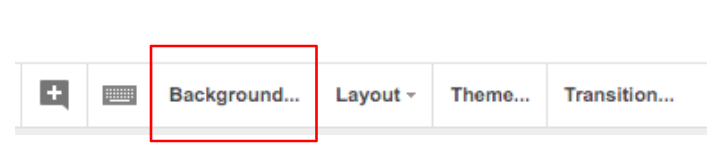
When in Google Slides, click on a slide from the left. Then, select Background.

Screen Shot 2018-05-25 at 5.18.08 PM

From here, a pop-out window appears. Choose color then gradient and finally custom.

Screen Shot 2018-05-25 at 5.24.20 PM.png

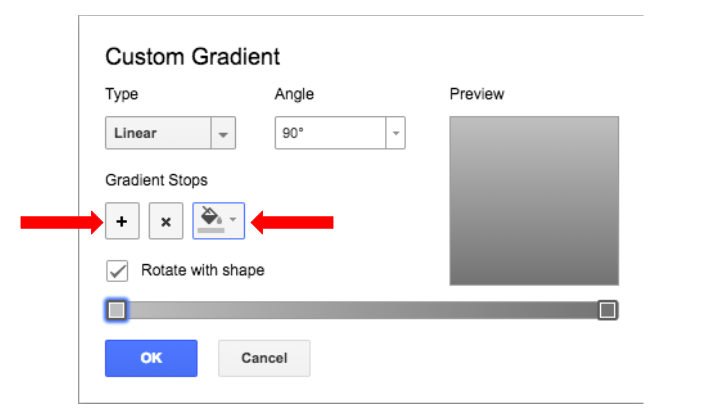
From here we have several options. The one that really blew my mind was the + gradient stops.

Screen Shot 2018-05-25 at 5.30.37 PM

Clicking the + allows you to add points where you can add colors using the paint can.

Screen Shot 2018-05-25 at 5.36.18 PM

Pretty cool. So, I thank my student for sharing his discovery with the class.


What the Tests Don’t Show

I have a student this year that I am in awe of. I want to be like her when I grow up. She is a true testament to growth-mindset. She is my go-to person for most tech questions. She is the rare 5th-grader who uses technology in meaningful ways in her spare time. My student, L, is a role model to both students and adults.

pexels-photo-733856.jpegYes, I realize I’m waxing on about L and here’s why. L has run our school’s daily news all year – which is a news broadcast. She films, edits, and most recently, been in front of the camera. When I’m having issues with a computer/tablet she’s the first person I consult and she usually has the solution. She uses her phone as if it were a mini computer: downloading Google Classroom, working on assignments at home, using Raz-Kids, and other programs to help her succeed. She has helped her family to download and set up educational apps (on their phones) to help them be connected to Class Dojo and learn a new language. She ‘texts’ me via Google Hangouts (her school account) to ask school-related questions or just tell me that she’ll be out the next day.

I’m sure you’re thinking that’s impressive for a 5th-grader, but not swoon-worthy. THIS is where her story begins to show how amazing she is. If we only look at her statistics – test scores, socioeconomic status, home language, etc – we would miss everything!

L is a second (maybe third) language learner. Her family speaks a dialect from the Oaxaca region in Mexico and Spanish. She qualifies for free/reduced lunch.  She was hit by a car last year while riding her bike (no helmet) and still suffers from some brain swelling which has impacted her memory, vision (not drastically), and headaches. She continues to go to the doctor for her injuries. L has an IEP for learning differences. The IEP was in place before the accident. See, you’re impressed now, aren’t you?

So, while some tests can help guide us, they don’t measure the most important things about our students. They don’t tell their stories and it’s those stories that truly help us connect with our students and serve their needs. Without the personal relationships we build with our students, how could we ever build them up? How could we see their potential and set them on a path to success? How could we do our jobs? If only the test-crazy people would understand that a child is so much more than a silly test.

Notes & Voice Typing

pexels-photo-355988.jpegMy students constantly amaze me. They come up with great ideas and are innovators in their own right. Not only do I enjoy hearing their thoughts and ideas, often times we implement them in our classroom. I also feel fortunate enough that my students feel comfortable enough to share their ideas with me; knowing they will be taken seriously and not ridiculed.

Recently, one of my resource students (one with an IEP for both reading and math) created her own accommodation. We have been reading Tuck Everlasting and using a Hyperdoc to help guide us. While discussing one of the slides in the Hyperdoc, I noticed that the student had written some notes in the ‘Speaker Notes’ section. I found this interesting. It also made me a bit giddy as she was taking full advantage of our discussions. I privately talked to her about taking notes to tell her how impressed I was with her choice. She then revealed that she put on ‘Voice Typing’ during the conversation in order to capture everything that was said. Not going to lie, THIS really impressed me. Honestly, not sure I would have thought to do something like this.

student using voice typing

Later, I shared with the class what the student had done. Expressing how I felt it was a good use of technology, but shared with them my expectation that if they used this strategy, it is to be used as a means of note taking and all responses should be in their own words.

The next day, we were discussing the events that took place at Lexington and Concord – studying the American Revolution. At one point a group of students had ‘bug eyes’, began giggling, and pointing to their computer screens. I walked over to find out what was so entertaining. Sure enough, someone in their group had turned on ‘Voice Typing’ to capture the information. All I thought was, “Go kiddos!”

How Was Your Break?

pexels-photo-551590.jpegThis is one question I try not to ask. This and “Did you have a good break?” When dealing with many students from differing backgrounds, it’s easy to forget that not everyone has a ‘good break’. It’s a natural question for many of us to ask. We come back not really ready to be back. I mean, we all love to sleep in and get things done around the house or hang with family/friends or go on trips. But for many students coming back to school is a welcome break from their home lives.  And for that reason, I no longer ask students these questions.
I write this because I was reminded over my break that not all our students have ideal home lives. Some are dealing with the threat of a parent being deported or being evicted from their homes. Others are visiting a parent in jail over the holidays. Some don’t have money for presents. And yet others have had to deal with trauma and situations we can’t imagine. For these students, school IS their safe place; school is a welcome break from their everyday lives.

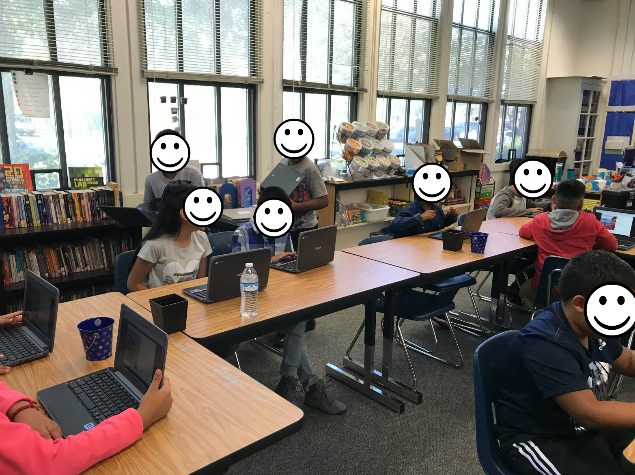
So what do I do? What do I say to my students when they come back? I’ve found that questions and statements such as: “I’m so happy to see you,” or “Are you glad to be back?” work well. “Are you glad to be back?” allows students to tell me about their trips to Mexico, all the toys they received, or the family they spent time with.  While allowing those in less than ideal situations to feel safe to say, “Yes, I’m happy to be back.” Many times they follow that statement with, “It was so boring.” Knowing their lives, I know this isn’t really the case, but rather they are happy to feel safe for 7 hours out of their day.

And it’s not just our students who don’t always have ‘good breaks’. Some of our colleagues have had to deal with situations that were less than an ideal Holiday. Remember: “Be kind, for everyone you meet is fighting a hard battle,” – Ian Maclaren.

I’ve Got #FlipgridFever

Screen Shot 2017-08-19 at 5.16.50 PMYup, I’ve got #FlipgridFever along with my students. Over the summer I learned about Flipgrid. I was intrigued by the idea that students could respond using video and their videos would be organized! No messing around with creating and uploading. The whole thing is wrapped up in one neat package.
So the first week of school was the perfect chance to play around with the tool with my students. After listening to a speaker, Steve Ventura, I was inspired to ask my students “What does a good learner look like?” He asked students in a school and the answers were of passive students – “Doesn’t disrupt the class,” “Listens,” and so on. Based on his experience, I wondered what my students had to say. Sadly, much of the same: “Someone who does well on tests,” “Someone who reads a lot,” etc. I plan to ask them again later in the year in hopes that they realize that a good learner collaborates, questions, defends, disrupts (respectfully), etc.

Stickers
They LOVED the stickers!

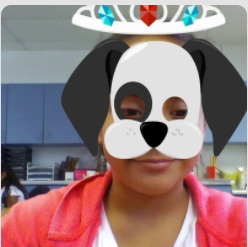
Now I’ll be honest, I had no idea how to use Flipgrid. And I told my students that! They were eager to explore the tool. They had no problem jumping in and figuring it out. And then…they discovered the stickers they could put on their pictures. Some enjoyed the experience so much they asked to create another video. Yes, I allowed them to. I wanted them to play with the tool now so that when we use it for learning they can focus on the learning and not the stickers!

And they couldn’t get enough of watching each others’ answers. They loved that they could ‘like’ or ‘love’ a particular video. In fact, they had so much fun they came in the next day asking if they were going to do it again!

I plan on using Flipgrid for responses in literature, defending a math problem, and self-reflections on projects and work. The possibilities are endless. I know that we will read Bud, Not Buddy this year. It might be fun to have students use Flipgrid to respond as if they were a character. I am so excited to use this throughout the year!

How do you plan to use it?

Websites In Class

Websites are great places to collect and display student work. I have used them in Math so that student can document their learning through videos, photos, and examples. In addition to documenting their progress, when students are unsure of a concept they can refer to another student’s page for clarification.

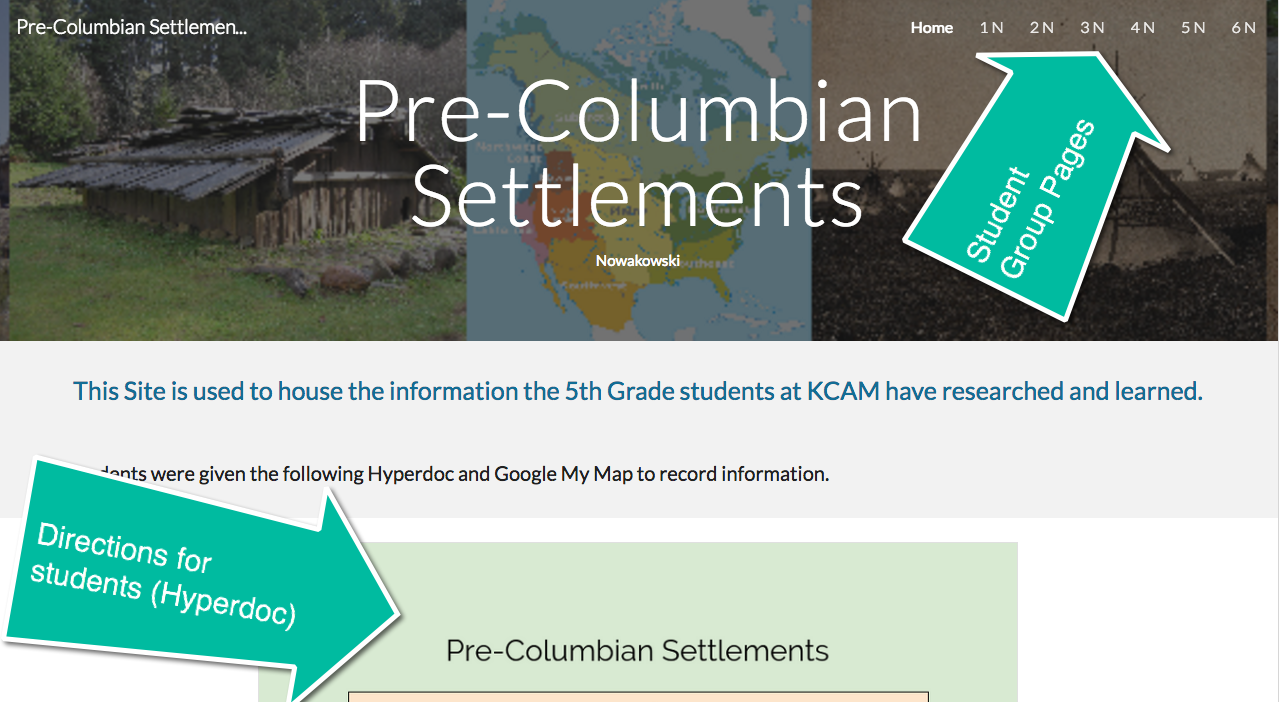
More recently, I have used them to document learning in Social Science. Earlier in the year, we were learning about Pre-Columbian Settlements. Students documented their learning on Google Maps then placed them on a website.

webpage-1The beauty of doing this is that it allows for easier sharing with the outside world. It has been said, and is most certainly true, that when students know the public will see it they up their game. When my students think it’s just for me, they give me ‘okay’ work. It’s like pulling teeth to get top notch work from them. However, when I say that it will go on a website that will be shared on Twitter and Facebook, they are much more careful and meticulous in their work. Adding to that, I present. I tell them what I am presenting and when. Okay, sometimes I ‘say’ I’m presenting on a topic even when I’m not. I want the best work from them, I have no shame.
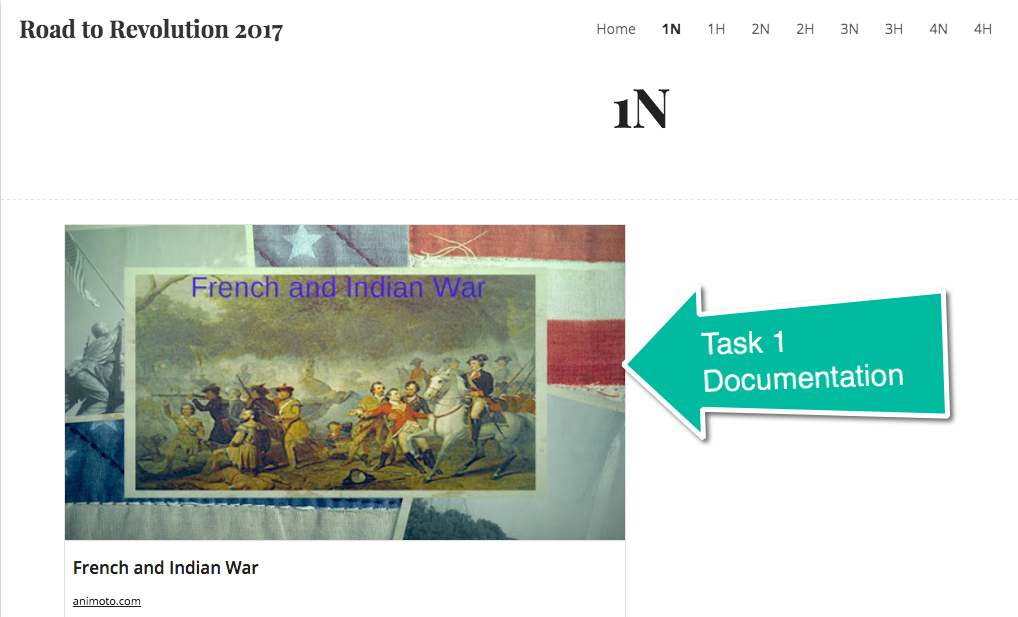
Here’s another example from my students. We recently started learning the reasons for the Revolutionary War. There are various tasks that they need to accomplish. Those final products are placed on a shared website.

webpage-2I have used this method of documentation and sharing in the classroom for over four years. I have never had a student abuse their editing rights. On the old Google Sites, I could give page level permissions for editing but never did. All students have always had full rights on the site. However, this year I have a student who has been known to maliciously edit shared documents (and when caught asks what ‘Revision History’ proves). So said student does not have editing rights. While this makes me sad and I wish I could have gotten through to the student that such behavior is inappropriate, I have decided to exclude him/her from editing until he/she proves themselves to be trustworthy. I figure once in four-plus years is a pretty good record.

Two of my favorite websites were student driven. One was for a ‘business’ where the students created keychains and bracelets to raise money for St. Jude Hospital. They had photos and order forms! The other was a tech tutorial website. A group of girls calling themselves The Techie Chicks created one tech tutorial each week during Genius Hour.

Student Ownership

I love this time of year. That time of the year where you’ve hit that ‘sweet spot’ with your class: they know the routines, they can work independently, and they know they have a stake in the success of the class. On Friday, my students wanted to know if we were having a Valentine’s Day party. Personally, I don’t care. I told them that it was up to them. Of course, they decided to go for it.

screen-shot-2017-02-05-at-4-57-12-pm
Source: Pexels.com

Then, a group asked if they could decorate the room. Again, I said go for it that it was their thing. This group, made up of both genders, got together during Genius Hour to create decorations for the classroom. They also informed me that they were not done and would continue next Genius Hour. How cool are they?


We also have another issue to decide. We usually have parties near the end of the school day for obvious reasons. However, Valentine’s Day is also First Tee (Golf) day. We go in the afternoon. Our current dilemma is when to have it. On the 14th at lunch? On the 13th? Wait until 17th (Genius Hour)?  This was not a popular option. I’m letting them decide. Majority rules.

I just love days like this.