The Pedagogy-First Mindset

As a Tech TOSA, teachers often come to me when they have a spark of an idea and need the right tool to bring it to life. Sometimes, they just need a reliable replacement for a tool they loved, like finding a new home for video discussions after Flip changed. My role isn’t to audit what’s in their “digital closet,” but to offer support and guidance as we navigate the “energy” of our classrooms together.

With the growing conversation around screen-time limits in districts like LA Unified, we have to be honest about what that energy looks like. When we stand side-by-side in a classroom where students are on a mandate for 90 minutes of adaptive software each week (45 minutes for math and 45 minutes for ELA), the room is often stagnant. It’s quiet, but is it the silence of deep thought or the silence of digital compliance?

The person who is doing the work is doing the learning.

The “Work” Litmus Test

I have a quote I live by in my own classroom: “The person who is doing the work is doing the learning.”

When we look at tech tools, the question isn’t “is this high-tech?” but “who is doing the heavy lifting?”

  • Compliance Tech: The software handles the logic and sorts the levels. The student is a passenger.
  • Creation Tech: Tools like Canva or Snorkl (which now hosts MathReps!) require students to be the drivers. In Snorkl, there is no passive learning; the student must articulate their thinking and record their process. That is the kind of “work” that leads to true learning.

The “Fluff” Tax vs. The Power of Fun

We all need to break the monotony sometimes. A fast-moving game like 99math or Wayground can be a fantastic way to build the fluency and basic facts students need before they can perform complex math. That “sprint” of excitement is a bridge to the next level of mastery.

The “fluff” tax happens when the game mechanics (like 20 minutes of boss battles in Prodigy) take up more brain space than the actual math. If the stimulation is a barrier to the standard rather than a bridge, it’s worth asking if it’s truly propelling them forward.

Making the Most of Mandated Minutes

We know the reality: many districts mandate 90 minutes a week for math and reading software. As a coach, I’m not there to push back on district policy, but to support teachers in navigating it. When I stand side-by-side with a teacher in a “stagnant” room, I like to ask four gentle, clarifying questions:

  1. Is the tool giving accurate information? Does the data on the screen reflect the growth (or struggle) you are seeing in the classroom?
  2. How do you know they are learning the material? If we closed the laptop right now, could they explain the “why”?
  3. Is this propelling them forward? Is this tool helping them master a Priority Standard, or just helping them finish a level?
  4. Who is doing the thinking?

Everyone will have a different take on it, and that’s okay. Some tools work better for some than others.

Final Thought

The goal of looking at pedagogy first isn’t to add a burden to the teacher. It’s to ensure that when we do use screens, whether it’s for a mandated block or a creative EduProtocol, the tech is helping them think, not just helping them finish.

Join the Conversation

How do you balance the “stagnant” mandated minutes with the “energetic buzz” of creation-based learning? Have you found a tool that actually reflects the growth you see in your small groups? Let’s talk about it in the comments.

Embracing Vulnerability in Math Education

There is a heavy myth in education that once we step into the classroom, we are supposed to be the “Expert in the Room.” For many elementary teachers, this is especially daunting in math. Many don’t see themselves as “math people” and might even joke about it to cover up a deeper insecurity regarding the conceptual methods we use today.

It is terrifying to feel you have to teach something you don’t fully understand. But after years, I’ve realized something: The most powerful words you can say to a student are “I don’t know. Let’s find out”.

Modeling the Struggle

When we admit we don’t know something in the classroom, we are being instructionally agile. Admitting the struggle allows students to be vulnerable themselves. If they see that their teacher has to work at things, it gives them the silent permission to be okay with the struggle, too.

I’m not advocating for being unprepared. But when a student makes an observation you hadn’t thought of, saying, “I don’t know, let’s check it out,” or “Tell me more,” allows the students to become owners of the learning process and cultivates critical thinking. It turns math from a performance into a side-by-side discovery.

Confessions of a Coach

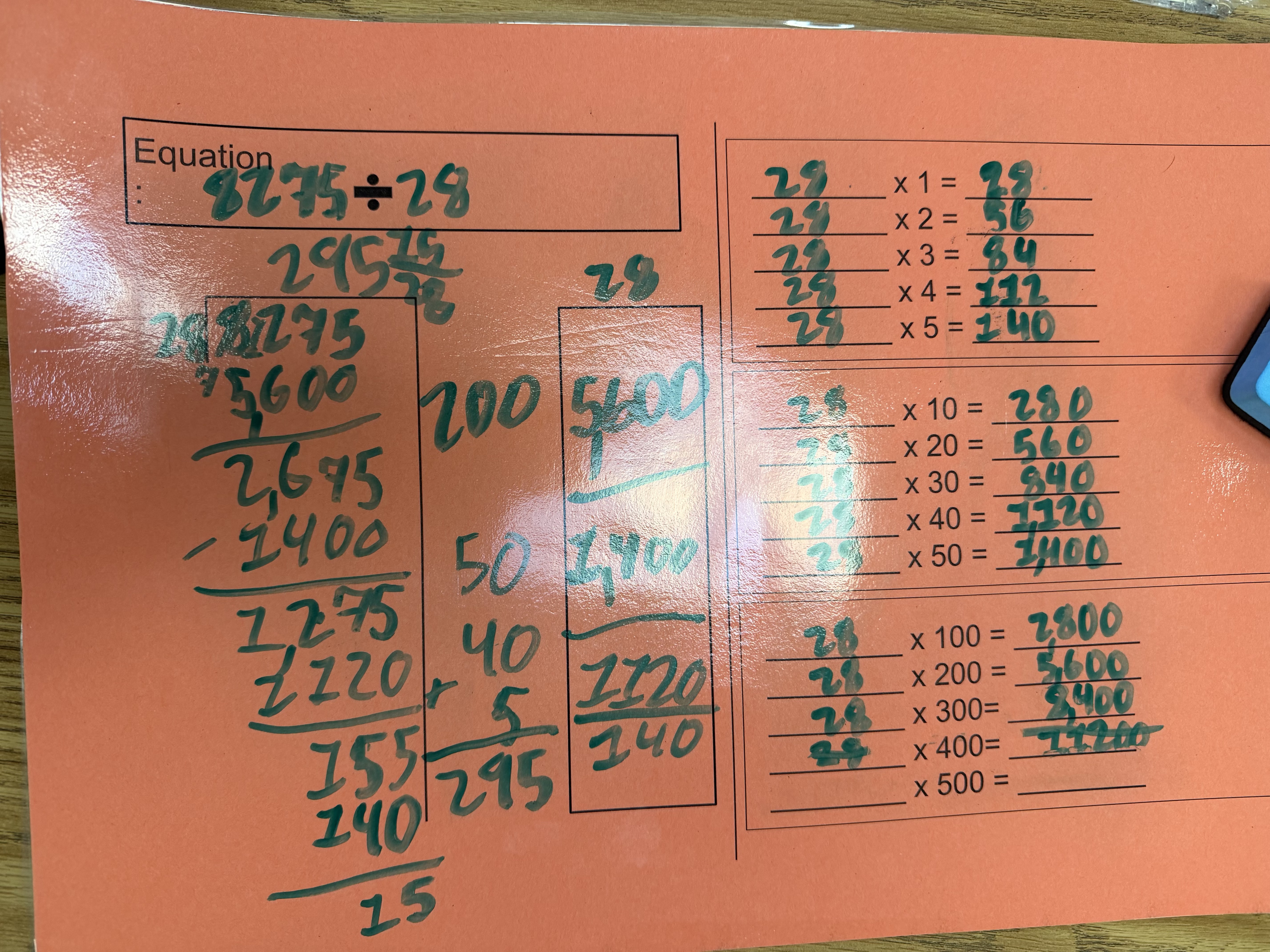
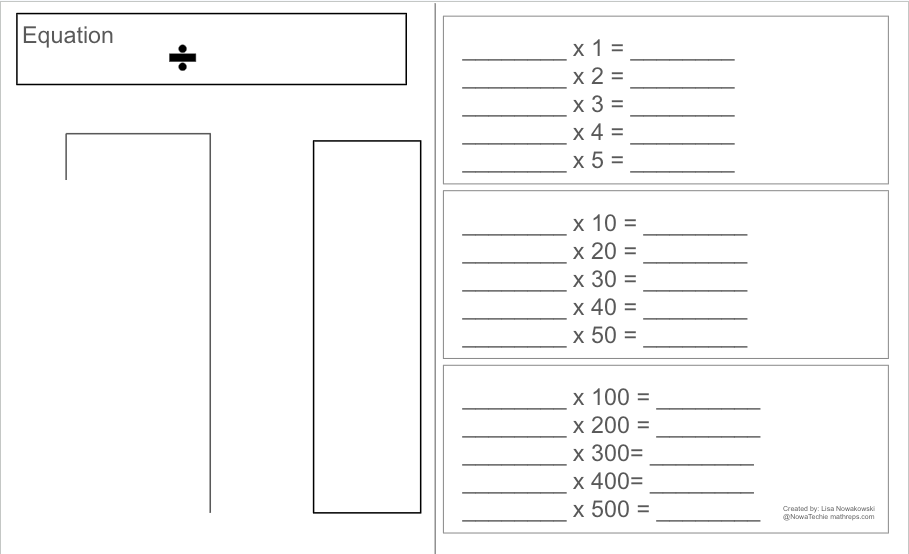
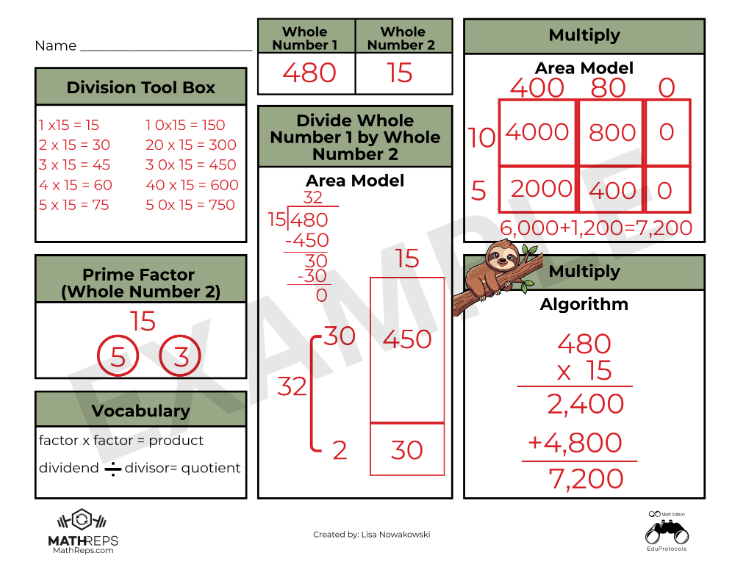
I’ve found that the most effective support I can offer teachers isn’t when I show up with all the answers, it’s when I model that I’m still a learner, too. For a long time, the area model for division was my personal “wall.” I understood the theory, but the mechanics just wouldn’t stick.

Instead of hiding that, I approached a 4th-grade teacher who was a master of the method and asked if I could come in, watch her, and record her lesson so I could watch it until it finally clicked.

Breaking the “Math Person” Trap

When I share this story with teachers who are hesitant to try a new method, the energy shifts. They see that:

  • The Struggle is Universal: If a coach has to “rep” a 4th-grade standard multiple times to learn it, it’s okay if they do, too.
  • The Method is a Conversation: By asking a colleague for help, I turned our relationship into a partnership. I wasn’t a coach; I was a learner benefiting from her expertise.
  • Persistence Pays Off: Just like we tell students that the Mastery Loop requires repetition, we need to give ourselves the same grace to grow.

The standard is the goal, but the method is the conversation.

Creating Space for “Cultural Wealth”

When we step aside as the “source of all knowledge,” we create space for students to be the teachers. I remember a year we were learning division, and a student showed the class a method her immigrant parents had taught her. We celebrated that. We all learned something new because we were open to the idea that there isn’t just one “right” way to get to the answer.

The standard is the goal, but the method is the conversation. By signing our own “permission slip” to not know everything, we empower every student in the room to finally feel like a “Math Person”.

Join the Conversation

When was the last time a student, or a colleague, taught you something in the middle of a math lesson? How did that shift the energy in your room? Let’s talk about the power of being the “Lead Learner” in the comments.

Time Saver Toolkit: 3 Google Features for May Sanity

When I think about classrooms this time of year, I’m thinking of the workflow. This time of year is jam-packed with activities, final checks, and state testing. We don’t have time to waste. That’s why it’s important to reclaim your time.

If you want to survive May with your sanity intact, here are three features you should be leaning on:

1. Rubrics in Google Classroom (The “State Test” Hack)

Many teachers don’t realize they can import or build rubrics directly into their Google Classroom assignments.

  • The Pro Move: Take the actual writing rubrics from our state testing and build them into your final writing assignments.
  • The Benefit: When you grade, you just click the level (1, 2, 3, or 4), and Google does the math for you. More importantly, the students see exactly where they stand against the state standard before the test starts.

2. Google Forms as the “Automated Exit Ticket”

Stop collecting 30 slips of paper at the door. A simple 2-question Google Form can be your diagnostic “Biopsy” for the next day’s lesson.

  • The Pro Move: Use “Quiz Mode” with answer keys for multiple-choice questions.
  • The Benefit: You get a pie chart of student understanding before the kids even leave the room. If 70% of the class missed the question on fractions, you know exactly what your MathRep warm-up needs to be tomorrow.

3. The “Schedule” Button (Mental Health Move)

The Feature: Instead of hitting “Post” on an assignment, click the arrow next to it and select “Schedule.”

Why it helps: You can batch-plan your entire next week on Sunday night (or during a prep period) and have assignments drop exactly when class starts. No more fumbling with the “Create” button while 30 kids are waiting.

Bonus May Helper

Version History in Docs/Slides

  • The Feature: File > Version History > See version history.
  • Why it helps: In May, students sometimes “accidentally” delete their entire project or claim they “worked on it for hours” when they didn’t. Version History shows you exactly who wrote what and when. No more “he-said, she-said” during grading, just pure data.

The Importance of Learning Progressions in Math Education

As an instructional coach in a district that recently began Standards-Based Learning in math, I hear similar concerns across the district, especially this time of year. The pressure to have mastery of all the Priority Standards before the year ends. (It’s important to note that all the standards are being taught. There are Priority Standards and supporting standards. The supporting standards do just that: support. They are the prerequisites, if you will, to the Priority Standards.)

But there is a hidden “Instructional Debt” that makes these standards feel like an uphill battle. If we want our students to succeed at high-level problem solving, we have to talk about the one thing that has become a bit of a “taboo” word in modern math: Memorization. Okay, the act of memorization isn’t taboo; some of the old methods are no longer supported by current research. It’s a frustration for all K-12 math teachers. So let’s talk about it and how we can help students master facts using current research.

The “Cognitive RAM” Problem

Every student has a finite amount of mental energy (let’s call it “Cognitive RAM”). I can hear you all now, “So do the teachers!” When we ask a student to solve a multi-step word problem, that task requires a massive amount of RAM for reading comprehension, translation, planning, and strategic persistence.

If that student hasn’t memorized their basic addition, subtraction, or multiplication facts, they are forced to use their limited RAM for “manual labor”: counting on fingers, drawing tally marks, drawing, modeling, or skip-counting. By the time they get to the actual logic of the problem, they’ve run out of “mental memory.” The whole task seems insurmountable.

The truth is: Memorization is Creative Freedom. When the facts are automatic, the brain is finally free to be creative in the approach to solving the problem. It breaks down a barrier. Think about it. If you are trying to solve a problem and realize you need to multiply 376 by 48, but you don’t have your facts memorized, this task just became a slow, muddy drudge. However, if you know you will need to multiply 376 by 48 AND you know your facts, the hard part is behind you once you know what to do. Suddenly, things don’t feel so unattainable.

The Progression is Non-Negotiable

To be clear: I am not advocating for “rote memorization” without understanding. Memorization is the final step of this Learning Progression. It only works if it is built on a solid foundation:

  1. Concrete: Manipulating base ten blocks and counters.
  2. Representational: Drawing tape diagrams, number paths, and arrays.
  3. Abstract (The Goal): Automaticity, mental fluency, and algorithms.

If we jump straight to memorization, we build a house of cards. But if we stay in the “Representational” phase forever, allowing students to rely on skip-counting patterns or finger-counting, we are capping their growth. We are asking them to do “back-breaking” math every single day. We do need to nudge them to move beyond the Representational model and help them see/understand that they are ready for the abstract and that the abstract is, in fact, your friend.

The Three Gaps Holding Students Back

When I listen to teachers discuss where students are “stuck” on a standard, they usually find that there is a gap in one of these three essential progressions:

1. The Missing Floor (Addition & Subtraction Facts)
If a fourth grader is still “counting on” to solve 14 + 6, they aren’t just slow, they are overloaded. Mental math strategies like “Make a 10” are the building blocks for every standard that follows.

2. The Fluency Wall (Multiplication & Division)
Skip-counting (7, 14, 21, 28…) and arrays are beautiful ways to learn multiplication, but it’s a weight around a student’s neck during long division. We have to move them across the bridge to automaticity.

3. The Magnitude Gap (Flexible Thinking)
When a student looks at 1/4 and 5/6, do they see numbers to crunch or magnitudes to visualize? Flexible thinking means knowing that 1/4 is “a little bit” and 5/6 is “almost a whole.” If they can’t visualize this, they aren’t ready for the standard of comparing fractions.

Bridging the Gap with MathReps

This is exactly why the MathReps framework exists. We don’t just “hope” kids learn their facts or develop flexible thinking. We build consistent, high-frequency opportunities to practice these skills alongside the priority standards.

A MathRep ensures that students touch the concrete and/or representational models every single day until those skills settle into the abstract. It allows us to pay off the “Instructional Debt” in small, daily installments so that when students are expected to solve two-step word problems with multiple operations, our students have the mental capital to win.

The Bottom Line: Don’t be afraid to slow down and build the floor. You aren’t “behind” on the pacing if you are busy building the progressions that make those standards possible.

What Teachers Can Do Now (Without Burning Out)

Post 5 in the Teaching in a Digital Age series. See previous post.

After research, reflection, and hard truths, the question many teachers are left with is a simple one:

What can I actually do, right now, without adding more to my plate?

It’s the question we are often asking ourselves. This post isn’t about sweeping reform or perfect implementation. It’s about small, realistic shifts that rebalance technology use, protect teacher energy, and put learning back where it belongs: with students. As they say, the person doing the work is the person who is learning.

Start With Choice Boards (Without Overthinking Them)

If you’ve read my blog long enough, you know that I am a fan of choice boards. But choice boards don’t have to be complicated or beautifully designed. In fact, many teachers already use a version of them without calling them that: a “must do” and “may do” list.

A simple way to begin, and what I do:

  1. Choose the skill you want students to practice or master.
  2. List familiar ways students can show understanding (write, draw, explain, build, record).
  3. Decide how students will share—digitally or not.

That’s it. I’m a fan of having students share their work, not just turn it in.

The focus stays on skills and mastery, not the tool. Technology becomes an option, not the driver. A student might choose to draw a model, make a poster, record an explanation, design a game, or write a short reflection. Over time, these low-tech options can naturally lead to digital creation, but only when it makes sense.

Choice builds ownership. Ownership builds engagement.
And none of this requires a new platform (unless you want one).

Lean Into Student Explanation

It’s easy to feel like there’s no time for student talk. There’s content to cover. Pacing to manage. Standards to meet. It all can feel overwhelming at times.

But explanation, oral, visual, or written, isn’t extra.
It is the learning. I know it sounds simple, and the time can feel like extra, but it’s really not. Remember: start small.

Short, structured opportunities for students to explain their thinking, turn-and-talks, quick presentations, sketch-notes, and exit explanations, strengthen understanding and surface misconceptions faster than silent work ever could.

These practices also align naturally with ELD standards, but they benefit all students. Being able to explain clearly, listen actively, and respond thoughtfully is a skill worth protecting instructional time for. And when a student can explain the material clearly, you know they understand it.

Sometimes the most powerful move is simply to stop and let students talk.

Build Simple Routines That Shift the Cognitive Load

When students know:

  • where to find materials
  • what success looks like (success criteria or proficiency scales)
  • how to make choices
  • where finished work goes

…the cognitive load shifts from the teacher to the learner.

This isn’t about losing control; it’s about creating systems that run themselves. As an instructional coach, I have found that having systems in place is valuable for teachers. It lowers your stress and makes for a more peaceful classroom. Once expectations are clear and routines are established, students work more independently, collaborate more naturally, and take greater responsibility for their learning.

That shift frees you up to do what matters most: conference, observe, intervene, and support students who need it most.

You already do much of this instinctively. The key is being intentional and letting go just enough. And if you are thinking to yourself, “I already do all of this,” then you should feel validated.

Start Small (Really Small)

This might be the hardest part.

Teachers are learners. We read blogs, attend conferences, watch webinars, and leave inspired. The temptation to do all the things is real. I am one of those who want to do all of the things right away.

But change works best when it’s edited. And I get it, I have trouble editing. But here are some things I have learned and would like to share with you.

Choose one shift:

  • One new routine
  • One way students explain
  • One choice opportunity

Let students become comfortable. Let yourself adjust. Once it’s working, then layer in something new.

Doing too much too fast overwhelms students and teachers alike. Sustainable change is slow, and that’s not a flaw. It’s the point.

Where MathReps and EduProtocols Fit

Strategies like MathReps and EduProtocols fit naturally into this work, not as mandates, but as examples.

They emphasize:

  • showing thinking over choosing answers
  • explanation as learning
  • repeatable routines that reduce planning load – This is probably the biggest bonus.

Used thoughtfully, they can support production without requiring perfection or constant novelty. But they’re options, not requirements. What matters most is the principle behind them: students actively making sense of their learning.

A Final Thought

You don’t need a new platform. (And if you’re like me, you want the newest, shiniest tool)
You don’t need a complete overhaul.
You don’t need to do more.

You need permission—to start small, to focus on thinking, and to build a classroom that works for you and your students.

That’s where balance begins.

So, what is one low-lift shift you could try this week that moves students from consuming to producing, without adding to your workload?

Snorkl + MathReps = Powerful Learning Moments

I’m sure I’ve mentioned Snorkl before, but it’s worth sharing again, especially because MathReps are part of the platform!

If you haven’t explored it yet, Snorkl is an AI-powered feedback tool that provides students with meaningful and personalized responses to their work. Teachers can create their own assignments or choose from Snorkl’s library of ready-to-go activities. These activities span all grade levels and subject areas – from kindergarten through high school – and include math, ELD, science, history, and language arts.

When a student completes an assignment, Snorkl analyzes their work based on the rubric (which it can even create for you!) and provides feedback and a score. It doesn’t provide answers, but instead encourages students to think deeper and revise their work.

A few reasons I ❤️ Snorkl:

  • It’s simple (not loaded with bells and whistles) and intuitive for both teachers and students.
  • Teachers can start from scratch or choose from a library of quality tasks.
  • Feedback can be provided in multiple languages, but teachers always see it in English.
  • Directions and feedback can be read aloud, making them perfect for young learners or multilingual students. (And it doesn’t sound robotic!)

Snorkl in Action: A Classroom Story

Recently, I had the opportunity to visit a 3rd-grade class to help them get started with Snorkl. (Total aside, but the teacher—Erin Daines—is one of the most naturally gifted educators I’ve ever met. I always learn something new in her classroom!)

On the first visit, we started simple with a fun activity from the Snorkl Library: “Introduce yourself and draw a picture of something you like.”

It was a low-stakes way for students to explore some of the whiteboard tools—pen, highlighter, shapes, and lines and get comfortable with the platform. We set it up so they could view and comment on one another’s work, and the engagement was instant. The room was buzzing with creativity and laughter.

When I returned the next week, we took things a step further. We made the next assignment collaborative, which meant students appeared under playful names, such as Zany Zebra or Curious Coyote. This anonymity helped students focus on ideas instead of popularity, something I really appreciate.

We started with a Would You Rather prompt: “Would you rather have a caramel apple or a slice of pumpkin pie?”

Students had to choose one and explain why. One student chose “neither” and explained his reasoning. Snorkl acknowledged his logic but scored it lower and challenged him to pick one, since the task was to make a choice, an excellent learning moment in a safe environment.

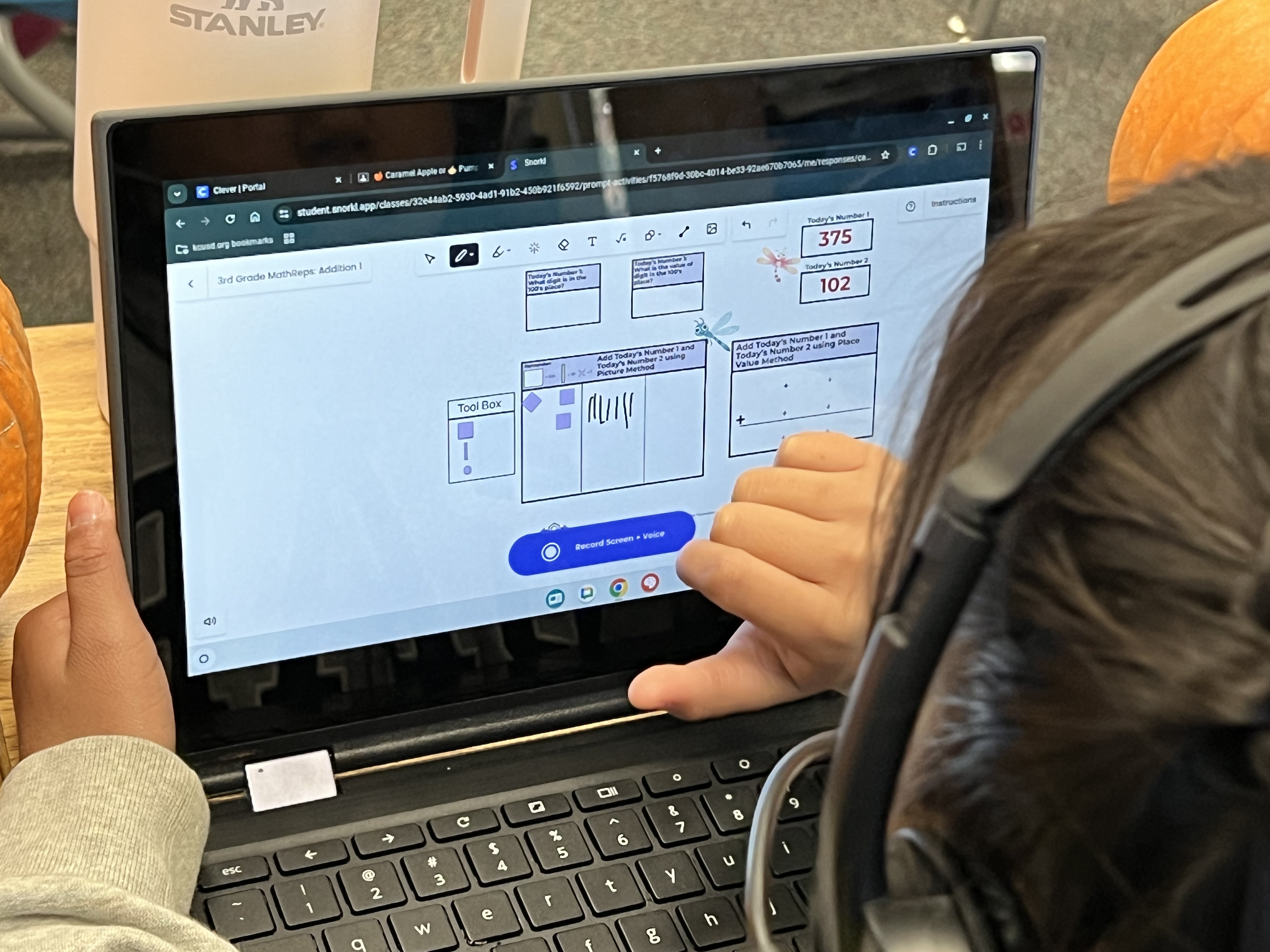
Then came the highlight: a 3rd Grade MathReps addition activity in Snorkl!

Students completed the task, then recorded their explanations to show their thinking. We know that when students can explain a process, their understanding deepens. Snorkl provided instant, helpful feedback that supported this reflection.

The best part? When students didn’t earn a 4/4, they wanted to improve. They read or listened to the feedback and tried again: some two or three times! The combination of MathReps and Snorkl fostered perseverance, reflection, and a sense of pride in learning. It was so exciting to witness.

Try MathReps in Snorkl!

Yes, MathReps are live in Snorkl—you’ll find them under the EduProtocols section. Currently, activities are available for grades K–4, with additional 4th-grade content and upper-grade levels forthcoming.

If you’d like to beta test upcoming MathReps in Snorkl, I’d love to have you join in! Just reach out and let me know.

So go ahead—try a MathRep in Snorkl. Let your students explore, explain, and shine.

Celebrating Creative Teaching Techniques in Classrooms

One of the things I love most about my role as an instructional coach/tech TOSA (Teacher on Special Assignment) is the opportunity to visit all the elementary sites in our district. Each school has its own rhythm and energy, and every teacher brings something special to the table. I get to see it all – the creative ideas, the quiet moments of connection, and the unique ways teachers make their classrooms feel like home for their students.

For example, at one school, a teacher sets out a small chalkboard outside her classroom each day. On it, she writes a Joke of the Day – something silly and lighthearted, but always guaranteed to get a few smiles and spark conversation. (Today’s joke: “What do you call rotten eggs, rotten fruit, and spoiled milk in a bag? Gross-eries!”) I love how she’s zhuzhed up the board, complete with a festive skeleton and a splash of color. It’s such a small thing, but it builds community and connection.

Another teacher has found a meaningful way to help students express themselves through emoji writing. I’m still learning exactly how she structures it, but I know students get the chance to write about their thoughts and feelings, and share them if they choose. It’s such a beautiful example of using something familiar and fun to help students build emotional awareness and voice.

Then there’s a teacher at another site who’s rethinking her approach to reading. She’s diving into novel studies, aligning them to the standards while keeping student engagement and learning front and center. It’s exciting to see teachers continually reflect, innovate, and take risks for the sake of their students.

Every week I’m reminded that innovation in education doesn’t always come from big changes—it’s often found in the small, thoughtful touches teachers bring to their classrooms.

The teachers in our district are doing amazing things every single day. I feel incredibly lucky to have a front-row seat to their creativity and care. One of my favorite parts of my job is being able to share these ideas, anonymously, of course, across the district. When I visit another site and a teacher says, “I’ve been wanting to try something new; any ideas?” I get to say, “Actually, I saw someone doing something really neat…”

I love this perk of my job. I love celebrating great teaching and helping ideas spread from one classroom to another. Because when we share, we all grow, and our students benefit most of all. And if you know me, you know that I’m a chronic over-sharer!

Your turn: What’s something small but meaningful you’ve seen or done in a classroom that builds connection or joy? Share it in the comments or with a colleague—it might just spark an idea that makes someone else’s classroom shine a little brighter.

Customize Your MathReps in Snorkl Easily

This past summer, I’ve been sharing insights about the MathReps collection available in Snorkl. In my recent post, New MathReps Available in Snorkl Library, I provided a quick guide on how to easily navigate the platform to discover your favorite MathReps. Don’t miss the latest video that demonstrates how to seamlessly add these resources to your library and customize them to suit your specific needs.

Let’s Talk Math

My current position, Tech TOSA/Instructional Coach, affords me the opportunity to go into teachers’ classrooms and share the amazing things that are happening. So here I am sharing what this talented first-grade teacher in my district is doing.

Earlier in the week, I was in my Tech TOSA role. I went into this first-grade classroom to teach a lesson on coding using Beebots. I’m sure you’ve figured out this is not what I’m here to discuss. When I walked in, I noticed this chart on her board. What struck me about it was its simplicity. As you can see, it has some basic concepts and images to accompany it. What also drew my attention was the title: Let’s Talk Math. This implies that Math is something that should be discussed. It’s not something we do in isolation or keep to ourselves. While I did not have time to discuss with the teacher what she does with this chart, I know her well enough to say that she references it consistently.

I think it’s worth noticing that this is not flashy, cutesy, or Pinteresty in any way. Too often, we teachers ‘do too much,’ as the kids would say. That isn’t to say that those who make their room match or aesthetically pleasing “do too much.” It’s just to say that if you’re not that kind of teacher—like me—that’s okay. Having something as simple as a chart on your whiteboard works just as well. The important thing here is accessibilty – both in terms of understanding and placement – is most important. If it’s in a place where students can’t see it, like being too high up, or teachers don’t reference it, it’s no good to anyone.

What is my point in all of this? I wanted to celebrate the awesomeness of what this teacher is doing and highlight its simplicity. What are some simple ways you keep your students engaged while encouraging discussions?

NOTE: You may have noticed that I use hyphens in my writing. This has been a thing for me for many years: you can find them in previous posts dating back to pre-AI. I also know that AI uses them often, and it is one of the tell-tale signs that something has been written with AI. I felt the need to point out that while I use them, they are not a result of AI, just of my own knowledge of how to use them.

Why Manipulatives Matter Beyond Early Grades

In the early grades, it’s not uncommon to see math manipulatives used daily in the classroom. Teachers pull out connecting cubes, counters, base ten blocks, and more—tools that help students build a concrete understanding of math concepts. Whether they’re exploring different ways to make 10 or practicing addition, these hands-on tools support their thinking in meaningful ways.

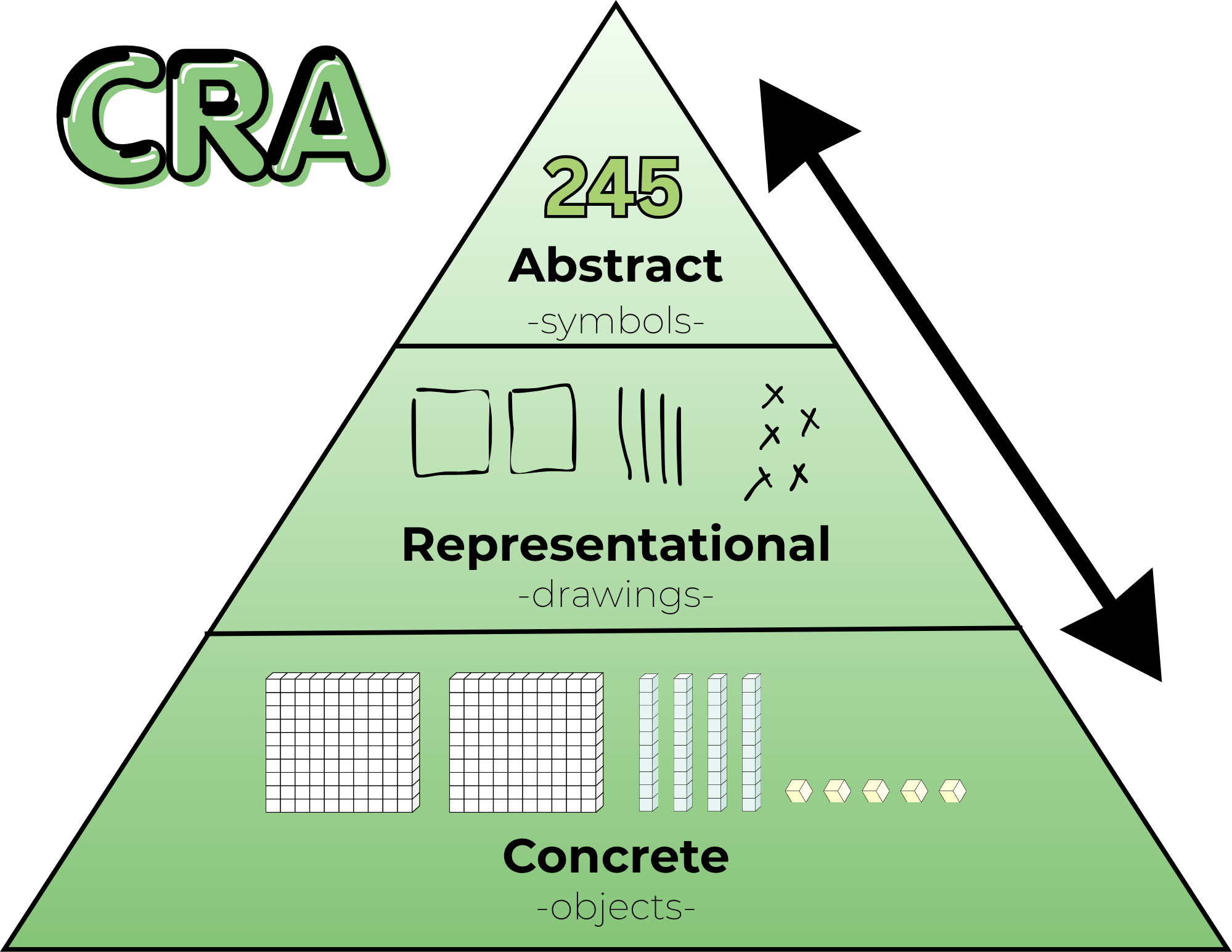
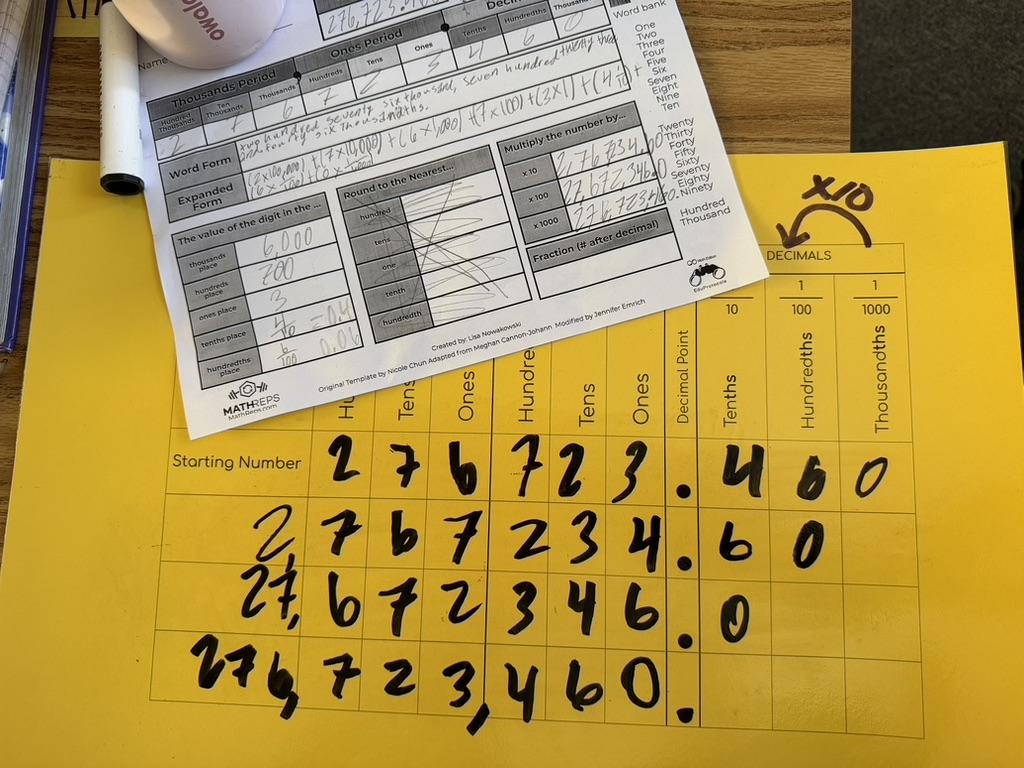
This follows the CRA model—Concrete, Representational, Abstract. We start with the concrete, like manipulatives. Once students have a solid grasp of the concept, we move into the representational, such as drawings or visual models. Finally, we introduce the abstract, using numbers and symbols alone. For example:

  • Concrete: Use connecting cubes to model 5 + 3
  • Representational: Draw 5 circles and 3 more
  • Abstract: Solve 5 + 3 = 8

But here’s what I’ve been thinking about lately: why do we often abandon manipulatives once students move into the upper grades?

Sure, by fourth or fifth grade, many students no longer need cubes for basic addition and subtraction. At that point, they’ve likely mastered those foundational skills and can work abstractly. But what about when we introduce new, more complex concepts—like volume in upper elementary or integers in middle school?

Volume is a great example. It’s a tough concept to grasp without something physical to hold or build. Yet so often, we hand students a formula and expect them to just “get it.” What if we instead gave them time to build with cubes, experiment, and see what volume means before jumping into the numbers?

The same goes for concepts like negative numbers. A number line or clothesline math activity can help students visualize and understand the relationships between positive and negative values. Why skip that step?

All this has me wondering: Is it a time issue? A training issue? Have we simply forgotten how powerful manipulatives can be for older students, too?

I’d love to hear your thoughts.
Do you use manipulatives in your classroom? What grade do you teach? What concepts do you use them for?

Let’s keep the conversation going—and keep math meaningful at every grade level.