Reflections on Year 31: Growth, Gratitude, and Navigating the Unknown

Reflecting on a school year is always a delicate balance of celebrating deep classroom triumphs while navigating the inevitable winds of systemic change. This year marked my 31st year in education. If three decades in the classroom and in coaching roles have taught me anything, it is that while our daily tasks may shift, the core mission of supporting authentic student and teacher growth remains entirely unchanged. Looking back at the full landscape of the months behind me, I can confidently say it was a year filled with personal and professional success, driven by educators and students willing to take risks and try something new.

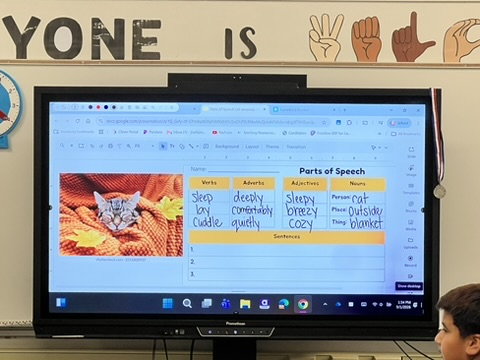
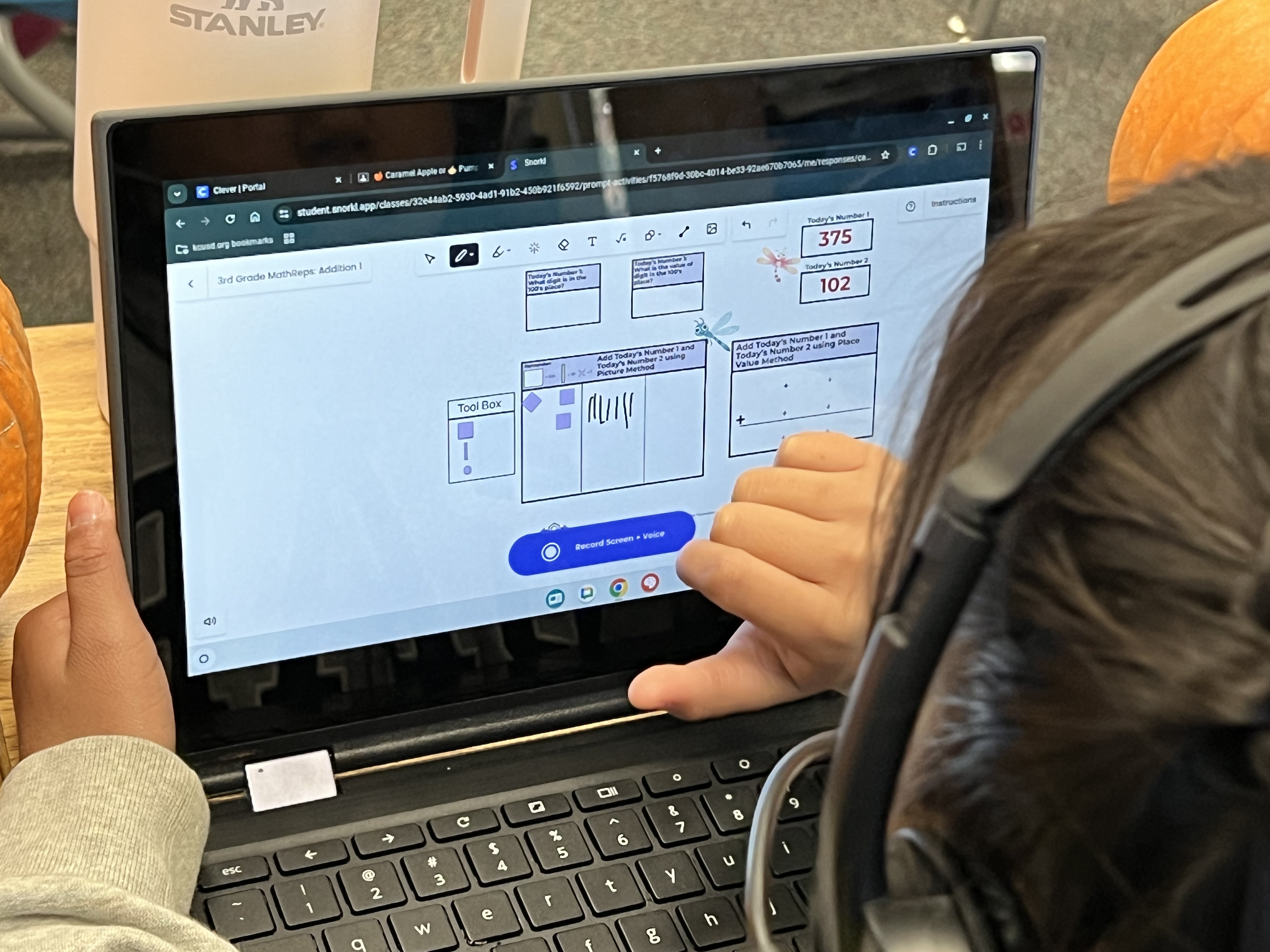
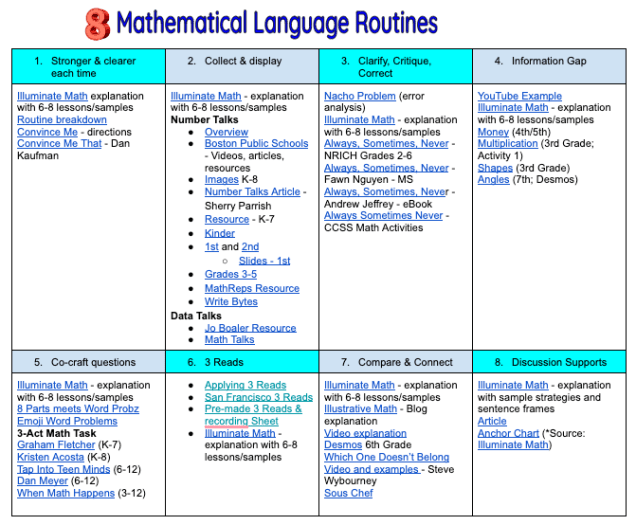
The best moments of my year took place directly inside classrooms, where I had the privilege of watching brilliant teaching across several grade levels. In Kindergarten, students were mastering foundational coding using Bee-Bots, while up in 5th grade, classrooms were diving into collaborative critical thinking through the Cyber Sandwich EduProtocol. As a Tech TOSA and instructional coach, my favorite days involved partnering with teachers to blend meaningful technology with powerful pedagogical frameworks. In one room, we paired MathReps with Wipebooks and Snorkl to make mathematical thinking visible and dynamic. In a 2nd-grade classroom, the students proved to be absolute rockstars in independent reading comprehension, leveraging Snorkl to capture their responses before seamlessly transitioning to choice boards to further explore topics independently.

Perhaps the most profound professional joy this year came from an instructional coaching cycle focused on student discourse with a 1st-grade teacher. By implementing just a few precise, intentional shifts, this teacher increased student-led discussion by an incredible 62% in a short six-to-eight-week period (I think it was six weeks, but I tell ya, it’s been a year). The transformation came down to a few key pedagogical changes: intentionally giving the students dedicated time to share ideas with one another before speaking to the whole group, and introducing structured sentence frames to support their developing language skills. The most rewarding part of this growth was that these targeted design shifts ultimately saved the teacher a great deal of time and energy, proving that shifting the cognitive load to our youngest learners is a win for everyone.

Beyond individual classrooms, our district has continued its steady journey into standards-based learning in mathematics. Refining our proficiency scales has brought massive clarity to our school sites. Through this ongoing work, our teachers now possess a much deeper understanding of the standards and a clearer picture of exactly what is expected of our students to build true conceptual understanding. Which led to many discussions as we evaluated which Math curriculums to pilot next year. On a professional level, I also adjusted to a new supervisor this year: our Director of Curriculum and Instruction. Navigating a change in leadership always requires a period of mutual adaptation.

Of course, a year rarely goes by without some friction, and it certainly wasn’t all smooth sailing. At the district level, it was a genuinely rough year marked by internal site issues that caused considerable unrest, leading to some contentious board meetings. Compounding this unrest was the sudden announcement that our high school district will unify with us within the next three to five years due to the desired unification of a neighboring town’s elementary district. (NOTE: our high school district is in charge of our town’s high school and the neighboring town’s). It is a massive undertaking, and the reality is that we simply are not ready and currently have no viable plan in place. To add to the complexity, our superintendent decided to retire this past spring. Because the announcement dropped so late in the school year, it left very little time for a thorough, comprehensive search for a new leader who is ready to take on both our internal site challenges and a looming district unification. As of today, the district has been in negotiations with one candidate, but that is as far as it has gone (as far as I know), leaving us entering the summer with real uncertainty about who will be leading our district forward.

Looking back at the year, it was a journey filled with intense ups and downs. Unfortunately, there were far more bumpy patches than smooth ones this year. While our absolute focus should always remain firmly on our students, the honest truth is that maintaining that focus can be incredibly difficult when there is so much systemic upheaval going on all around us. Some school sites felt this weight much more than others. It was a heavy, exhausting year for many.

Looking ahead to the upcoming school year, we have a major math pilot in place to evaluate two distinct approaches to conceptual understanding. We will be taking a deep look at Innovamat’s Thinking Math alongside Savvas’ EnVision, and I am eager to see how our teachers and students interact with these resources as we continue to refine our standards-based instruction.

Here’s to closing out year 31and to stepping into year 32 (YIKES). Seriously, though, how did so many years already pass by? It truly feels like I just started teaching ten years ago. Wherever the road leads and whoever steps in to lead our district, my hope is simply that this next year brings a little more stability and a lot more smooth patches for our district.

Making Your August Self Thankful for Your June Self

We are all there. The countdown calendar is taped to the whiteboard, and we are practically crawling across the finish line. The kids are completely checked out and ready for summer, and we are buried under an avalanche of cumulative records, final grades, report cards, and the physical chaos of packing up a classroom.

Let’s be honest: June me is completely over it. When I’m packing up my room at the end of the year, I don’t care where I throw things. I just want to shove the boxes in the closet, slam the door, and walk out because I am done.

But experience has taught me a hard truth: August me will absolutely despise June me if I just walk away.

No one wants to start a brand-new school year drowned in stress. So, to protect my future sanity, I’ve developed a transition routine that bridges the gap between June exhaustion and August peace of mind.

When the final bell rings, I don’t immediately dive into lesson planning. First, I take a few days entirely off to recharge and decompress from the school year that just wrapped up. For me, that means lounging around the house, sipping hot tea, and getting creative with Zen Doodles out on my patio. I let my brain completely reset.

But before that school-work brain completely disappears for the summer, I lean into just one or two days of light lifting. I take a few essential materials home, ignore them during my doodle-and-tea phase, and then sit down to do some simple, high-yield organizing.

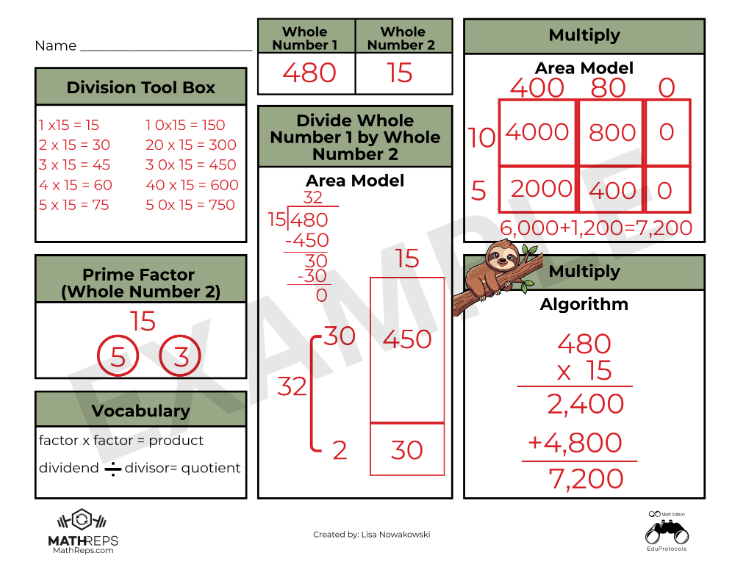
The goal isn’t to plan out the whole year or tax myself during my break. It’s simply to get our most powerful, repeatable classroom routines ready to run on autopilot. If I can get the foundational pieces of our daily MathReps protocol set up now, I won’t have to scramble or think about it during the August rush. It feels a little daunting right now in the thick of June exhaustion, but I know that a few intentional choices today are a massive gift to my future self.

Designing Your Setup: Low-Tech, High-Tech, and the Power of Routine

I know firsthand how transformative MathReps are for students. I’ve seen it in my own work and heard it from teachers across the nation: this protocol is one of the most powerful tools we have for bridging conceptual gaps and actively combating the forgetting curve. Because it is such a high-leverage routine, my goal each June isn’t just to keep it in place, but to reflect on how I can refine and improve it for the upcoming year.

When you sit down to start MathReps, the very first step is a moment of reflection. Ask yourself: What do I want my students to start with?

To ease students into the routine without overwhelming them, my best bet is usually to start with content from the previous grade level. This lowers the initial barrier, allowing students to master the routine’s format using math they already feel confident in.

As you map this out, you also have to consider your incoming class and choose the right media blend for your launch. I highly recommend a tiered progression that moves from low-tech to high-tech as the class builds confidence:

  1. The Paper-and-Pencil Launch: Start the first few days with traditional paper-and-pencil. This allows you to establish a clear, physical baseline and creates a paper trail of exactly what your new students know right out of the gate.
  2. The Plastic Sleeve Transition: Once the baseline is set, transition to the reusable, cost-effective method. Slide your preferred MathRep templates into heavy-duty plastic sheet protectors. Students love dry-erase markers because they lower anxiety, and mistakes can be wiped away in a second. For you, it provides a quick, physical pulse-check as you scan a room full of raised boards.
  3. The Snorkl Digital Integration: While you are prepping your physical sleeves, you can simultaneously prep your digital bridge. Take a look through Snorkl’s pre-built MathReps library to find the exact matching MathRep for your grade level. Grab those digital links now and drop them straight into your summer notes, digital planner, or lesson plans.

By taking the time in June to select your templates, print your initial packs, and organize your digital links, you’ve already won half the battle. When August arrives, you won’t be scrambling to figure out your math block. Your materials will be on your desk, ready to protect both your sanity and your students’.

The Transition, the Tech, and the Ultimate Goal

Once you have completed your June tasks and have your materials ready, you have a blueprint for August. But as you look at those plastic sleeves and digital links, you might wonder: How do I actually roll this out?

You don’t have to do everything at once. My best bet is always to start with that 1–2-week low-tech buffer using the plastic sleeves. This allows students to build the raw muscle memory of the MathRep routine without the added variable of a digital screen. They learn the layout, get comfortable with the pacing, and enjoy the process.

Once that routine is completely locked in, you can choose to introduce the tech. Because you are using the exact same MathRep templates they mastered in the sleeves, the cognitive load is low. The math is identical; only the medium changes.

Now, depending on your class, you might choose to start right on Snorkl for new MathRep later in the year, because the routine’s structure is already second nature. For younger grades, you might choose to stay non-digital much longer.

And honestly? As a coach, I will tell you that whatever you choose, make it consistent and manageable for you.

Tech or no tech is not the point. Is tech necessary? No. What matters is the pedagogy: Are your students getting immediate feedback, and is the routine sustainable for you? Each teacher needs to make it work for them and their students.

While plastic sleeves are incredible for a quick physical pulse-check as you scan the room, we are only human. We can’t catch every misconception in a room of thirty kids. That’s why I love to show teachers how a tool like Snorkl can take a routine we already love to the next level. The digital dashboard doesn’t replace you; it multiplies you. It captures and highlights the student audio explanations, making it easier to see exactly who needs your help. It can make a teacher’s life easier, but you are the driver.

The Last Gift to Yourself

When you walk out of your classroom this June, slam that door, and head out to the patio for some tea and doodles, you can do so with a clear head. You don’t need to plan the whole year. Just pick your template, set up your progression, and organize your links. Your August self will thank you for the boundaries you set, the rest you took, and the simple routines you put on autopilot.

The Pedagogy-First Mindset

As a Tech TOSA, teachers often come to me when they have a spark of an idea and need the right tool to bring it to life. Sometimes, they just need a reliable replacement for a tool they loved, like finding a new home for video discussions after Flip changed. My role isn’t to audit what’s in their “digital closet,” but to offer support and guidance as we navigate the “energy” of our classrooms together.

With the growing conversation around screen-time limits in districts like LA Unified, we have to be honest about what that energy looks like. When we stand side-by-side in a classroom where students are on a mandate for 90 minutes of adaptive software each week (45 minutes for math and 45 minutes for ELA), the room is often stagnant. It’s quiet, but is it the silence of deep thought or the silence of digital compliance?

The person who is doing the work is doing the learning.

The “Work” Litmus Test

I have a quote I live by in my own classroom: “The person who is doing the work is doing the learning.”

When we look at tech tools, the question isn’t “is this high-tech?” but “who is doing the heavy lifting?”

  • Compliance Tech: The software handles the logic and sorts the levels. The student is a passenger.
  • Creation Tech: Tools like Canva or Snorkl (which now hosts MathReps!) require students to be the drivers. In Snorkl, there is no passive learning; the student must articulate their thinking and record their process. That is the kind of “work” that leads to true learning.

The “Fluff” Tax vs. The Power of Fun

We all need to break the monotony sometimes. A fast-moving game like 99math or Wayground can be a fantastic way to build the fluency and basic facts students need before they can perform complex math. That “sprint” of excitement is a bridge to the next level of mastery.

The “fluff” tax happens when the game mechanics (like 20 minutes of boss battles in Prodigy) take up more brain space than the actual math. If the stimulation is a barrier to the standard rather than a bridge, it’s worth asking if it’s truly propelling them forward.

Making the Most of Mandated Minutes

We know the reality: many districts mandate 90 minutes a week for math and reading software. As a coach, I’m not there to push back on district policy, but to support teachers in navigating it. When I stand side-by-side with a teacher in a “stagnant” room, I like to ask four gentle, clarifying questions:

  1. Is the tool giving accurate information? Does the data on the screen reflect the growth (or struggle) you are seeing in the classroom?
  2. How do you know they are learning the material? If we closed the laptop right now, could they explain the “why”?
  3. Is this propelling them forward? Is this tool helping them master a Priority Standard, or just helping them finish a level?
  4. Who is doing the thinking?

Everyone will have a different take on it, and that’s okay. Some tools work better for some than others.

Final Thought

The goal of looking at pedagogy first isn’t to add a burden to the teacher. It’s to ensure that when we do use screens, whether it’s for a mandated block or a creative EduProtocol, the tech is helping them think, not just helping them finish.

Join the Conversation

How do you balance the “stagnant” mandated minutes with the “energetic buzz” of creation-based learning? Have you found a tool that actually reflects the growth you see in your small groups? Let’s talk about it in the comments.

Time Saver Toolkit: 3 Google Features for May Sanity

When I think about classrooms this time of year, I’m thinking of the workflow. This time of year is jam-packed with activities, final checks, and state testing. We don’t have time to waste. That’s why it’s important to reclaim your time.

If you want to survive May with your sanity intact, here are three features you should be leaning on:

1. Rubrics in Google Classroom (The “State Test” Hack)

Many teachers don’t realize they can import or build rubrics directly into their Google Classroom assignments.

  • The Pro Move: Take the actual writing rubrics from our state testing and build them into your final writing assignments.
  • The Benefit: When you grade, you just click the level (1, 2, 3, or 4), and Google does the math for you. More importantly, the students see exactly where they stand against the state standard before the test starts.

2. Google Forms as the “Automated Exit Ticket”

Stop collecting 30 slips of paper at the door. A simple 2-question Google Form can be your diagnostic “Biopsy” for the next day’s lesson.

  • The Pro Move: Use “Quiz Mode” with answer keys for multiple-choice questions.
  • The Benefit: You get a pie chart of student understanding before the kids even leave the room. If 70% of the class missed the question on fractions, you know exactly what your MathRep warm-up needs to be tomorrow.

3. The “Schedule” Button (Mental Health Move)

The Feature: Instead of hitting “Post” on an assignment, click the arrow next to it and select “Schedule.”

Why it helps: You can batch-plan your entire next week on Sunday night (or during a prep period) and have assignments drop exactly when class starts. No more fumbling with the “Create” button while 30 kids are waiting.

Bonus May Helper

Version History in Docs/Slides

  • The Feature: File > Version History > See version history.
  • Why it helps: In May, students sometimes “accidentally” delete their entire project or claim they “worked on it for hours” when they didn’t. Version History shows you exactly who wrote what and when. No more “he-said, she-said” during grading, just pure data.

The Importance of Learning Progressions in Math Education

As an instructional coach in a district that recently began Standards-Based Learning in math, I hear similar concerns across the district, especially this time of year. The pressure to have mastery of all the Priority Standards before the year ends. (It’s important to note that all the standards are being taught. There are Priority Standards and supporting standards. The supporting standards do just that: support. They are the prerequisites, if you will, to the Priority Standards.)

But there is a hidden “Instructional Debt” that makes these standards feel like an uphill battle. If we want our students to succeed at high-level problem solving, we have to talk about the one thing that has become a bit of a “taboo” word in modern math: Memorization. Okay, the act of memorization isn’t taboo; some of the old methods are no longer supported by current research. It’s a frustration for all K-12 math teachers. So let’s talk about it and how we can help students master facts using current research.

The “Cognitive RAM” Problem

Every student has a finite amount of mental energy (let’s call it “Cognitive RAM”). I can hear you all now, “So do the teachers!” When we ask a student to solve a multi-step word problem, that task requires a massive amount of RAM for reading comprehension, translation, planning, and strategic persistence.

If that student hasn’t memorized their basic addition, subtraction, or multiplication facts, they are forced to use their limited RAM for “manual labor”: counting on fingers, drawing tally marks, drawing, modeling, or skip-counting. By the time they get to the actual logic of the problem, they’ve run out of “mental memory.” The whole task seems insurmountable.

The truth is: Memorization is Creative Freedom. When the facts are automatic, the brain is finally free to be creative in the approach to solving the problem. It breaks down a barrier. Think about it. If you are trying to solve a problem and realize you need to multiply 376 by 48, but you don’t have your facts memorized, this task just became a slow, muddy drudge. However, if you know you will need to multiply 376 by 48 AND you know your facts, the hard part is behind you once you know what to do. Suddenly, things don’t feel so unattainable.

The Progression is Non-Negotiable

To be clear: I am not advocating for “rote memorization” without understanding. Memorization is the final step of this Learning Progression. It only works if it is built on a solid foundation:

  1. Concrete: Manipulating base ten blocks and counters.
  2. Representational: Drawing tape diagrams, number paths, and arrays.
  3. Abstract (The Goal): Automaticity, mental fluency, and algorithms.

If we jump straight to memorization, we build a house of cards. But if we stay in the “Representational” phase forever, allowing students to rely on skip-counting patterns or finger-counting, we are capping their growth. We are asking them to do “back-breaking” math every single day. We do need to nudge them to move beyond the Representational model and help them see/understand that they are ready for the abstract and that the abstract is, in fact, your friend.

The Three Gaps Holding Students Back

When I listen to teachers discuss where students are “stuck” on a standard, they usually find that there is a gap in one of these three essential progressions:

1. The Missing Floor (Addition & Subtraction Facts)
If a fourth grader is still “counting on” to solve 14 + 6, they aren’t just slow, they are overloaded. Mental math strategies like “Make a 10” are the building blocks for every standard that follows.

2. The Fluency Wall (Multiplication & Division)
Skip-counting (7, 14, 21, 28…) and arrays are beautiful ways to learn multiplication, but it’s a weight around a student’s neck during long division. We have to move them across the bridge to automaticity.

3. The Magnitude Gap (Flexible Thinking)
When a student looks at 1/4 and 5/6, do they see numbers to crunch or magnitudes to visualize? Flexible thinking means knowing that 1/4 is “a little bit” and 5/6 is “almost a whole.” If they can’t visualize this, they aren’t ready for the standard of comparing fractions.

Bridging the Gap with MathReps

This is exactly why the MathReps framework exists. We don’t just “hope” kids learn their facts or develop flexible thinking. We build consistent, high-frequency opportunities to practice these skills alongside the priority standards.

A MathRep ensures that students touch the concrete and/or representational models every single day until those skills settle into the abstract. It allows us to pay off the “Instructional Debt” in small, daily installments so that when students are expected to solve two-step word problems with multiple operations, our students have the mental capital to win.

The Bottom Line: Don’t be afraid to slow down and build the floor. You aren’t “behind” on the pacing if you are busy building the progressions that make those standards possible.

What Teachers Can Do Now (Without Burning Out)

Post 5 in the Teaching in a Digital Age series. See previous post.

After research, reflection, and hard truths, the question many teachers are left with is a simple one:

What can I actually do, right now, without adding more to my plate?

It’s the question we are often asking ourselves. This post isn’t about sweeping reform or perfect implementation. It’s about small, realistic shifts that rebalance technology use, protect teacher energy, and put learning back where it belongs: with students. As they say, the person doing the work is the person who is learning.

Start With Choice Boards (Without Overthinking Them)

If you’ve read my blog long enough, you know that I am a fan of choice boards. But choice boards don’t have to be complicated or beautifully designed. In fact, many teachers already use a version of them without calling them that: a “must do” and “may do” list.

A simple way to begin, and what I do:

  1. Choose the skill you want students to practice or master.
  2. List familiar ways students can show understanding (write, draw, explain, build, record).
  3. Decide how students will share—digitally or not.

That’s it. I’m a fan of having students share their work, not just turn it in.

The focus stays on skills and mastery, not the tool. Technology becomes an option, not the driver. A student might choose to draw a model, make a poster, record an explanation, design a game, or write a short reflection. Over time, these low-tech options can naturally lead to digital creation, but only when it makes sense.

Choice builds ownership. Ownership builds engagement.
And none of this requires a new platform (unless you want one).

Lean Into Student Explanation

It’s easy to feel like there’s no time for student talk. There’s content to cover. Pacing to manage. Standards to meet. It all can feel overwhelming at times.

But explanation, oral, visual, or written, isn’t extra.
It is the learning. I know it sounds simple, and the time can feel like extra, but it’s really not. Remember: start small.

Short, structured opportunities for students to explain their thinking, turn-and-talks, quick presentations, sketch-notes, and exit explanations, strengthen understanding and surface misconceptions faster than silent work ever could.

These practices also align naturally with ELD standards, but they benefit all students. Being able to explain clearly, listen actively, and respond thoughtfully is a skill worth protecting instructional time for. And when a student can explain the material clearly, you know they understand it.

Sometimes the most powerful move is simply to stop and let students talk.

Build Simple Routines That Shift the Cognitive Load

When students know:

  • where to find materials
  • what success looks like (success criteria or proficiency scales)
  • how to make choices
  • where finished work goes

…the cognitive load shifts from the teacher to the learner.

This isn’t about losing control; it’s about creating systems that run themselves. As an instructional coach, I have found that having systems in place is valuable for teachers. It lowers your stress and makes for a more peaceful classroom. Once expectations are clear and routines are established, students work more independently, collaborate more naturally, and take greater responsibility for their learning.

That shift frees you up to do what matters most: conference, observe, intervene, and support students who need it most.

You already do much of this instinctively. The key is being intentional and letting go just enough. And if you are thinking to yourself, “I already do all of this,” then you should feel validated.

Start Small (Really Small)

This might be the hardest part.

Teachers are learners. We read blogs, attend conferences, watch webinars, and leave inspired. The temptation to do all the things is real. I am one of those who want to do all of the things right away.

But change works best when it’s edited. And I get it, I have trouble editing. But here are some things I have learned and would like to share with you.

Choose one shift:

  • One new routine
  • One way students explain
  • One choice opportunity

Let students become comfortable. Let yourself adjust. Once it’s working, then layer in something new.

Doing too much too fast overwhelms students and teachers alike. Sustainable change is slow, and that’s not a flaw. It’s the point.

Where MathReps and EduProtocols Fit

Strategies like MathReps and EduProtocols fit naturally into this work, not as mandates, but as examples.

They emphasize:

  • showing thinking over choosing answers
  • explanation as learning
  • repeatable routines that reduce planning load – This is probably the biggest bonus.

Used thoughtfully, they can support production without requiring perfection or constant novelty. But they’re options, not requirements. What matters most is the principle behind them: students actively making sense of their learning.

A Final Thought

You don’t need a new platform. (And if you’re like me, you want the newest, shiniest tool)
You don’t need a complete overhaul.
You don’t need to do more.

You need permission—to start small, to focus on thinking, and to build a classroom that works for you and your students.

That’s where balance begins.

So, what is one low-lift shift you could try this week that moves students from consuming to producing, without adding to your workload?

Was Professional Development the Missing Piece?

What if the problem was never the tool, but the lack of sustained support? Or support from the onset?

For years, classrooms have been flooded with platforms, programs, and promises. New tools arrive with excitement, urgency, and often good intentions. Teachers are (sometimes) trained briefly, then sent back to their classrooms to “make it work.” Sometimes there is no training, and expected to “make it work”. When outcomes fall short, frustration follows. Fingers point in every direction.

But perhaps the most honest explanation is also the least controversial: we asked educators to transform instruction without giving them the time, space, or support to truly learn how to do so.

One-Time PD vs. Sustained Learning

Most teachers recognize this pattern immediately.

A new tool is introduced. There’s a short training – here’s what it does, here’s where to click – and then: Go use it. Sometimes there’s follow-up, but it’s often months later and/or focused narrowly on features, not instruction. Other times, PD becomes so repetitive that it feels disconnected from classroom reality.

The spacing matters, just like it matters with our students. When training sessions are too far apart, teachers naturally fill in the gaps themselves. They figure out what works (and what doesn’t) through trial, error, and time; often without a shared pedagogical vision guiding those decisions.

Add to that the reality that many schools roll out multiple new tools or curriculum adoptions at once, sometimes with little dedicated time at the start of the year to learn them deeply. And sometimes there’s too much information coming at the beginning of the school year. The result isn’t resistance, it’s overload.

There has to be a better way.

Pedagogy Must Come First: We Can’t Pretend the Clock Rewinds

In theory, most educators agree: pedagogy should come before platforms, curricula, and pacing.

In practice, that train has already left the station long ago.

Teachers are knee-deep in platforms that were adopted years ago. Pedagogy often became secondary, not because educators didn’t care, but because survival required learning to manage the tool with students in the classroom in real time before reflecting on how it shaped instruction.

So the question isn’t Should pedagogy come first?
It’s How do we re-center pedagogy now, given where we are?

One possible answer isn’t adding more tools, but pressing pause. Limiting new adoptions. Creating space for a pedagogical reset using the platforms already in place. Asking not What else do we need? But how can we use what we have better? Or how can I use what is already available? How will it help me/my students?

This isn’t easy. It can feel overwhelming. But if the goal is student thinking, understanding, and transfer, not just task completion or student compliance, then the work is necessary.

What Meaningful Tech PD Actually Looks Like

I know, this is a loaded question. We want it, we know we need it, but are often loath to attend, myself included. This is especially true when it’s district-provided. Why is that? (That was more of a question to myself, no sarcasm, just a real thought/question)

If professional development is meant to change classroom practice, it must be manageable, relevant, and immediately useful.

That starts with focus. If a district introduces three new tools, meaningful PD might center on just one—and even then, on one or two high-leverage instructional uses, not every feature. Depth matters more than breadth. I’m a fan of showing how it is relevant to you, right now.

PD also needs to be differentiated. Some teachers are ready to explore advanced applications. Others need a strong foundation. Meeting teachers where they are isn’t a luxury; it’s how learning works. The trick is to do this well. I’m not sure what the answer is, but I know it should be a goal.

And perhaps most importantly: teachers need to be able to use what they learn immediately. I am passionate about this point. If something isn’t implemented within a week, it often never will. This isn’t a failure of commitment; it’s the reality of teaching in a system filled with mandates, assessments, and competing priorities.

Ongoing support matters too. Not once a semester. Not when schedules allow. Consistent coaching, collaboration, and feedback help teachers refine their practice at a pace that feels sustainable rather than rushed.

Teachers invest in what moves their students forward. When the impact is visible, the motivation follows.

The Cost of Not Investing in Teacher Learning

When professional learning is shallow or fragmented, classrooms tend to drift toward extremes. Again, this isn’t a criticism of teachers; it’s a reality.

In some cases, technology becomes a digital babysitter, students consume, click, and complete without deep thinking. That’s the compliance factor. In others, technology is avoided altogether. Of the two, opting out may be the more responsible choice, but it still leaves potential untapped.

A middle ground exists.

When teachers are supported in learning how and why to use tools, technology can amplify good pedagogy rather than replace it. Tools that provide immediate feedback, surface misconceptions, or help analyze student thinking, like Snorkl or Wayground, can lighten the instructional load while keeping learning active and visible. I know I keep bringing up these two tools. They are ones I have available in my district. There are other tools that achieve the same things.

But even the best tools can’t compensate for a lack of investment in teacher learning.

A Shared Responsibility

This isn’t about blame. We are where we are, and reflection is necessary.

Teachers didn’t ask for constant change without time to adapt. Administrators didn’t design systems to overwhelm. Policymakers didn’t intend to sideline pedagogy. Everyone involved is operating within constraints and doing what they feel is best.

But if we want classrooms where students think, explain, and truly understand, then professional learning can’t be an afterthought. It has to be central to how we implement change.

Teachers and students deserve better than “I have to do this.”
We’ve tried that. It doesn’t work. It’s time we try something different.

So, my question to you is, if professional development were designed around learning rather than compliance, what would change, for teachers, for students, and for the system as a whole?

What Science Says About Technology

Active Retrieval Is More Powerful Than Passive Re-Exposure

Cognitive psychology has consistently found that retrieval practice, that is, actively bringing information to mind, deepens learning more than simply re-reading or re-exposure. Research spanning laboratory and classroom settings shows that engaging students in retrieval (quizzing, explaining, recall exercises) leads to better long-term memory retention than repeated study or review alone. (source 1, Source 2)

This is often referred to as the testing effect or retrieval practice effect. The retrieval practice effect is an effective strategy for combating the Ebbinghaus Effect, aka the Forgetting Curve. While it is sometimes misinterpreted as “more tests,” it is really about effortful recall, getting students to retrieve and rethink information. It’s retrieval itself, not just repetition, that strengthens memory traces.

In other words, this means that asking students to produce explanations, to summarize in their own words, or to write and discuss thinking aloud builds deeper learning than simply having them repeatedly read material or answer DOK 1-type questions. This aligns closely with production-based approaches like #MathReps and #EduProtocols, which encourage students to reveal their thinking rather than simply select answers.

Cognitive Load Matters Both With and Without Screens

Science also reminds us that our brains have limited working memory capacity. Cognitive Load Theory explains that when students are overwhelmed with too much information or poorly structured tasks, learning suffers. This is why #EduProtocols recommends starting with a fun, low-cognitive load (non-academic) subject when introducing a new protocol.

Some research on multimedia learning, how information is presented with visuals, audio, and text, suggests that poorly designed digital content can increase cognitive load, making it harder for students to focus on what matters.

Importantly, cognitive load is not caused by screens themselves, but by how information is presented and how much unrelated or distracting material competes for attention. Even when we don’t use technology, we have all experienced cognitive overload from information, especially when it is new or ‘meaty’. This is why it is important to use well-designed tasks that chunk information, reduce unnecessary complexity, and scaffold thinking, helping students allocate mental energy to deep learning, whether on paper or on a device.

This is where tech can help: platforms that analyze student errors, present information in multiple representations, or guide students through step-by-step reasoning can reduce unnecessary load and help students focus on what matters most. Tools like Snorkl and Wayground (which provide instant feedback and class-wide analysis) can lighten the teacher’s load while still requiring students to produce and explain their thinking. This isn’t to say that the use of technology is better. If a teacher needs to learn a platform to lighten their load, it can lead to cognitive overload; that’s not good either.

It’s about balance for both students and teachers.

Explanation Strengthens Learning Across Contexts

Research and classroom evidence agree upon a central idea: students learn better when they must explain their thinking. This is true whether explanations are verbal, written, visual, or recorded. Explanation forces students to organize, articulate, and refine their understanding, something that passive or consumption tasks rarely do.

This finding is supported by the English Language Development (ELD) standards, which highlight explanation as crucial for language learners; I would argue the same holds for all students. The act of explaining requires higher-order thinking, connecting ideas, making meaning, and justifying reasoning, and is linked to stronger understanding across domains. We know that if a student can accurately explain their thinking, they understand the concept. And if, while they explain their thinking, they have a misconception, we, as teachers, can address the issue immediately.

Whether students are explaining mathematical reasoning, composing a paragraph, or teaching a peer through a screencast, the cognitive work of explanation activates deeper learning processes.

What Neuroscience Says About Screen Use

Neuroscience research and cognitive development studies paint a layered picture of screen use, especially in early childhood and developing brains. As teachers, we have all seen our fair share of young children passively watching something on a phone or tablet. I have my own personal thoughts on that.

Some findings suggest that excessive screen time, especially passive, unstructured exposure, can be associated with reduced development of executive functions (such as working memory, inhibitory control, and attentional networks) and changes in brain connectivity during critical developmental periods. (Source 3) Other work points out that heavy screen exposure in young children can replace activities like conversation, play, and social interaction that are essential for the development of attention, language, and executive skills. (Source 4)

I will acknowledge the limits of this research:

  • Most studies on screen use and brain development focus on quantity and context of use, not technology per se.
  • Research does not support simplistic claims that screens alone “ruin attention” or permanently damage cognition; effects depend heavily on the type of engagement, content quality, and context. (Source 5)
  • There is no consensus that screens are inherently worse for learning than other media; rather, the design of tasks and interactions matters most. I would be curious to see any studies on the effects of social media on attention spans, how they relate to perseverance and productive struggle.

Screens can be part of effective learning when they prompt students to think, produce, interact, and explain, not just watch or click. I still advocate for common sense. Personally, I don’t think plunking students down in front of a computer for extended periods of time every day is healthy.

What Research Doesn’t Claim

As educators, we must be careful not to overinterpret research into simple slogans like “technology is harmful” or “screens destroy brains.” The science shows that how we use technology matters far more than whether it exists in the classroom.

Studies on cognitive load don’t condemn all digital tools. They simply remind us that well-designed tasks that minimize the load and maximize meaningful engagement lead to better outcomes.

It’s all about balance.

What This Means for Classrooms

The science of learning supports production-based work, tasks that get students to retrieve, organize, and explain content. It also supports varied modalities and repetitive practices, whether via paper/pencil or smart tools that help with feedback and analysis. This was discussed in the Consumption vs Production post of this series.

Here’s what teachers and leaders should keep in mind:

  • Retrieval practice (active recall) strengthens long-term retention more than repeated exposure.
  • Cognitive load matters: thoughtful design matters more than screens.
  • Explanation builds understanding: making students’ thinking visible is powerful.
  • Tech can help, but only when it supports thinking, not replaces it.

Tools like Snorkl and Wayground illustrate this well: they can provide instant feedback and class analysis, helping teachers target instruction while students practice articulation of thinking. But these tools are most effective when teachers know what they want students to produce, not just consume.

Educators deserve systems that support this deeper work—not just devices to fill time. They also need support to accomplish this successfully. Leaving teachers to figure things out on their own time isn’t an acceptable solution. Schools and districts need to invest in their teachers.

What are your thoughts on this research? What have your experiences been?

Coming Next:
Research may tell us what works, but oftentimes, teachers are left to figure out how to put it all into practice successfully. Post 4 explores what happens when pedagogy is expected without proper time, training, or systemic support.

Consumption vs. Production: What Do We Actually Mean?


When conversations about technology in classrooms come up, they often sound like this:
“Kids are on screens too much.”
“Students don’t think like they used to.”
“Technology has ruined learning.”

These statements reflect genuine concern, but they don’t dig deep enough. The problem is not technology itself. The problem is how students are asked to engage with learning when technology is involved.

To move this conversation forward, especially with the general public, we need a shared language. One of the most important distinctions we can make is between consumption and production.

What Is Consumption?

When I talk about consumption, I’m referring primarily to passive learning experiences. These are activities where students receive information or interact with content in limited ways, often without having to explain or construct their thinking.

Examples include:

  • Watching a video and answering surface-level questions
  • Clicking through digital practice or assessments
  • Playing educational games that reward speed or completion
  • Navigating programs where the main task is selecting answers

Consumption isn’t inherently bad. Students need exposure, modeling, and opportunities to practice skills. The issue arises when consumption becomes the default – especially because technology makes it easy to assign, track, and justify. And with the load on teachers’ plates, it is understandable.

Students can look busy. They can even look engaged. But that doesn’t always mean learning is happening.

Engagement Is Not the Same as Learning

A student can be entertained, compliant, or focused on a screen without deeply understanding the content. Learning requires effort. It requires retrieval, reasoning, explanation, and sometimes productive struggle.

This is where production matters and why it’s crucial.

What Is Production?

Production-based learning asks students to create something that makes their thinking visible.

That “something” might be:

  • A written explanation
  • A visual model or representation
  • A verbal explanation
  • A collaborative document
  • A screencast or short video

For example:

  • A student creates a short video explaining how to add two-digit numbers using expanded form
  • Students read, collaborate on shared notes, and write synthesized paragraphs (such as in a Cyber Sandwich)
  • Students explain why a strategy works, not just apply it

These tasks require more than clicking through DOK 1-type questions. Students must organize ideas, make decisions, and communicate clearly.

And contrary to popular belief, production does not always require more time.

Production Doesn’t Mean More Work

Many teachers already build production into their classrooms, often without labeling it that way:

  • Asking students to explain answers to a partner
  • Requiring written justification
  • Having students represent ideas visually

These are small shifts, not massive overhauls.

Technology can support this work, but only when it’s used intentionally. Which leads to a critical question educators must constantly ask:

How is this technology enhancing the learning goal?

Not:

“I have this tool, now how can I use it?”

That distinction is subtle but powerful. I admit, there were times when I asked myself, “How can I use this tool?”

Revisiting an Old Idea: SAMR

Years ago, many educators used the SAMR model (Substitution, Augmentation, Modification, Redefinition) to think about technology integration. Over time, I’ve noticed it has faded from conversation, but its central idea still matters: technology should enhance or transform learning, not simply digitize existing tasks.

But frameworks alone don’t change practice.

For many teachers, there is little time or support to deeply learn new pedagogy alongside new tools. Professional learning is often brief, optional, or disconnected from classroom realities. Teachers are expected to “innovate” while managing full classrooms, mandates, and shifting expectations.

As in the early Chromebook rollout, teachers are once again left to figure it out on their own.

The Reality Teachers Are Working In

This conversation cannot happen without acknowledging the conditions teachers work under.

Teachers navigate:

  • District-adopted programs and initiatives
  • Pacing guides and curriculum mandates
  • State testing and accountability pressures
  • Constant shifts in platforms and expectations

At the same time, teachers are frequently blamed for:

  • Low student motivation
  • Declining reading levels
  • Weak math fluency
  • Poor reasoning skills

Teachers have students for six to seven hours a day. They do not control screen time outside of school. They cannot undo every societal influence within a single classroom.

Yet they are often expected to do precisely that.

Understanding consumption versus production is not about criticizing teachers’ choices. It’s about recognizing that many of those choices are/were made within tight constraints, often without the time or support needed to explore better alternatives.

Technology as an Enhancer, Not a Requirement

Production does not require technology. In many cases, paper and pencil work beautifully. Research consistently supports the cognitive benefits of writing and drawing by hand.

Take MathReps as an example. I often prefer students to write their thinking on paper or use plastic sleeves with whiteboard markers. Writing, revising, and representing ideas physically supports understanding.

Once students are familiar with the routine, technology can enhance the experience.

Tools like Snorkl allow students to demonstrate and explain their thinking while receiving immediate feedback. Used intentionally, perhaps a few times a week, it can amplify learning rather than replace it.

The goal still remains the same:

  • Show your thinking
  • Explain your reasoning
  • Make understanding visible

Technology is one pathway, not the destination.

Starting With the Right Question

Whether using technology or not, the most important question is always:

What is the learning goal?

Only then should we ask:

  • Can technology enhance this?
  • Does it deepen thinking or just speed things up?
  • Are students producing, or merely responding?

Consumption and production are not enemies. Both have a place. But when consumption dominates, we risk mistaking activity for understanding.

As we continue navigating teaching in a digital age, the challenge is not choosing between technology and tradition. It’s choosing practices that can meld the two.

I leave you with this question:

When you think about the learning experiences students spend the most time on, inside or outside the classroom, would you describe them as primarily consumptive or productive? And what slight shift might move the balance? If you see balance already, what does it look like?

When Technology Entered the Classroom, What Did We Lose Along the Way?

Technology was introduced into classrooms with the promise of innovation, access, and equity. Chromebooks became commonplace, and suddenly every student had a screen. On paper, it looked like progress.

What rarely came with those devices, however, was a shared vision for how technology should support learning.

Years later, many educators and families are noticing something unsettling. Teachers are detecting declines in certain skills: critical thinking, problem-solving, perseverance, a sense of wonder, and even basic fluency, such as memorizing math facts or understanding procedures deeply.

This is not a claim rooted in blame or panic.
It’s a reflection grounded in lived classroom experience.

And it’s critical to say this clearly: teachers did not cause this shift.

Teachers Were Put in a No-Win Situation

When Chromebooks were first rolled out, many teachers were handed powerful tools with minimal training, limited pedagogical guidance, and enormous expectations. The message was often implicit: Use the technology. Figure it out.

What followed was predictable.

Most available tools at the time were consumption-based:

  • Students practiced skills through programs
  • Computer-generated assessments
  • “Learning” games
  • Watch videos and click through content

These tools promised efficiency, and in some ways, they delivered. Teachers could quickly gather data, assign differentiated work, and manage classrooms stretched thin by increasing demands and limited time.

For many teachers, this wasn’t laziness or lack of creativity.
It was survival, as they were told to use technology, follow pacing guides, differentiate, improve test scores, etc.

When Consumption Became the Default

Photo by Ryutaro Tsukata on Pexels.com

Over time, consumption-based technology became mainstream. Students spent more time interacting with screens and less time explaining their thinking, constructing arguments, or grappling productively with struggle.

This matters because consumption alone does not build deep understanding.

Selecting an answer is not the same as defending one.
Completing digital practice is not the same as reasoning.
Engagement is not the same as learning.

Still, teachers used these tools because they were what districts purchased, what schedules allowed, what was expected, and what, if any, professional development supported.

Arguments for the Opposite Can Be Made

Some teachers pushed against this trend. I was one of them. This was a luxury and an interest for me.

Technology has always interested me, and I had the time, energy, and inclination to learn how pedagogy and technology could work together. I gravitated toward production-based uses of technology: students explaining, creating, representing, and discussing their thinking.

When tools like Prodigy became popular, many teachers saw motivation and engagement. I saw more game than practice and chose not to use it. Instead, I decided to use programs like Fog Stone Isle to help build capacity with fractions. That doesn’t make one choice morally superior; it highlights how context, interests, and capacity shape decisions.

Many teachers did see value in those tools for their students. And for those teachers, it made complete sense. There are times when consumption-based technology is appropriate and works. As teachers, we do what we feel works best for our students.

The Larger Systemic Issue

The deeper issue isn’t about individual tools. It’s about a system that often invests in products instead of practices.

Districts and lawmakers frequently purchase or mandate programs, platforms, and devices without funding the time and training teachers need to use them well. Pedagogies like HyperDocs and EduProtocols emphasize student production and thinking, but learning them is often left entirely to individual teachers.

And teachers already carry an impossible load.

Technology changes yearly. Research evolves. Expectations increase. Teachers are asked to adapt constantly, often without sustained professional learning or structural support.

When systems fail to lead with pedagogy, companies fill the gap. Many tools genuinely aim to help, but convenience can quietly override cognitive demand if we aren’t careful.

What Research Actually Tells Us (And What It Doesn’t)

To be clear: there is no definitive research proving that technology has caused a universal decline in student skills. What we do have is:

  • Research showing that active learning and retrieval are more effective than passive consumption
  • Cognitive science emphasizing the importance of productive struggle, explanation, and practice
  • Multimedia learning research (like Richard Mayer’s work) demonstrating that technology must be intentionally designed to support learning, not overload it
  • Large-scale assessments (such as PISA and NAEP) showing stagnation or uneven growth, which educators interpret through classroom experience

What teachers are reporting should not be dismissed, but it should be understood as contextual, nuanced, and systemically influenced, not a simple cause-and-effect story.

Moving Forward: Balance, Not Backlash

This is not a call to remove technology from classrooms.

It’s a call to use it differently.

Production-based strategies don’t have to be complex. They can start small:

  • Choice boards instead of one-size-fits-all programs
  • Students explaining their thinking orally or visually
  • Simple routines that prioritize reasoning over speed

These changes can be technology-based or not technology-based. For example, explaining thinking can be done in a class setting, in groups, or with the use of tools like Snorkl.

Frameworks like MathReps and EduProtocols offer powerful examples, but they are not mandates. They are models. Entry points. Proof that technology can amplify thinking when pedagogy leads the way.

A Message to the Public and to Decision Makers

Teaching today is not the same as “when you were in school.”
Technology has changed. Research has evolved. Students’ needs are different.

Educators are not resisting change; they are navigating it in real time.

If we want technology to improve learning, then teachers need more than devices. They need time, training, and trust. Districts and lawmakers must invest not just in tools, but in the pedagogy that makes those tools meaningful. And all of this needs to be done without adding more to teachers’ plates.

The goal isn’t balance sheets or dashboards. It’s thinking.

And the question we should all be asking is not whether technology belongs in classrooms, but whether we are brave enough to demand that it truly serves learning and teachers are put in a position of power, not left scrambling to figure it all out.

This has been a subject that has been weighing on me heavily lately. I think this will be the beginning of a series. I would love to hear your thoughts. I am not here to persuade anyone one way or another, but rather have open discussions on where, as a community, educators, parents, districts, and policymakers, we can do better.