It’s Okay To Fail

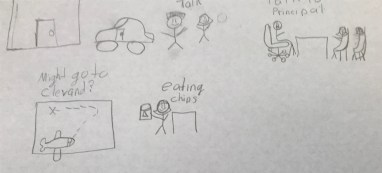
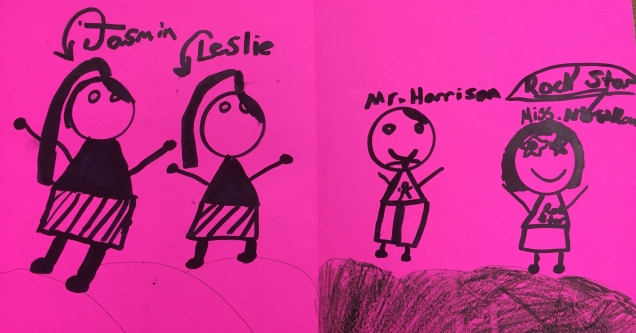
This has been a BIG lesson for one of my students this year. She was not a fan of failure and learning from her experiences. In the beginning of the year, she would completely shut down, pout, and refuse to make eye contact if she didn’t get something right. We have worked hard on this: the student, the family, her classmates, and me.

So our Trimester 3 homework gave the option for students to create an artistic expression of something they felt was important that they learned this year. This student chose to draw about failure! I am amazed at how far she has come this year. She is truly an amazing person!

IMG_5267 (1) Special thanks to the student and parents for granting permission.

Plastic Times: In the Beginning

This year we have been focusing on Book Studies. We have read several great works of literature including Love That Dog and Bridge to Terabithia. Recently, we picked up another Newberry Award winner. After 16 pages most of us were having trouble ‘getting into’ the book. We weren’t even through the first chapter yet – it was 24 pages – when I stopped and asked the students what they thought. At first, they were reluctant to be completely honest. They said things like, ‘it’s okay’ and ‘eh’. So yeah, when I gave them my honest opinion, they opened up a bit more. I have difficulties with reading comprehension, which they all know about, and I simply told them that I was having trouble ‘getting into’ the book. Collectively, they all breathed a sigh of relief and opened up. In the end, we decided to put the book down – at least for now – and move on to something different.

This is where Plastic Times comes in. Last year my class wrote, directed, produced, and acted in their own movie. It was an empowering experience. Within the last year, A Tale Unfolds has expanded their resources and restructured their payment system. Essentially, they have a ‘suggested’ price but will accept what you are willing to pay. Yep, even if you want to pay nothing! Which is brilliant, since their generosity makes me want to pay the suggested price and not try to get a cheaper price. A Tale Unfolds has partnered with several quality organizations, including CNN, to create top quality lessons. Teachers, everything is included!

Anyway, after the book fail, I wanted my students to participate in something meaningful, fun, and most importantly, rigorous. So, I went onto A Tale Unfolds and was immediately drawn to Plastic Times.  This lesson incorporates research, forming opinions on facts, (high quality) writing, and PBL.

screen-shot-2017-02-25-at-5-26-25-pmFriday we started our new path. The first lesson has students reviewing five different pieces of ‘Evidence’ (all factual) and taking notes. They are investigative reporters learning about the impact of plastic on our environment, animals, and us. Then, they are to form an action plan. When each group received their ‘Evidence’ I don’t think they thought I would stick to the 4-minute timer. I printed one copy of each piece of evidence and so they had a certain amount of time to review and take notes before passing it along. After the first round, they got the message. They then watched a 14-minute video produced by CNN to further their knowledge on the subject. Honestly, I have never seen the students so engaged. They really wanted to get all the information provided and answer all the questions on the guiding worksheet. And that was only day 1! I can’t imagine what the rest of the three weeks will bring, but I’m excited to see where this takes us!

BreakoutEDU

Finally, today I held my first real BreakoutEDU of the year. I say ‘real’ because I had run Mini Math Breakouts earlier this year. They were a success, but I just didn’t have enough kits to pull off a full class Breakout (I now know it can be done with one kit and tickets).

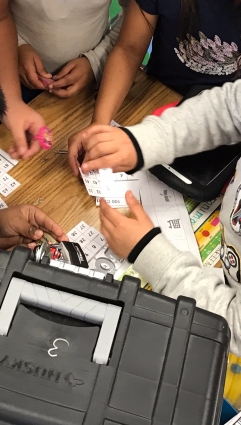
screen-shot-2017-02-23-at-6-13-19-pmHoly Cow! It was a GREAT success. I mean, I knew it would be but it still blew my mind. A few weeks ago I sucked it up and purchased 4 more DIY kits. I had purchased one from the website a little over a year ago and was hesitant to buy more – I’m cheap! Anyhow, today I ran 5 simultaneous breakouts – Grammar Gurus.

The entire class was engaged. Each group had no more than 6 students. They all seemed to work well together. There were a few groups that I had to remind to communicate with one another, but honestly, they did great. In the end, no groups completed the task. A few came really close to opening the last lock.

The really fun part, for me, was watching the students work together, quietly, for 45 minutes. This is something they rarely do – especially lately. In the end, they begged to have more time. Even when I didn’t give them more time to finish the puzzles they asked if we could do it again, WHEN we could do it again, and suggested we do one every Thursday.

When was the last time your students failed a task and BEGGED to do it again, soon? Later screen-shot-2017-02-23-at-6-14-14-pmin the afternoon, I had another group of students in my classroom. They saw the locked boxes and asked what they were. I briefly explained what we did earlier and they asked when they were going to do one.

I’m so excited with the outcome that I will try to plan them more often. I already have one planned for Read Across America Day – Dr. Seuss’ Birthday. If you haven’t tried a Breakout, I highly suggest you do. You and your kids will love it.

Websites In Class

Websites are great places to collect and display student work. I have used them in Math so that student can document their learning through videos, photos, and examples. In addition to documenting their progress, when students are unsure of a concept they can refer to another student’s page for clarification.

More recently, I have used them to document learning in Social Science. Earlier in the year, we were learning about Pre-Columbian Settlements. Students documented their learning on Google Maps then placed them on a website.

webpage-1The beauty of doing this is that it allows for easier sharing with the outside world. It has been said, and is most certainly true, that when students know the public will see it they up their game. When my students think it’s just for me, they give me ‘okay’ work. It’s like pulling teeth to get top notch work from them. However, when I say that it will go on a website that will be shared on Twitter and Facebook, they are much more careful and meticulous in their work. Adding to that, I present. I tell them what I am presenting and when. Okay, sometimes I ‘say’ I’m presenting on a topic even when I’m not. I want the best work from them, I have no shame.

Here’s another example from my students. We recently started learning the reasons for the Revolutionary War. There are various tasks that they need to accomplish. Those final products are placed on a shared website.

webpage-2I have used this method of documentation and sharing in the classroom for over four years. I have never had a student abuse their editing rights. On the old Google Sites, I could give page level permissions for editing but never did. All students have always had full rights on the site. However, this year I have a student who has been known to maliciously edit shared documents (and when caught asks what ‘Revision History’ proves). So said student does not have editing rights. While this makes me sad and I wish I could have gotten through to the student that such behavior is inappropriate, I have decided to exclude him/her from editing until he/she proves themselves to be trustworthy. I figure once in four-plus years is a pretty good record.

Two of my favorite websites were student driven. One was for a ‘business’ where the students created keychains and bracelets to raise money for St. Jude Hospital. They had photos and order forms! The other was a tech tutorial website. A group of girls calling themselves The Techie Chicks created one tech tutorial each week during Genius Hour.

Place Value Basics & Mult./Div.

Last year, I began using Jon Corippo‘s 8 p*ARTS . I saw great success with the repetition. As a result, I thought I’d like to do something along similar lines with Math. Now, I will admit, what I came up with isn’t nearly as fun. However, the repetition is there. This is for 5th grade and can easily be modified for other grades. Here’s what I came up with.

Place Value Basics

The plan:

  • Today’s Number – Have the student of the day decide on the day’s number anywhere from billion to thousandths place. However, the number must be at least to the tenths place.
  • 10 times greater – Take the original number and make it ten times greater.
  • 100 times greater – Take the original number and make it one hundred times greater.
  • 1,000 times greater – Yup, take the original number and make it one thousand times greater.
  • Add 10 times greater and 100 times greater – add the numbers.
  • Write a number that is GREATER – Have students change ONLY a digit that is AFTER the decimal.
  • 1/10 times less – Take the original number and make it ten times less.
  • 1/100 times less – Take the original number and make it one hundred times less.
  • Subtract 1/10 and 1/100 – subtract the numbers.
  • Write a number that is LESS – Have students change ONLY a digit that is AFTER the decimal.
  • Prime factors of the first 2 digits of the whole number – Only take the numbers in the ones and tens place and find the prime factors.

An example is given on the second slide. This should be done daily, with an assessment each week. The first week or two should be done as a group until the class understands what is expected. Once they ‘get the hang of it’ all that is needed is the number and the students can do this independently.

Update: Since the beginning of the year, I have added a new daily practice paper. Now that they can do the Mult/Div paper well, I switch back and forth. I will soon add a fractions practice paper to the mix.

Google My Maps: 13 Colonies

Social Studies is a natural place for My Maps to appear. This year I created a HyperMap. This is based on the HyperDoc method. The students are given a map with information they are to know. This information will also be used to create a final product. Sometimes I have them creating a video on Animoto, other times it might be flyers/pamphlets, or some other creative way the students show what they’ve learned.

For the 13 colonies, I created a HyperMap with a few different layers: 13 Colonies, Current 50 States, and Colonial Regions. The students were to take notes and create a final product: a ‘billboard’ for their state. You can view their final products here. (NOTE: The billboard idea came from Los Virgenes School District via a teacher Nancy Minicozzi@coffeenancy – works with).

13-colonies-113-colonies-2

I did NOT create all the outlines. A Google Mapper created a site with some great resources. I downloaded the KML File and then uploaded it to my map (see video).

Using My Maps in this way allowed my students to become more familiar with the territory and they had ownership over their learning. I’m clearly a fan of HyperMaps!

Google Maps in Class: State Reports

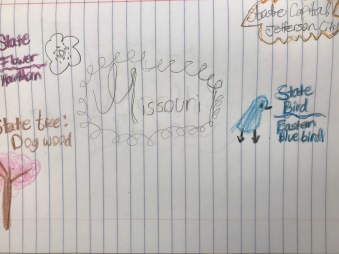
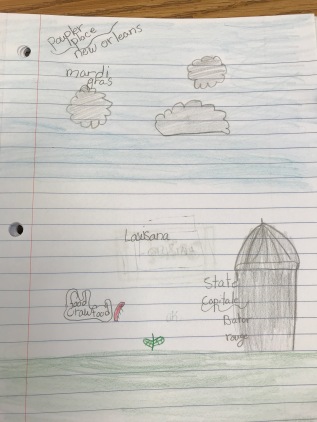
A few years ago I was looking for something new to do with state reports so I had students do them using Google Maps. Part of my desire to do something different came from frustration. I had been doing state reports near the end of the year. And that means NO ONE really wants to do them and I don’t want to read them – for the sheer fact that the quality isn’t there (end of the year, in 5th grade, last grade in our elementary school…see my point).

screen-shot-2017-02-05-at-1-38-06-pmHowever, when I changed the format to maps, the engagement and quality significantly improved. Students entered in the morning ASKING to do the ‘reports’. In the end, it was much more enjoyable for everyone! They still had to do the research and write a quality report.

State Report on Maps Directions.

Here’s a student example:

screen-shot-2017-02-05-at-1-39-54-pm

NOTE: While ‘Sate Reports’ are a tradition in 5th grade, it is not actually a standard. The standard, in California, states:

5.9 Students know the location of the current 50 states and the names of their capitals

This standard can be met by participating in Mystery Skypes/Hangouts and various other engaging activities. Just because we’ve always done something doesn’t mean we have to continue doing it.

Notes on Google Slides

Earlier this week my students started on a group project – Road to the Revolution. I had given them a Hyperdoc with the information on the French and Indian War. I gave them very specific guidelines and some questions to answer. The end product is an Animoto video. As I was walking around and helping, I noticed that a group of students had Google Slides open. I got worried. It took a long time for me to get my students out of the habit of wanting to create a slideshow for presentations. So I stopped and asked why Slides was open and “Please don’t tell me you’re creating a slideshow.” I was so relieved when one of the girls explained that they were using it to take notes! I didn’t even show them this trick. Yeah, proud teacher moment.
download One of the girls created and shared the slides with the rest of the group. Each person in the group had their own slide to take notes. I know this isn’t the first time this has been done, but I was really proud of my students for thinking of this. It is so much easier to take shared notes on Slides as opposed to Docs.

I LOVE it when students take learning into their own hands and make it work for them. Go Innovators!

Just another great example of what students will do when we give them the freedom to own their learning.

Tweet The Author

I recently wrote for the CUE Blog on how to own a premade curriculum. I spoke about taking it and tweaking it so that we, as teachers, feel the ownership instead of feeling like we have no say. Part of the way I take ownership in my math class is to use Andrew Stadel‘s Estimation 180 site. It’s a nice warm-up for the students and a great way to practice several of the 8 Mathematical Practices found in CCSS.

Most recently, we have been going through a series that has us estimate the value of coins in a container. It started with pennies, then progressed through until the day we estimated the value of dimes. We went through our normal routine – three minutes to discuss and find an estimate that is too low, too high, the actual estimate, and how they arrived at that estimate. Then, as normal, we viewed the video answer. Upon finding the answer, the RSP co-teacher got a discussion started. She disagreed with the answer. We left it at that so that the students could either agree or disagree. After they reviewed the previous two days’ answers and compared the answer to the dimes, the class determined that they too disagreed. Following the Mathematical Practices, they had to justify their reasoning, which they did. They reasoned that the pennies and nickels were mounding up to the point of almost spilling over, whereas the dimes didn’t quite reach the top of the container – same container.

Fortunately, with modern technology, we didn’t have to let the discussion die there. So, I got on my phone, hooked it up to the screen so the students could be active participants, jumped on Twitter, and sent Mr. Stadel a private message. This is what they wrote, well, told me to type:

screen-shot-2017-01-22-at-2-22-09-pm

After they got over the initial shock that one could actually do this, they got excited. Now, I have only been a participant in a few of Mr. Stadel’s sessions at conferences but was fairly certain that he would be open to what we had to say and would most likely respond. And he didn’t disappoint! The kids were VERY excited that he did respond. Okay, I was pretty excited too. This was such a real and relevant experience.

screen-shot-2017-01-22-at-2-27-05-pm

We then talked about how many more dimes we thought could fit. They determined that 1/2 roll more – 25 dimes – would be needed.

THIS is why we, as educators, need to be connected. THIS is why we continuously grow our PLN.

I would like to thank Mr. Stadel and Ms. Luke (RSP teacher) for making this all possible.

Winter Break Activities

This week I started my Winter Break. A glorious 3 weeks off from school. That also means that the students will most likely have 3 weeks off from practicing any of their skills, including reading. The no reading thing makes me sad. In an effort to combat the ‘Winter Break Slide’ (very similar to the Summer Slide) our principal requested that we give homework. As I am not a fan of homework, I designed a Winter Break Activities sheet.

2016-winter-break-activities-1

Since the students only need to choose 3 activities, it gives them some ownership and flexibility. I also tried to make them a bit more interesting as well as non-tech friendly. However, I think my favorite part is the Kindness Calendar. The calendar is ‘homework’ that everyone can agree on.

2016-winter-break-activities-2

One student noted that many items were ‘chores’. I told her it was my present to the parents!