Let me begin by saying that it has been several years since I have taught Science in my classroom; this is because I have ‘team taught’ in this time period. I took care of Social Studies/History while my teaching partner taught Science. This year, due to scheduling conflicts we weren’t able to continue. However, when I did teach Science all those years ago, it was rarely hands-on. And this was a HUGE disservice to students.
This year my school site is trying to focus on NGSS and really having kids EXPERIENCE Science. I love this focus. However, I have found that this shift is proving difficult for both my students and myself. Why? They have rarely done continuous (almost weekly) hands-on work. This is not a slight against my colleagues, I’m right there with them.
The push for all things testing (looking at you standardized tests and those that love them) has left us choosing to teach the testing subjects (mainly Math and ELA) or teach it all. Yes, CCSS has us shifting to more inclusive lessons, but as many districts purchasing curriculums for all subjects it’s not as easy as one would think. However, I digress.
 Chaos. That is the only word that accurately describes my classroom during Science. The kids lose their minds when given the opportunity to explore. For example, last week we were exploring different ‘white substances’ (insert El Chapo joke here) and their reactions to chemicals (water, iodine, and vinegar). Before we began we reviewed classroom norms: safety goggles on, observe, take notes, etc. I should have included ‘NO eating anything!’ Yeah, one of the substances was sugar and a few students decided it would be a good idea to taste test the ‘white substances’. Don’t get me wrong, they had a great time! They loved dropping the chemicals on the substances to observe the reactions. They were excited and engaged. That’s what we want, but they weren’t being very scientific. They were so ‘excited’ they observed all the reactions without taking a single note! #FrustratedTeacher Then, they started to ‘play’ with some of the mixtures. In their defense, they were observing what happened when the chemical and substance was thoroughly mixed. They did make some good observations, but still NO notes.
In the end, the lessons was a moderate (that’s being generous) success. And last week at our staff meeting we were talking NGSS. I brought up what I’d noticed. Another 5th-grade teacher noted that some of her students also ate the sugar. A 2nd-grade teacher noticed that her students lose their minds, too. It felt good not to be alone in this. After having a few giggles about our experience, it was nice to hear that everyone is still on board with the hands-on explorations. We know that this year might be tough, but the more we do it the easier it will become. The bottom line is that our students deserve the BEST education we can give them. Experiencing Science is part of that.


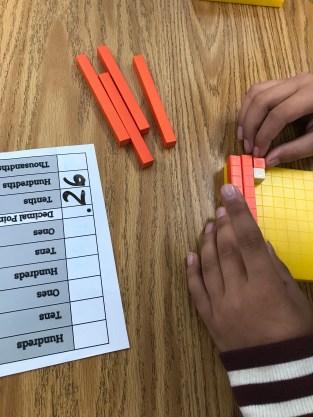 I don’t use manipulatives enough in math. Over the past few years, I have used fewer manipulatives than ever before. I take partial responsibility for this. I should have incorporated more into my lessons. However, other factors contributed to this: my district not providing any manipulatives, adopting a half curriculum (half because the state doesn’t recognize it) that makes no mention of using any, and the pressure to keep moving along the curriculum/pacing guide. Well, this year I am making a conscious effort to do better.


 I quickly realized while reading the first article with the class that it wasn’t going as planned. And for some insane reason, I powered on with the second article. What? Yeah, not sure what I was thinking (well, clearly I wasn’t thinking!). I did, however, extend the cat mini-report for a second day and scrap the dog report for next week. I also realized that I need to work up to two articles.


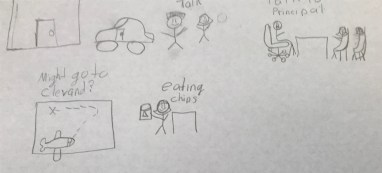
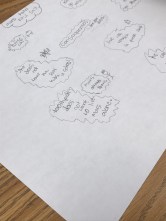 This is where I brought in sketchnoting. One complaint I hear over and over from teachers in my school/district is that the kids just don’t listen. I agree. The CELDT scores would also concur. By drawing the story, what they envision, they are forced to use different parts of their brain and listen. At first, a few students liked it but wanted to watch the episode. I explained that there wasn’t anything TO watch. They were not fans of this. However, by the end of the second episode, I didn’t hear any complaints. Some students had no problem drawing. Others listed the events in a note-taking style without any drawings. Others listed events and placed the notes in bubbles.
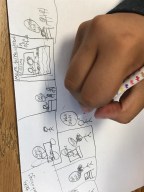 Mars Patel. I have to beg them not to listen on their own and go ahead. Others have settled on finding other podcasts they can listen to. I am thrilled, and excited, by their response and the possibilities. Next year, I plan to incorporate podcasts into my lessons more often.
