Snorkl + MathReps = Powerful Learning Moments

I’m sure I’ve mentioned Snorkl before, but it’s worth sharing again, especially because MathReps are part of the platform!

If you haven’t explored it yet, Snorkl is an AI-powered feedback tool that provides students with meaningful and personalized responses to their work. Teachers can create their own assignments or choose from Snorkl’s library of ready-to-go activities. These activities span all grade levels and subject areas – from kindergarten through high school – and include math, ELD, science, history, and language arts.

When a student completes an assignment, Snorkl analyzes their work based on the rubric (which it can even create for you!) and provides feedback and a score. It doesn’t provide answers, but instead encourages students to think deeper and revise their work.

A few reasons I ❤️ Snorkl:

  • It’s simple (not loaded with bells and whistles) and intuitive for both teachers and students.
  • Teachers can start from scratch or choose from a library of quality tasks.
  • Feedback can be provided in multiple languages, but teachers always see it in English.
  • Directions and feedback can be read aloud, making them perfect for young learners or multilingual students. (And it doesn’t sound robotic!)

Snorkl in Action: A Classroom Story

Recently, I had the opportunity to visit a 3rd-grade class to help them get started with Snorkl. (Total aside, but the teacher—Erin Daines—is one of the most naturally gifted educators I’ve ever met. I always learn something new in her classroom!)

On the first visit, we started simple with a fun activity from the Snorkl Library: “Introduce yourself and draw a picture of something you like.”

It was a low-stakes way for students to explore some of the whiteboard tools—pen, highlighter, shapes, and lines and get comfortable with the platform. We set it up so they could view and comment on one another’s work, and the engagement was instant. The room was buzzing with creativity and laughter.

When I returned the next week, we took things a step further. We made the next assignment collaborative, which meant students appeared under playful names, such as Zany Zebra or Curious Coyote. This anonymity helped students focus on ideas instead of popularity, something I really appreciate.
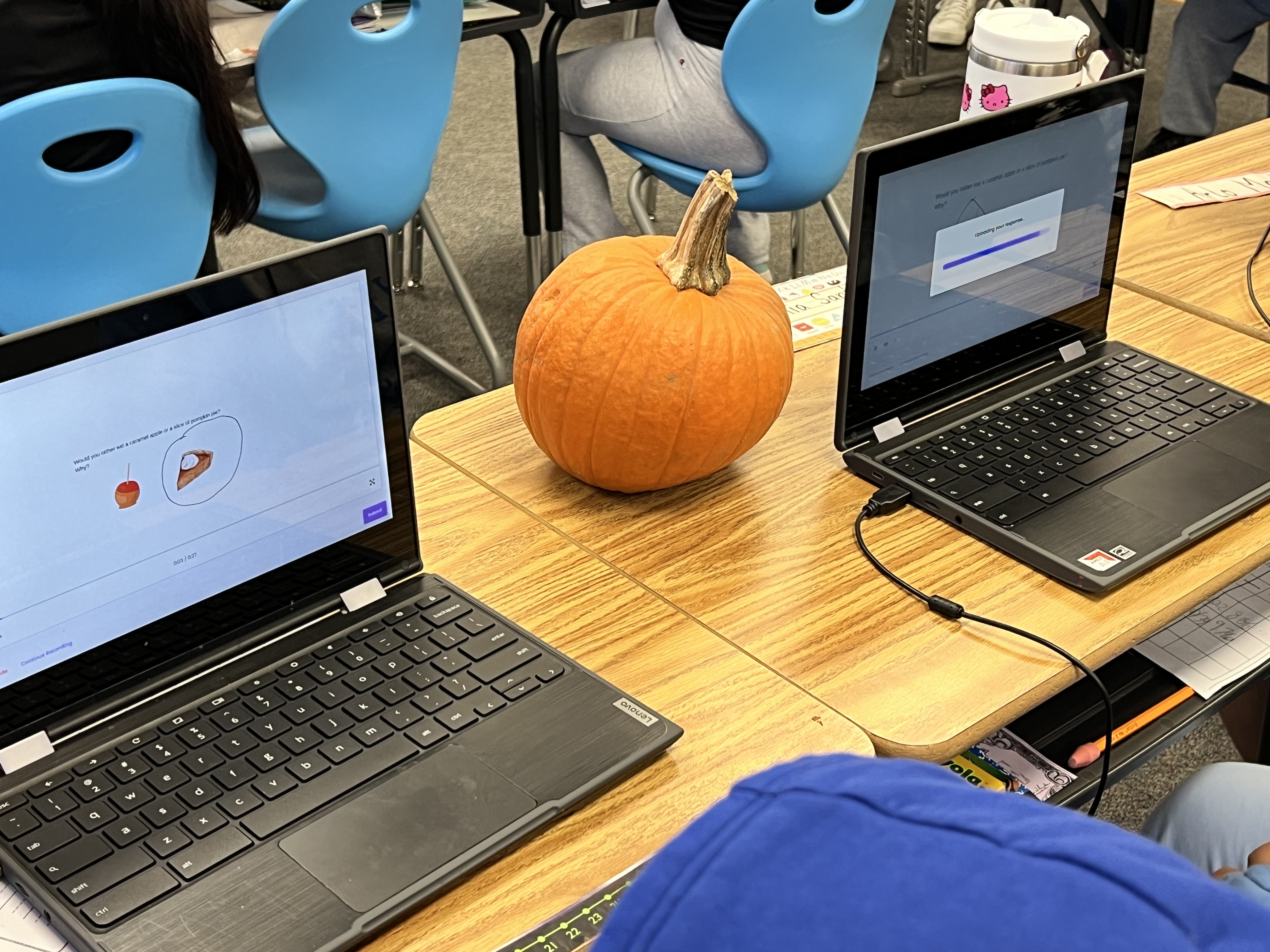
We started with a Would You Rather prompt: “Would you rather have a caramel apple or a slice of pumpkin pie?”

Students had to choose one and explain why. One student chose “neither” and explained his reasoning. Snorkl acknowledged his logic but scored it lower and challenged him to pick one, since the task was to make a choice, an excellent learning moment in a safe environment.

Then came the highlight: a 3rd Grade MathReps addition activity in Snorkl!
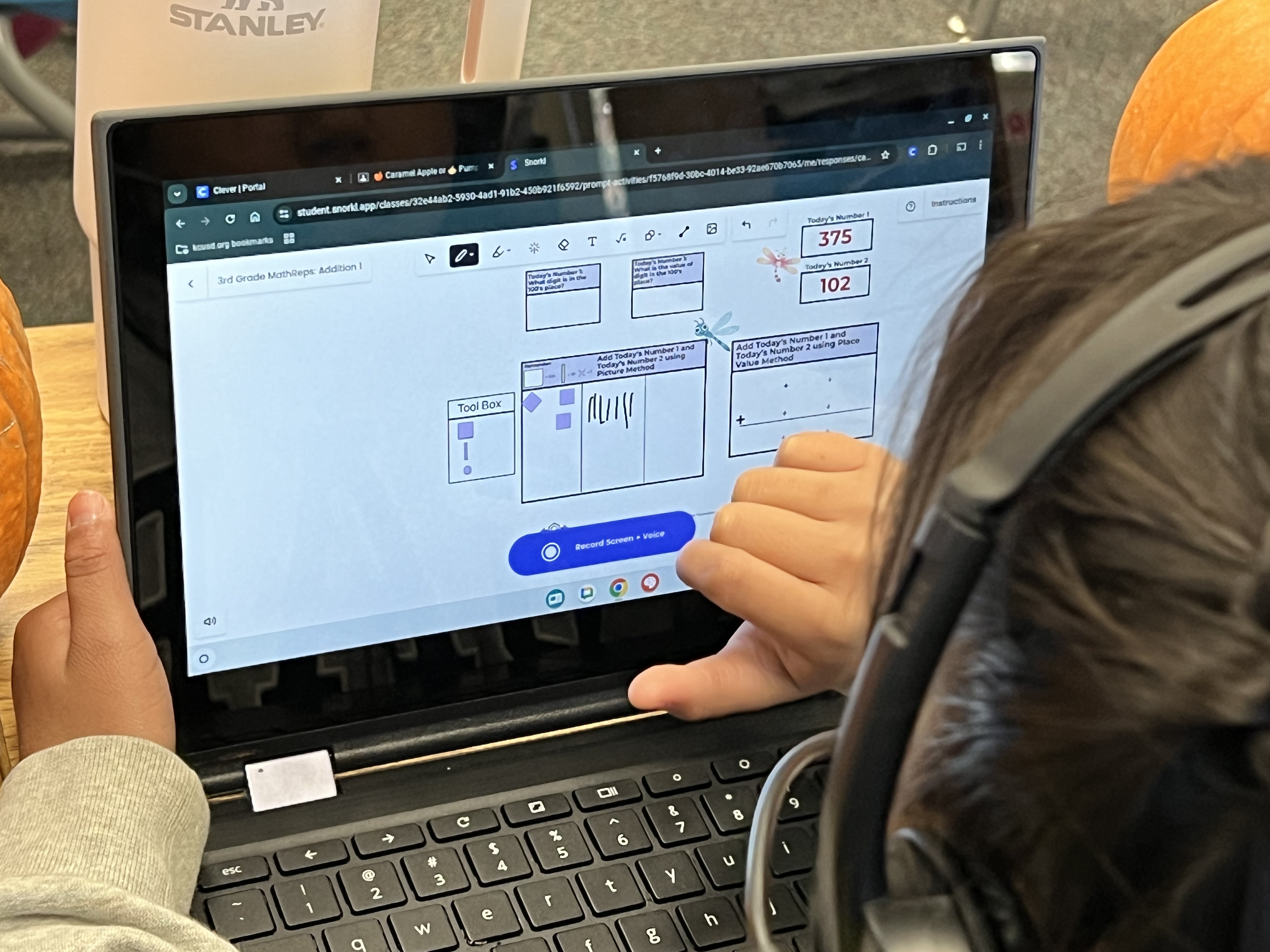
Students completed the task, then recorded their explanations to show their thinking. We know that when students can explain a process, their understanding deepens. Snorkl provided instant, helpful feedback that supported this reflection.

The best part? When students didn’t earn a 4/4, they wanted to improve. They read or listened to the feedback and tried again: some two or three times! The combination of MathReps and Snorkl fostered perseverance, reflection, and a sense of pride in learning. It was so exciting to witness.

Try MathReps in Snorkl!

Yes, MathReps are live in Snorkl—you’ll find them under the EduProtocols section. Currently, activities are available for grades K–4, with additional 4th-grade content and upper-grade levels forthcoming.

If you’d like to beta test upcoming MathReps in Snorkl, I’d love to have you join in! Just reach out and let me know.

So go ahead—try a MathRep in Snorkl. Let your students explore, explain, and shine.
Death by Laminator: A Cautionary Tale

There I was, in the staff lounge, ready to take on a brand-new school year. The 3rd-grade teachers were gathered in a semi-circle, swapping stories and laughing about their summer and getting ready for the new school year. I, meanwhile, was at the laminating machine — fully impressed that we had the good stuff this year. You know… the thick laminating plastic. Premium.

I was happily feeding in Clever Badges for the Kinder and 1st grade teachers, feeling oddly proud of my laminating skills, when suddenly… I felt it.

The pull.

Not an emotional pull. Not the pull of destiny.
A literal pull — from the laminator.

At first, I thought, “That’s weird.” Then I tried to step back and realized… I was stuck. In. The. Laminator.

That’s right. I almost died by laminator.

What’s left of my dignity, laminated for all eternity.

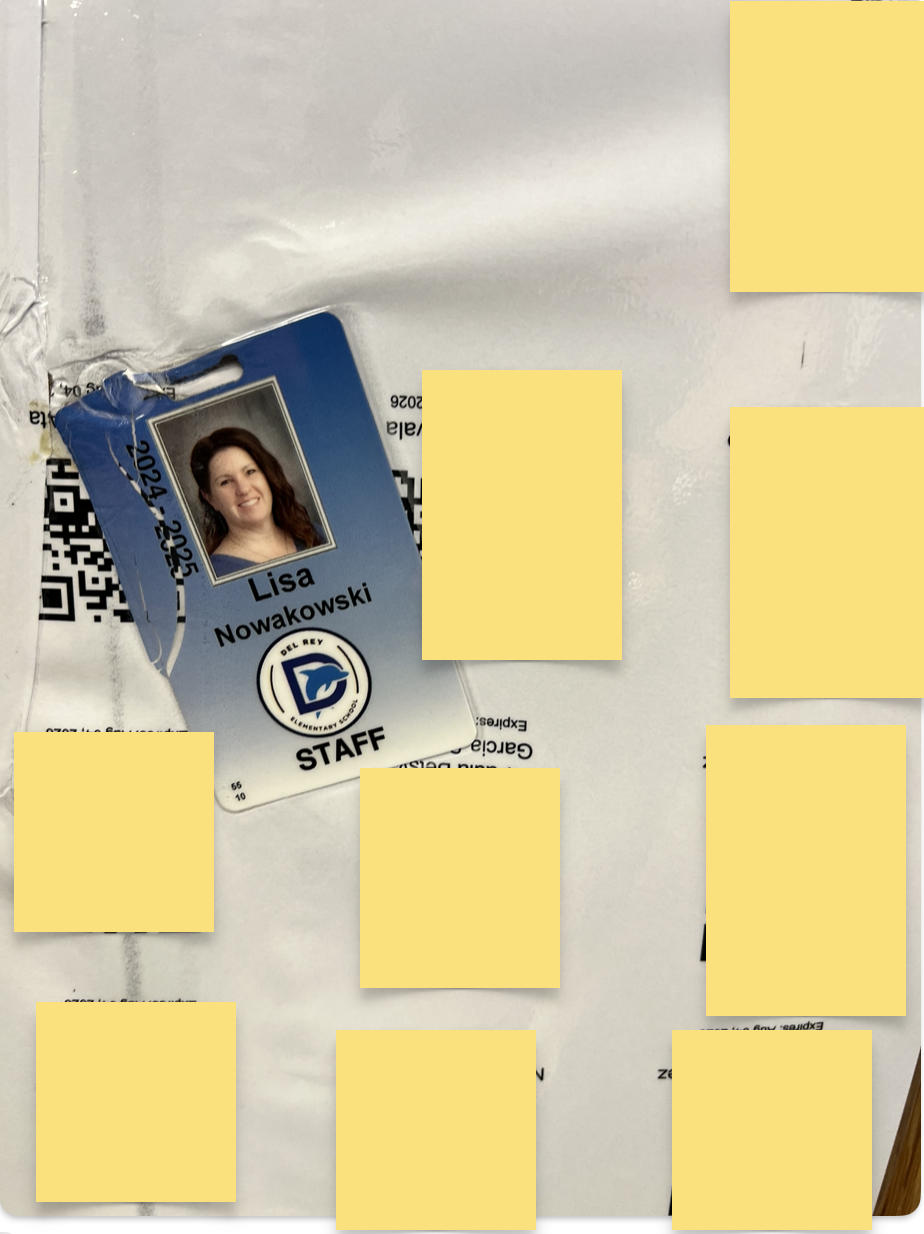
I squeaked out a panicked little “Ahhh!” and the entire 3rd grade team leapt into action like a squad of heroes in a very low-budget action film. Turns out, my lanyard — with my keys and name badge — had been sucked straight into the machine.

We slammed the stop button.
We breathed a sigh of relief.
And then… wave two of panic hit me.

My keys were lodged between the rollers. If you know anything about laminators (and honestly, who does until disaster strikes?), you know that messing with the rollers is basically laminator homicide. I did not want that on my record.

This is when I remembered the genius of my breakaway lanyard. I unclicked it, freed myself from the beast, and began the slow, shame-filled walk to the office. Head hung low.

Now, it’s the beginning of the school year, which means the secretary is juggling about 47 fires at once. I very gently asked for her help. She looked at me and said, “You didn’t break it, did you?”

Inside, I was thinking, Goodness, I hope not… because I like having friends here. I also like the secretary.

Could I have tried to fish out the keys myself? Sure. But that would have almost guaranteed turning a mildly embarrassing story into a full-on “Lisa killed the laminator” legend. And listen — school secretaries are magical. They can fix nearly anything. Copier jam? Fixed. Wi-Fi down? Fixed. Laminator holding your keys hostage? Also fixed.

She followed me in, took one look at the situation, then at me, and asked, “What in the world did you do?” Then she freed my keys — which, fun fact, were now scorching hot.

Lessons learned:

  1. Always watch your lanyard.
  2. Know when to call for backup.
  3. If we get a safety video on “proper laminator use” next year, my bad.

Oh — and when I didn’t return to my room (which I share with two other coaches), one of them came looking for me. She found out what happened and laughed so hard she was crying, and I’m pretty sure she needed a minute to breathe.

And that’s how I started my school year: by nearly becoming a cautionary tale in the staff handbook. Hopefully, yours was or will be better than mine.

Fail Forward

Today ended the first week of the 2018-19 school year. For the most part, it was a great success. I had fun, the kids had fun, and it was low pressure. I did have the option to give a reading test this week, but I thought, “Who wants to take a test the first week of school?” And honestly, it won’t do any harm to wait until next week (but that’s another blog post altogether).

Along with all of this week’s successes, I did have a few failures. The biggest one was when I, ambitiously, decided that we would do two mini-reports (created by Jon Corippo). I thought two short articles on cats would be doable for a quick mini-report in one day…done as a group…Oh, how wrong I was.

I quickly realized while reading the first article with the class that it wasn’t going as planned. And for some insane reason, I powered on with the second article. What? Yeah, not sure what I was thinking (well, clearly I wasn’t thinking!). I did, however, extend the cat mini-report for a second day and scrap the dog report for next week. I also realized that I need to work up to two articles.
So…Next week we will read one article on dogs. We will take notes together. Together we will begin writing our mini-reports. I will have them do a portion of it on their own. Yeah, I’m learning. All it takes is one painful mistake for me to remember where to start. THEN, the exciting part is watching how far they will grow!

Plastic Times: In the Beginning

This year we have been focusing on Book Studies. We have read several great works of literature including Love That Dog and Bridge to Terabithia. Recently, we picked up another Newberry Award winner. After 16 pages most of us were having trouble ‘getting into’ the book. We weren’t even through the first chapter yet – it was 24 pages – when I stopped and asked the students what they thought. At first, they were reluctant to be completely honest. They said things like, ‘it’s okay’ and ‘eh’. So yeah, when I gave them my honest opinion, they opened up a bit more. I have difficulties with reading comprehension, which they all know about, and I simply told them that I was having trouble ‘getting into’ the book. Collectively, they all breathed a sigh of relief and opened up. In the end, we decided to put the book down – at least for now – and move on to something different.

This is where Plastic Times comes in. Last year my class wrote, directed, produced, and acted in their own movie. It was an empowering experience. Within the last year, A Tale Unfolds has expanded their resources and restructured their payment system. Essentially, they have a ‘suggested’ price but will accept what you are willing to pay. Yep, even if you want to pay nothing! Which is brilliant, since their generosity makes me want to pay the suggested price and not try to get a cheaper price. A Tale Unfolds has partnered with several quality organizations, including CNN, to create top quality lessons. Teachers, everything is included!

Anyway, after the book fail, I wanted my students to participate in something meaningful, fun, and most importantly, rigorous. So, I went onto A Tale Unfolds and was immediately drawn to Plastic Times.  This lesson incorporates research, forming opinions on facts, (high quality) writing, and PBL.

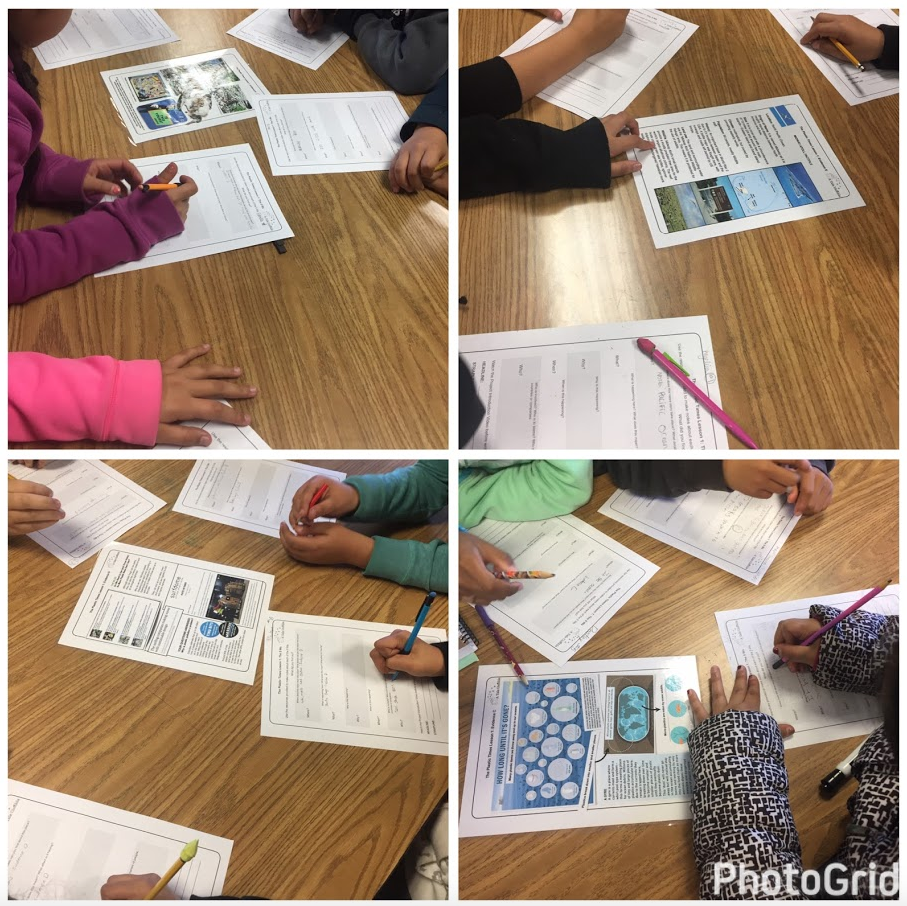
screen-shot-2017-02-25-at-5-26-25-pmFriday we started our new path. The first lesson has students reviewing five different pieces of ‘Evidence’ (all factual) and taking notes. They are investigative reporters learning about the impact of plastic on our environment, animals, and us. Then, they are to form an action plan. When each group received their ‘Evidence’ I don’t think they thought I would stick to the 4-minute timer. I printed one copy of each piece of evidence and so they had a certain amount of time to review and take notes before passing it along. After the first round, they got the message. They then watched a 14-minute video produced by CNN to further their knowledge on the subject. Honestly, I have never seen the students so engaged. They really wanted to get all the information provided and answer all the questions on the guiding worksheet. And that was only day 1! I can’t imagine what the rest of the three weeks will bring, but I’m excited to see where this takes us!
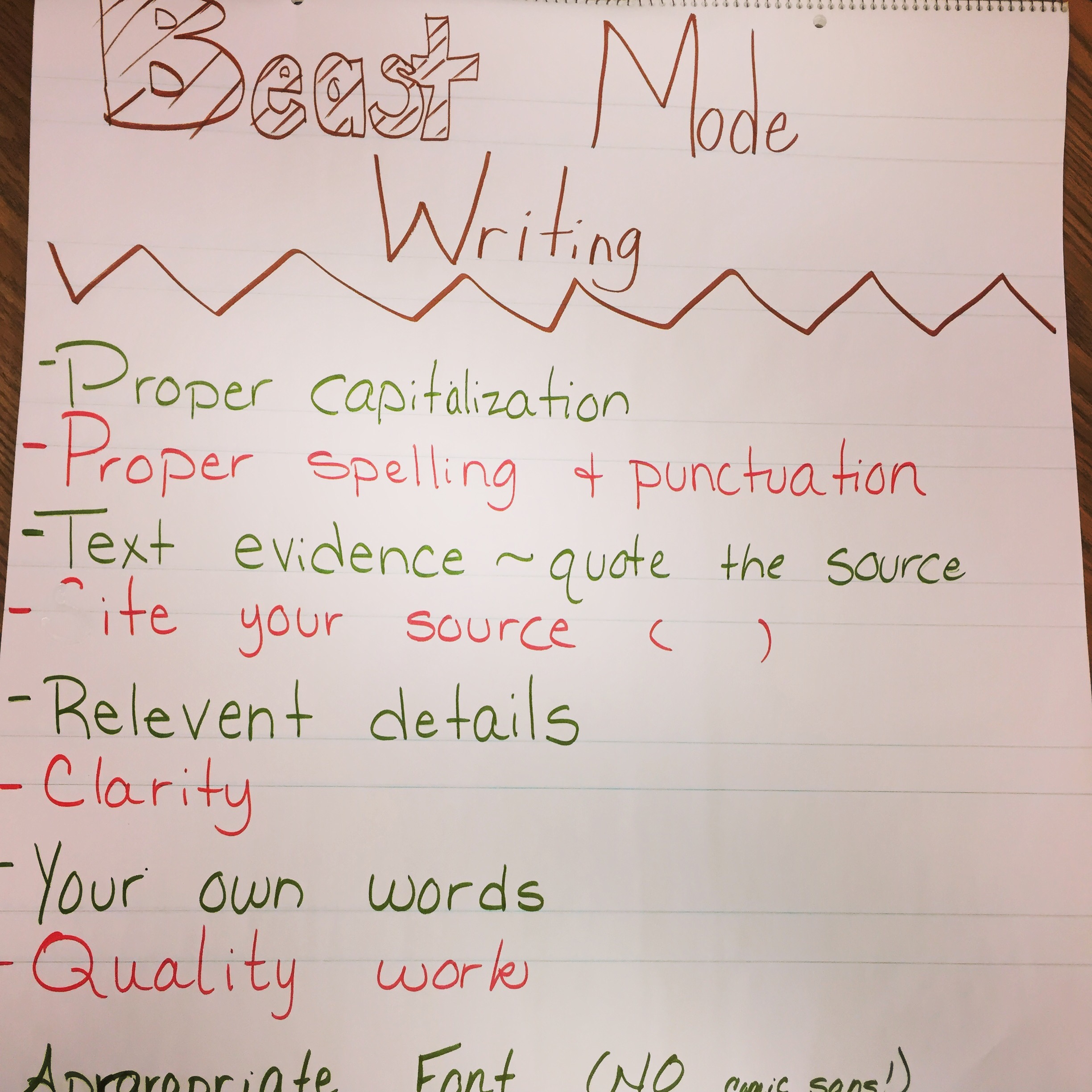

Beast Mode Writing

We have been reading Bud, Not Buddy (fantastic book; read it if you haven’t already) and writing in our Response Journals. The kids have been doing an ‘okay’ job, and I want to challenge them. So yesterday, I asked a few students if I could display their work to the class and we would talk about it. That’s when one student shouted out, “Put mine up.” I asked if I would be impressed (I tell them to impress me as a challenge). He assured me that his writing was ‘Beast Mode’.

This is when I diverted from my lesson. I asked what would a ‘Beast Mode Writing’ look like. What attributes would it have? And so the class generated a list of what they thought ‘Beast Mode Writing’ would be (or to the rest of us, a quality writing piece).

And this is what they said:

img_4741

For a while now, I have struggled with Rubrics. On one hand, I like that the students know what is expected. On the other, I feel that some look at the least amount of work needed to pass and do just that. However, with this, it gives the students the highest standard, nothing else. This way, they will shoot for the best and nothing less. I like it! And it was student generated to boot! And yes, that includes the – Appropriate font (size and style). Okay, I had some influence on the ‘NO comic sans’ earlier this year.

Writing With Literacy Shed

I know I’ve written about this site in the past. I thought it deserves to be talked about again, especially with the beginning of the school year upon some of us. So…. If you STILL haven’t checked out The Literacy Shed, do it. Like right now!

Literacy Shed

What is it?

Simply put, it is an amazing – FREE – writing resource. It will work with any writing program you have going on in your classroom or district. The creator and curator, Rob Smith, explains:

“The aim is to provide high-quality resources that can be used in stand-alone literacy lessons, can form the basis for a whole Literacy unit or can support literacy units that you already have in place.”

Rob has most certainly provided those high-quality resources.

AND, many of the video resources are non-verbal making them perfect for the ELL students.

Why use it?

First of all, it has beautiful quality videos. In addition to the videos, the site has several lesson ideas for each video. This isn’t put together by some corporation or publisher. This was created by a teacher who freely shares his knowledge and ideas.

About the Sheds

There are ‘Sheds’ that are essentially themes. There are so many sheds, and more being added, there is no shortage of resources. I love looking around the site and getting ideas. Word of warning; once you jump into this rabbit hole, it may be a while before you emerge. But it will be well worth it! Currently, I’m looking at the Rio Olympics Shed and getting REALLY excited about the possibilities for my classroom.

One Last Thought

I wish I were in the UK so that I might attend a training. Maybe someday there will be a training here….


Movie Premiere

I have been doing much reflecting, as most teachers do, upon this past school year. To say that there were many ups and downs would be an understatement. However, one of the best – if not THE BEST – thing I did this year was to have my students write, direct, act, and produce their own movie. With a full-fledged Red Carpet Event!

Thanks to Dominic and his efforts in A Tale Unfolds my students were able to have an incredibly memorable 5th-grade experience. This was, by far, one of the most fun and rewarding experiences in my teaching career. And I can’t wait to do it again! Throughout the process, I had been writing about this (A Tale Unfolds: Part 1A Tale Unfolds & Writing,   Writing and the CAASPP) and aligning it to 5th-Grade CCSS ELA. And here are the results of their efforts:

Red Carpet Event:

Cast Interviews:

Movie:

Once again, thank you, Dominic, for creating a high quality, rigorous program.

Writing and the CAASPP

writing.jpegThis week my students have been taking the CAASPP Test (SBAC). As you may, or may not, know, there is quite a bit of writing on it. This week we focused on the ELA portion. As a teacher, these tests kill me. I know what my students are capable of and know that they are making simple mistakes that they don’t normally make. That being said, I had several students transferring what they have learned about writing various sentences to this test, and more importantly, to everyday life.

Over the past several months we have been working on writing our own movie script using A Tale Unfolds, which comes out of the UK. I have written about it here and here. One of the strengths of the program is its writing aspect. The kids are constantly writing! Each week they are introduced to another type of sentence. One week it was appositives, another it was complex, and yet another had ‘if, if, if, then’ sentences. The program uses Alan Peat‘s modeling.

These are some of the things the students shared with me, with great pride:

  • Ms. N., I used an ‘if, if, if, then’ sentence.
  • Ms. N., I used a 3 -ed sentence.
  • I used an appositive. (She then showed me. It was beautiful! I got a little teary-eyed. Yeah, it was that awesome.)

I really don’t think my students would have produced the type of writing they did this week without the constant writing they have been doing for their script. The way the different sentences are introduced and the experience the students have with ‘playing’ with the new sentences has been a benefit to my students.

On a side note, I showed the first portion (without beginning credits/title/etc) of their movie to them. They are so excited! They are dying to see more. I even began showing other teachers small snippets. They were impressed. It’s been a fun experience!

A Tale Unfolds & Writing

At the beginning of February, I began A Tale Unfolds. Since then, I have noticed an improvement in my students’ writing. Their sentences are more interesting and they try to vary the types of sentences they use. Here is a picture of a student who has writing difficulties, practicing her sentences in her spare time!

Photo Credit: Tressa Luke

Another teacher was so impressed, she took these photos and HAD to share with me! This is awsome! Look  at all those adjectives.

A Tale Unfolds: Part 1

a tale unfolds Next week I will start A Tale Unfolds with my class. It is an 11 week ELA/ELD/Writing unit where the end product is a movie that the class has written, performed, and taped. As this is a UK Standards aligned unit, I looked over the lessons for the upcoming week and was pleased that on Day 1 ten (5th grade) CCSS are covered. While the lessons are complete on their own, I will be able to enrich them with conversations and expectations.

Along with the lesson plans, there are Promethean Flipcharts and SmartBoard resources, a ‘book’ (2 levels), and in certain cases leveled resources (depending on the activity). The focus of the writing is on quality, not quantity.

Overall, I am excited to get the unit started. I think the students are really going to enjoy it.