Snorkl + MathReps = Powerful Learning Moments

I’m sure I’ve mentioned Snorkl before, but it’s worth sharing again, especially because MathReps are part of the platform!

If you haven’t explored it yet, Snorkl is an AI-powered feedback tool that provides students with meaningful and personalized responses to their work. Teachers can create their own assignments or choose from Snorkl’s library of ready-to-go activities. These activities span all grade levels and subject areas – from kindergarten through high school – and include math, ELD, science, history, and language arts.

When a student completes an assignment, Snorkl analyzes their work based on the rubric (which it can even create for you!) and provides feedback and a score. It doesn’t provide answers, but instead encourages students to think deeper and revise their work.

A few reasons I ❤️ Snorkl:

  • It’s simple (not loaded with bells and whistles) and intuitive for both teachers and students.
  • Teachers can start from scratch or choose from a library of quality tasks.
  • Feedback can be provided in multiple languages, but teachers always see it in English.
  • Directions and feedback can be read aloud, making them perfect for young learners or multilingual students. (And it doesn’t sound robotic!)

Snorkl in Action: A Classroom Story

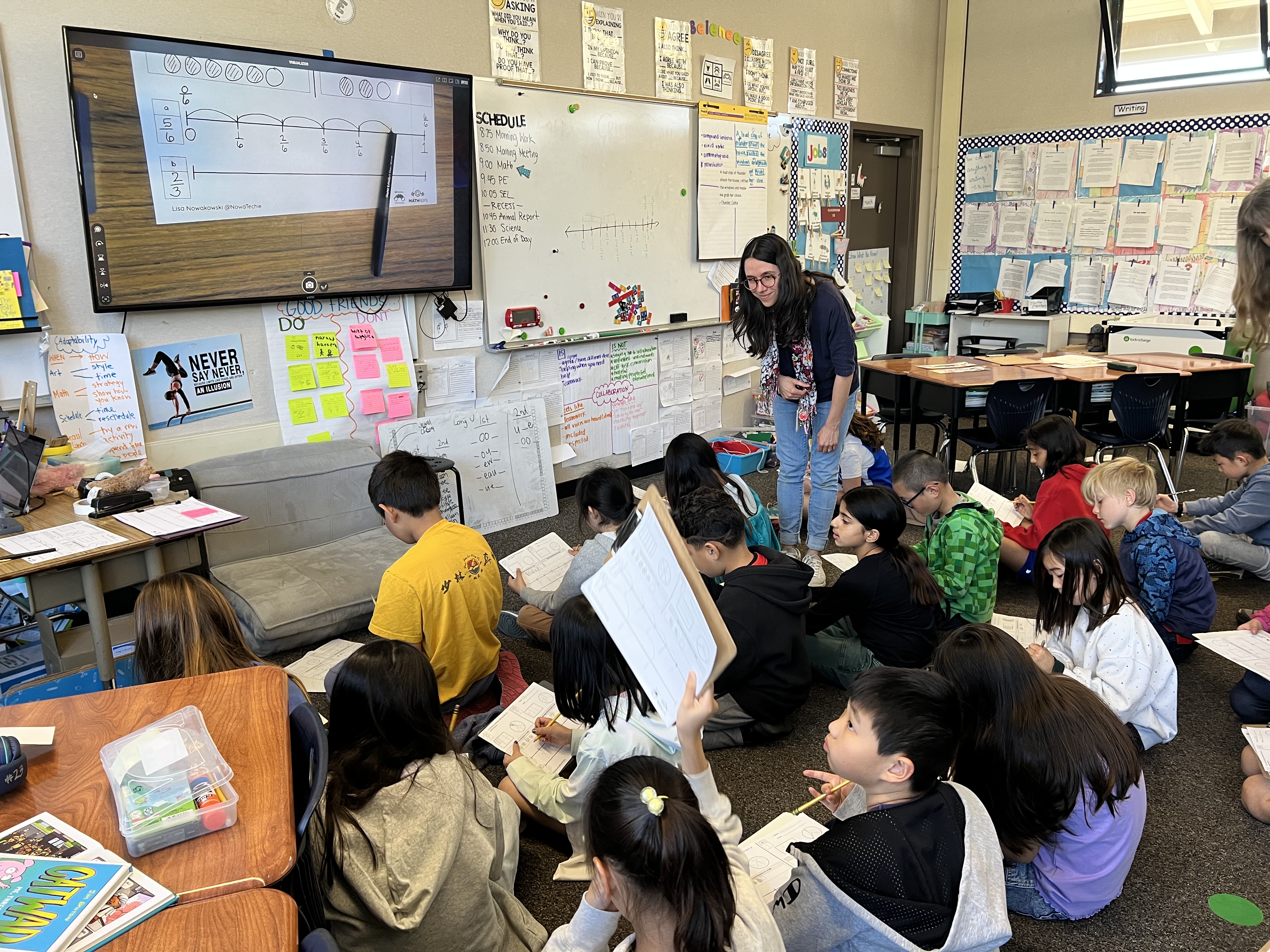
Recently, I had the opportunity to visit a 3rd-grade class to help them get started with Snorkl. (Total aside, but the teacher—Erin Daines—is one of the most naturally gifted educators I’ve ever met. I always learn something new in her classroom!)

On the first visit, we started simple with a fun activity from the Snorkl Library: “Introduce yourself and draw a picture of something you like.”

It was a low-stakes way for students to explore some of the whiteboard tools—pen, highlighter, shapes, and lines and get comfortable with the platform. We set it up so they could view and comment on one another’s work, and the engagement was instant. The room was buzzing with creativity and laughter.

When I returned the next week, we took things a step further. We made the next assignment collaborative, which meant students appeared under playful names, such as Zany Zebra or Curious Coyote. This anonymity helped students focus on ideas instead of popularity, something I really appreciate.

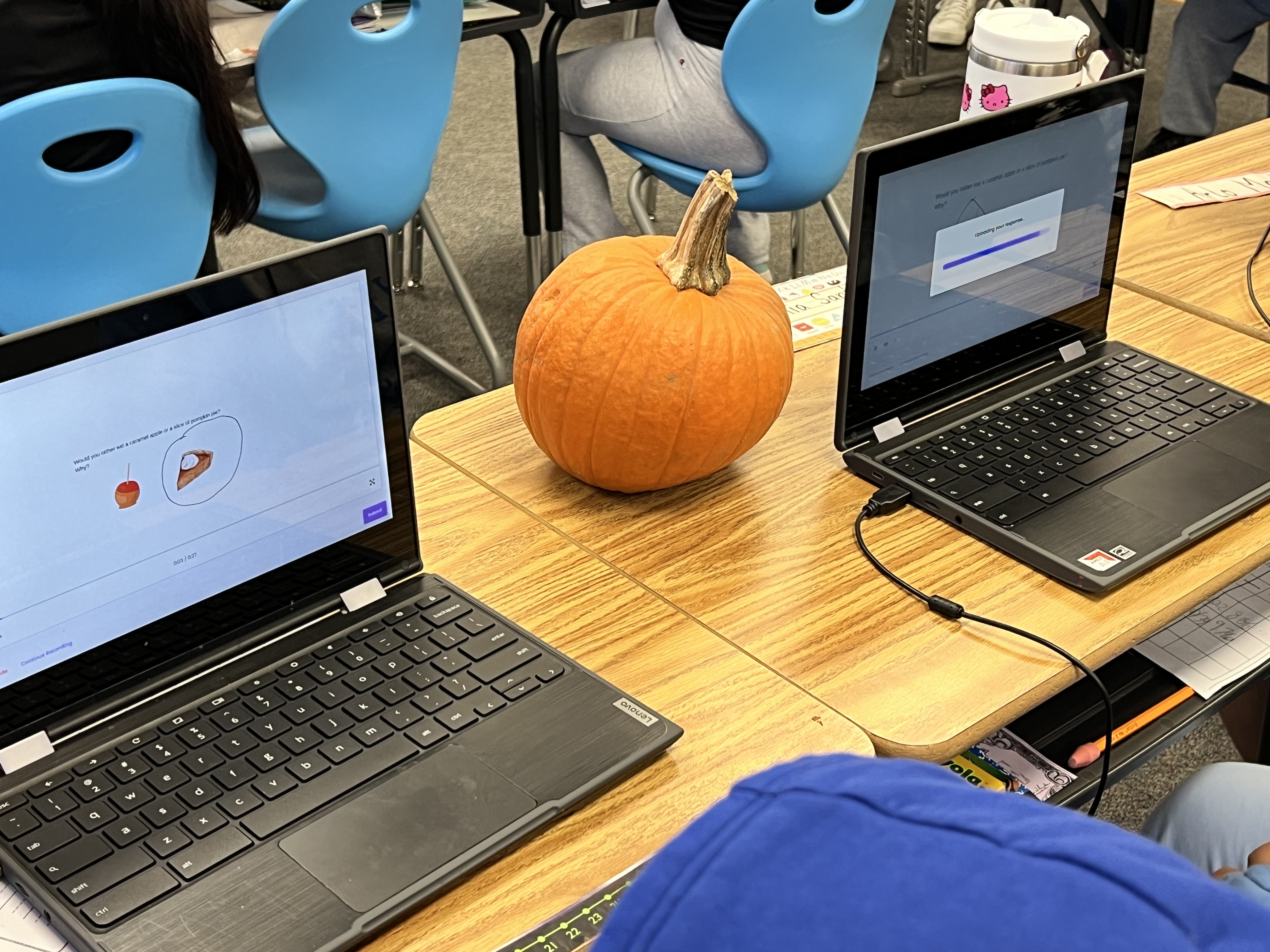
We started with a Would You Rather prompt: “Would you rather have a caramel apple or a slice of pumpkin pie?”

Students had to choose one and explain why. One student chose “neither” and explained his reasoning. Snorkl acknowledged his logic but scored it lower and challenged him to pick one, since the task was to make a choice, an excellent learning moment in a safe environment.

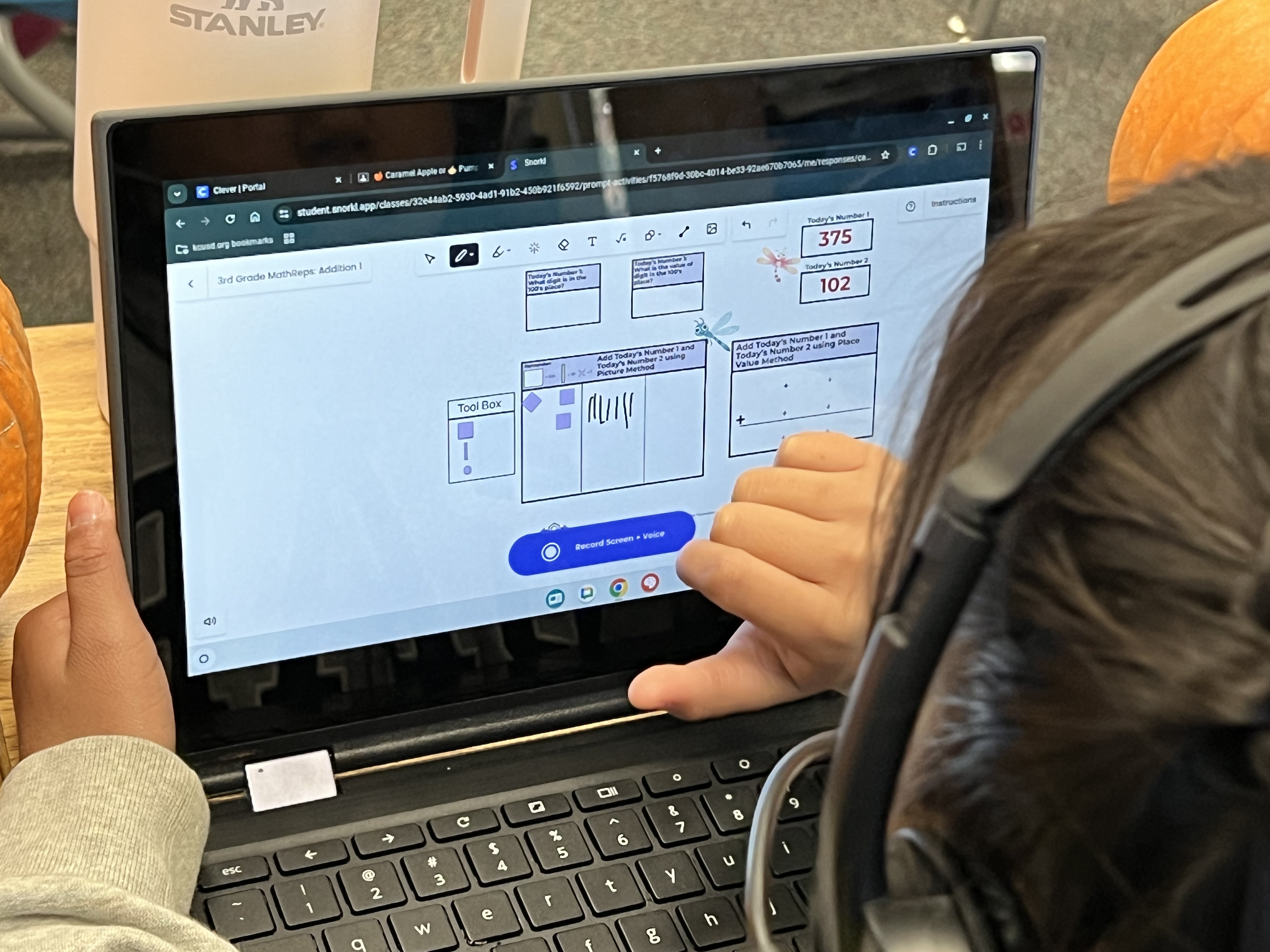
Then came the highlight: a 3rd Grade MathReps addition activity in Snorkl!

Students completed the task, then recorded their explanations to show their thinking. We know that when students can explain a process, their understanding deepens. Snorkl provided instant, helpful feedback that supported this reflection.

The best part? When students didn’t earn a 4/4, they wanted to improve. They read or listened to the feedback and tried again: some two or three times! The combination of MathReps and Snorkl fostered perseverance, reflection, and a sense of pride in learning. It was so exciting to witness.

Try MathReps in Snorkl!

Yes, MathReps are live in Snorkl—you’ll find them under the EduProtocols section. Currently, activities are available for grades K–4, with additional 4th-grade content and upper-grade levels forthcoming.

If you’d like to beta test upcoming MathReps in Snorkl, I’d love to have you join in! Just reach out and let me know.

So go ahead—try a MathRep in Snorkl. Let your students explore, explain, and shine.

Celebrating Creative Teaching Techniques in Classrooms

One of the things I love most about my role as an instructional coach/tech TOSA (Teacher on Special Assignment) is the opportunity to visit all the elementary sites in our district. Each school has its own rhythm and energy, and every teacher brings something special to the table. I get to see it all – the creative ideas, the quiet moments of connection, and the unique ways teachers make their classrooms feel like home for their students.

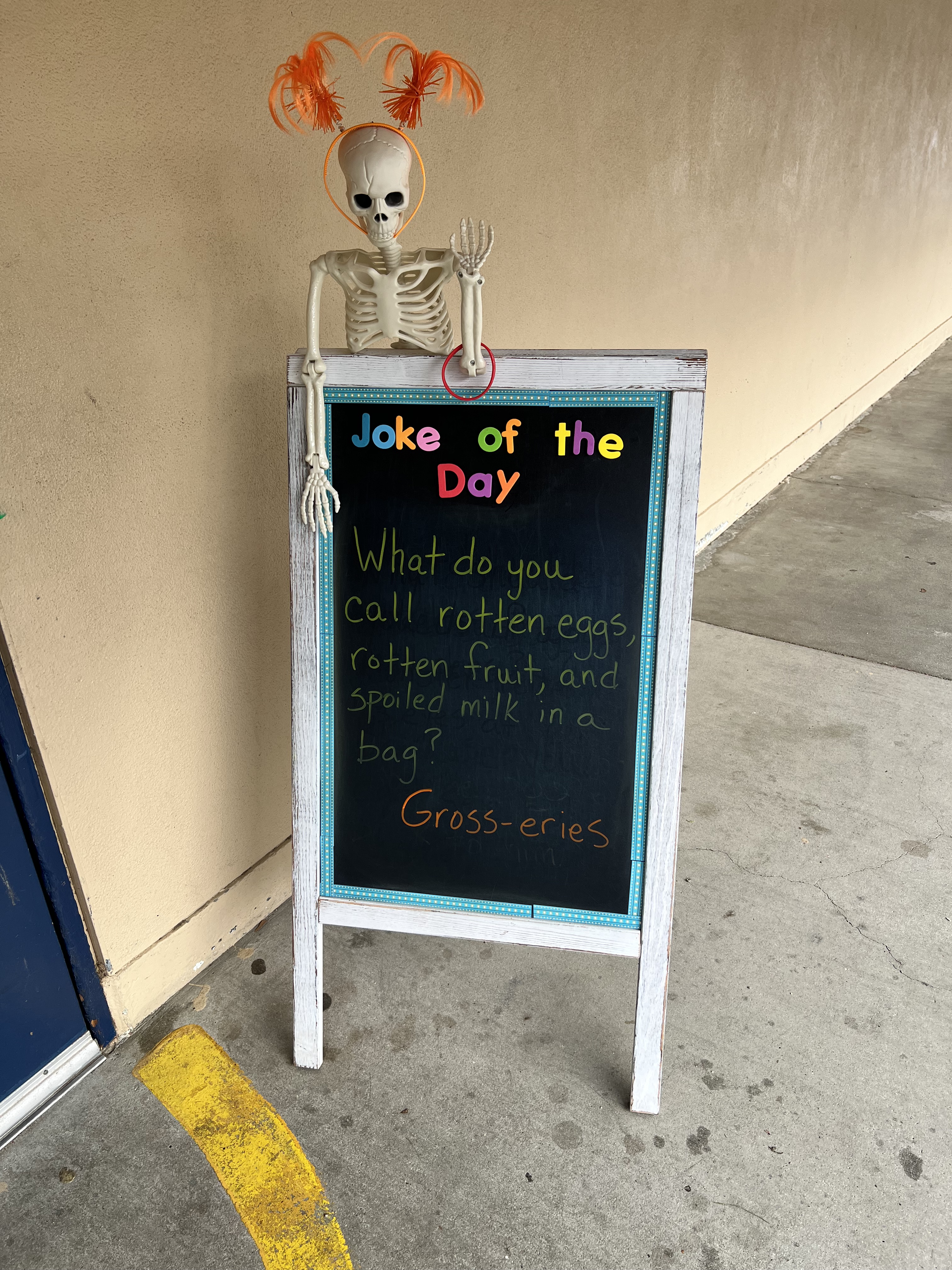
For example, at one school, a teacher sets out a small chalkboard outside her classroom each day. On it, she writes a Joke of the Day – something silly and lighthearted, but always guaranteed to get a few smiles and spark conversation. (Today’s joke: “What do you call rotten eggs, rotten fruit, and spoiled milk in a bag? Gross-eries!”) I love how she’s zhuzhed up the board, complete with a festive skeleton and a splash of color. It’s such a small thing, but it builds community and connection.

Another teacher has found a meaningful way to help students express themselves through emoji writing. I’m still learning exactly how she structures it, but I know students get the chance to write about their thoughts and feelings, and share them if they choose. It’s such a beautiful example of using something familiar and fun to help students build emotional awareness and voice.

Then there’s a teacher at another site who’s rethinking her approach to reading. She’s diving into novel studies, aligning them to the standards while keeping student engagement and learning front and center. It’s exciting to see teachers continually reflect, innovate, and take risks for the sake of their students.

Every week I’m reminded that innovation in education doesn’t always come from big changes—it’s often found in the small, thoughtful touches teachers bring to their classrooms.

The teachers in our district are doing amazing things every single day. I feel incredibly lucky to have a front-row seat to their creativity and care. One of my favorite parts of my job is being able to share these ideas, anonymously, of course, across the district. When I visit another site and a teacher says, “I’ve been wanting to try something new; any ideas?” I get to say, “Actually, I saw someone doing something really neat…”

I love this perk of my job. I love celebrating great teaching and helping ideas spread from one classroom to another. Because when we share, we all grow, and our students benefit most of all. And if you know me, you know that I’m a chronic over-sharer!

Your turn: What’s something small but meaningful you’ve seen or done in a classroom that builds connection or joy? Share it in the comments or with a colleague—it might just spark an idea that makes someone else’s classroom shine a little brighter.

Customize Your MathReps in Snorkl Easily

This past summer, I’ve been sharing insights about the MathReps collection available in Snorkl. In my recent post, New MathReps Available in Snorkl Library, I provided a quick guide on how to easily navigate the platform to discover your favorite MathReps. Don’t miss the latest video that demonstrates how to seamlessly add these resources to your library and customize them to suit your specific needs.

Let’s Talk Math

My current position, Tech TOSA/Instructional Coach, affords me the opportunity to go into teachers’ classrooms and share the amazing things that are happening. So here I am sharing what this talented first-grade teacher in my district is doing.

Earlier in the week, I was in my Tech TOSA role. I went into this first-grade classroom to teach a lesson on coding using Beebots. I’m sure you’ve figured out this is not what I’m here to discuss. When I walked in, I noticed this chart on her board. What struck me about it was its simplicity. As you can see, it has some basic concepts and images to accompany it. What also drew my attention was the title: Let’s Talk Math. This implies that Math is something that should be discussed. It’s not something we do in isolation or keep to ourselves. While I did not have time to discuss with the teacher what she does with this chart, I know her well enough to say that she references it consistently.

I think it’s worth noticing that this is not flashy, cutesy, or Pinteresty in any way. Too often, we teachers ‘do too much,’ as the kids would say. That isn’t to say that those who make their room match or aesthetically pleasing “do too much.” It’s just to say that if you’re not that kind of teacher—like me—that’s okay. Having something as simple as a chart on your whiteboard works just as well. The important thing here is accessibilty – both in terms of understanding and placement – is most important. If it’s in a place where students can’t see it, like being too high up, or teachers don’t reference it, it’s no good to anyone.

What is my point in all of this? I wanted to celebrate the awesomeness of what this teacher is doing and highlight its simplicity. What are some simple ways you keep your students engaged while encouraging discussions?

NOTE: You may have noticed that I use hyphens in my writing. This has been a thing for me for many years: you can find them in previous posts dating back to pre-AI. I also know that AI uses them often, and it is one of the tell-tale signs that something has been written with AI. I felt the need to point out that while I use them, they are not a result of AI, just of my own knowledge of how to use them.

Why Manipulatives Matter Beyond Early Grades

In the early grades, it’s not uncommon to see math manipulatives used daily in the classroom. Teachers pull out connecting cubes, counters, base ten blocks, and more—tools that help students build a concrete understanding of math concepts. Whether they’re exploring different ways to make 10 or practicing addition, these hands-on tools support their thinking in meaningful ways.

This follows the CRA model—Concrete, Representational, Abstract. We start with the concrete, like manipulatives. Once students have a solid grasp of the concept, we move into the representational, such as drawings or visual models. Finally, we introduce the abstract, using numbers and symbols alone. For example:

  • Concrete: Use connecting cubes to model 5 + 3
  • Representational: Draw 5 circles and 3 more
  • Abstract: Solve 5 + 3 = 8

But here’s what I’ve been thinking about lately: why do we often abandon manipulatives once students move into the upper grades?

Sure, by fourth or fifth grade, many students no longer need cubes for basic addition and subtraction. At that point, they’ve likely mastered those foundational skills and can work abstractly. But what about when we introduce new, more complex concepts—like volume in upper elementary or integers in middle school?

Volume is a great example. It’s a tough concept to grasp without something physical to hold or build. Yet so often, we hand students a formula and expect them to just “get it.” What if we instead gave them time to build with cubes, experiment, and see what volume means before jumping into the numbers?

The same goes for concepts like negative numbers. A number line or clothesline math activity can help students visualize and understand the relationships between positive and negative values. Why skip that step?

All this has me wondering: Is it a time issue? A training issue? Have we simply forgotten how powerful manipulatives can be for older students, too?

I’d love to hear your thoughts.
Do you use manipulatives in your classroom? What grade do you teach? What concepts do you use them for?

Let’s keep the conversation going—and keep math meaningful at every grade level.

Experiencing MathReps Success at Cipriani Elementary


A few weeks ago, I had the absolute pleasure of visiting Cipriani Elementary School in Belmont, California, and let me tell you—it was a fantastic day that filled my heart.

Throughout the day, I was met with warm smiles, welcoming teachers, and the most amazing group of students. I had the opportunity to visit several classrooms ranging from TK through fifth grade, and in each room, I was able to demonstrate MathReps and watch in amazement as students flourished in their math knowledge.

What stood out most to me during these classroom visits was the level of engagement and understanding the students displayed. They were respectful, kind, curious, and so eager to learn. It’s one thing to talk about the power of MathReps—but it’s another thing entirely to see it in action in so many classes.

The Cipriani staff was incredible. Not only were they open and receptive, but they also shared their own tips and tricks for how they modify and adapt MathReps to meet the needs of their students. I was genuinely inspired by the way they’ve made the framework their own. I came to share—but I left having learned so much from them too. That kind of collaborative energy is what makes this work so meaningful.

One of my favorite moments from the day happened in a third-grade classroom. As I was working with the students, one of them looked up at me, wheels turning in their head, and said, “Wait… your name is on the bottom of our MathReps!” The class instantly lit up with excitement. Then they asked, “Did you also make Math Dash Chats?” When I said yes, the energy doubled. That little moment of connection—of realizing that the person who created something they use every day was standing right there with them—was truly special. It reminded me that kids are paying attention, even when we don’t think they are.

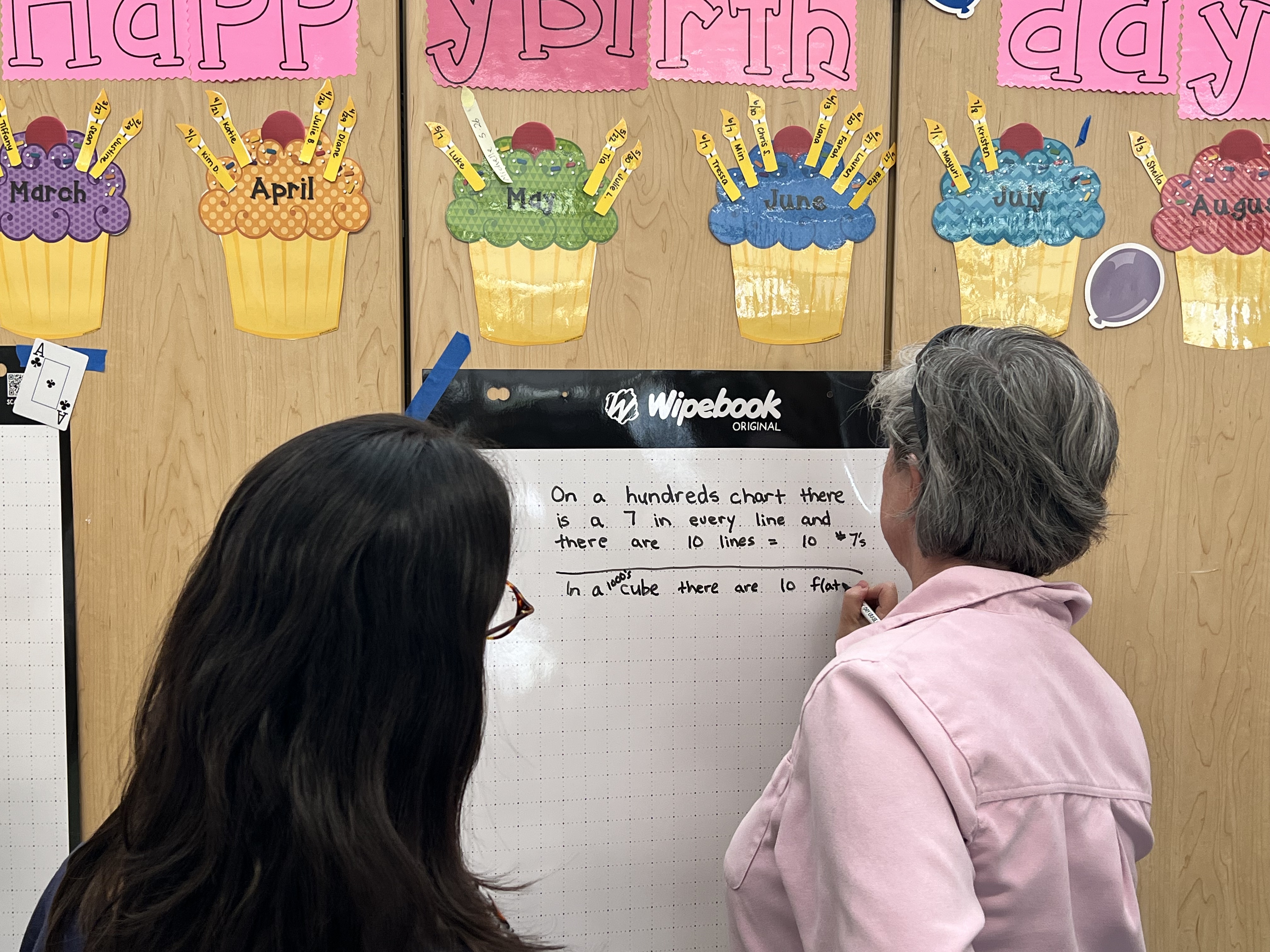
Later that afternoon, I led a Math 360 professional development session with the entire staff. Thanks to our friends at Wipebook, we had large Wipebook flip charts to work with, and it made the experience even more interactive and fun. The discussions were rich and reflective, and once again, the Cipriani teachers brought their full selves to the table—asking great questions, sharing insights, and showing a genuine passion for improving math instruction.

Overall, it was such a rewarding, joy-filled day. I left Cipriani Elementary feeling deeply grateful—and even more motivated to continue visiting classrooms across the country to share the love, importance, and power of MathReps.

I am thankful to everyone at Cipriani Elementary for making me feel so welcome.

Clothesline Math: Engaging Students with Interactive Learning

For those unfamiliar with clothesline math, think of it as an interactive number line. Chris Shore is an outspoken champion of this hands-on teaching tool that helps students better understand Number Sense. This tool goes beyond placing numbers on a number line. It can be incorporated into most math concepts.

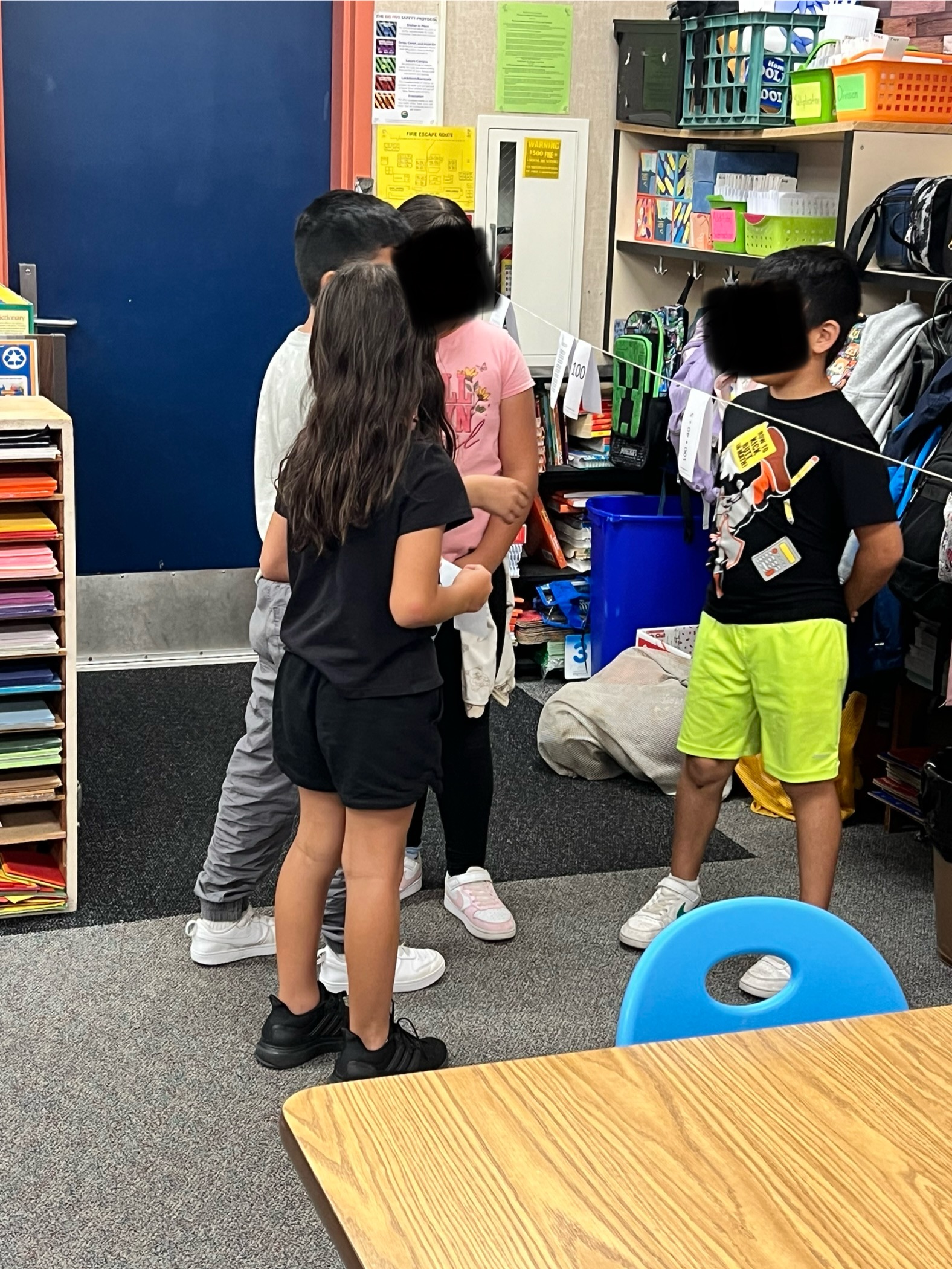
Earlier this year, I introduced a group of 3rd-grade teachers to this concept. We started with a relatively simple concept to acclimate the students to the task. I copied Kristen Acosta’s 2nd Base 10 activity. In it, students were given a card and were tasked with understanding the number being represented. The example below (Kristen Acosta) shows different ways the numbers were represented. The students were then placed in groups of 3-4 and ordered their numbers. Then, each group went to the large number line (literal clothesline stretched from one end of the room to the other) and placed their numbers on the class number line. The slip of paper was folded so that the number ‘hung’ on the number line. You can also use clothes pins to secure the numbers in place. This led to many rich discussions on placement and spacing.

Create Your Own

This was a huge hit with the students and teachers. This led to teachers asking for others. We found a multiplication activity (Kristen Acosta). Then teachers wanted division, area and perimeter. Try as I might, I couldn’t find anything online that was already created. This, then, led to me creating them. This became a labor of love.

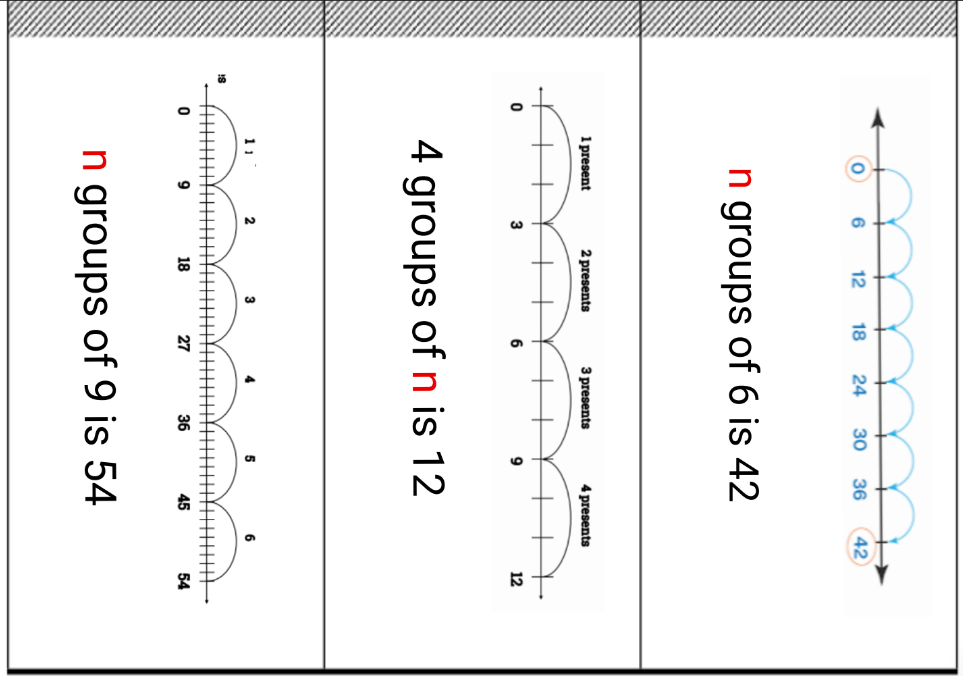
Like other math resources I create, I looked at the standard and the framework when I created these. The division clothesline has various representations of division: standard form, number line, and images. In each the missing number could have been the quotient, dividend, or divisor. The missing number (n) is the number that is placed on the number line.

It took me a bit to decide how to approach the area/perimeter. Ultimately, I decided that students should find either the area or the perimeter. I made sure that the students were exposed to a variety of images and challenges in order to find each. Some had a missing side, others only gave two side measurements to find the area or perimeter of a rectangle.

Notes From Grown-Ups Update

Back in 2019, I was blown away by the incredible energy and enthusiasm that filled the air during Back to School Night! The atmosphere was simply electric as students eagerly walked around their new room. Their grown-ups also had a job to do: write messages to the students. The results were fantastic and I couldn’t help but be captivated by the sheer brilliance and boundless positivity that jumped off the poster. These messages were like shimmering gems, glistening with love and inspiration, ready to guide and uplift the students throughout their entire journey. It was an absolute adrenaline rush of joy and motivation, leaving everyone buzzing with excitement for the amazing year ahead! If you want to relive that thrilling and heartwarming moment, head over to this link to read more about it!

What began as a humble idea in my classroom, born from a fleeting moment of inspiration in 2019, has blossomed into something truly remarkable. The joy that this concept brings has now spread far beyond the walls of my own classroom, reaching other classes, schools, districts, and even states. The impact of this simple idea has been truly astounding.

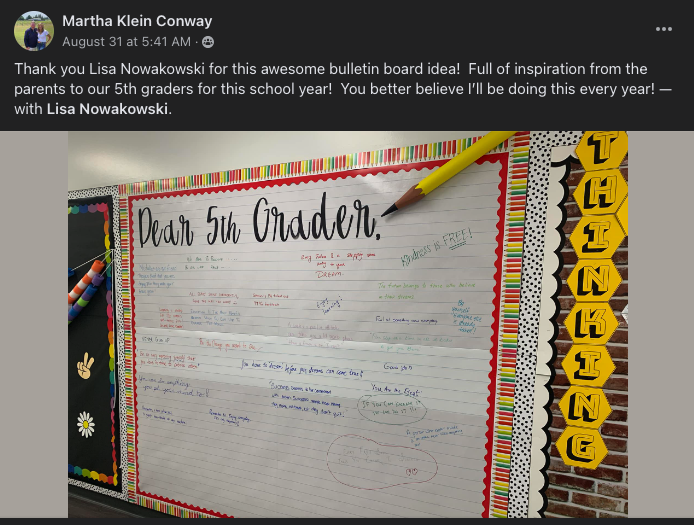
Allow me to share with you one particularly heartwarming story that exemplifies the reach and power of this concept. Martha Klein Conway, a dedicated educator and member of the EduProtocols Community Facebook Group, decided to implement this activity for the parents of her 5th-grade students. Recognizing the profound impact it could have on fostering a sense of connection and engagement, she eagerly created a space to share messages. The response from both parents and students was overwhelmingly positive, and it served as a testament to the transformative power of this idea.

Message board from parents

Inspirational Quotes

I have the honor to go into a 3rd-grade classroom in my district. Each time I am in there, the teacher has an inspirational quote posted. This isn’t your everyday quote. No, this teacher organically connects these quotes to social-emotional learning (SEL).

As you can see, the teacher is helping the students to have a healthy mindset about previously made choices. Not only does the teacher write these words, but demonstrates them to the students daily. The students are also reminded that mistakes are okay but in an authentic voice. It’s one thing to tell students, but it’s another thing to experience the compassion and encouragement to be gentle with oneself.

I have learned so much from this teacher. And hopefully, you learned a thing or two as well.

Size Matters

Yesterday, Friday, I had 5 students absent. When everyone is present, we have 26 students in our class. They are an awesome group of kiddos. I’m really enjoying them, but when I had 21 yesterday in class, it was so nice!

close up of woman working
Photo by Pixabay on Pexels.com

Let me explain. First of all, it had nothing to do with which students were absent. It had everything to do with the number of students physically present. I know 26 isn’t a bad number to have (last year I had 31 – THAT was too many). However, 21 students made it so much easier to squash undesired behaviors before the student had a chance to fully commit to the behavior. It allowed me to target individual needs more effectively. Don’t get me wrong, we had some name calling and general playing around but it was easier to manage.

So when school officials, politicians, or policymakers say that handling 31 is the same as handling 21, they clearly have either never been in the classroom (as a teacher) or have been out of it for far too long. There is a difference. I felt so much more productive and impactful than I have in a long time. I felt as if I really was making a difference and reaching all students.

If you are in a position to make a difference in your community, I urge you to do so. Go to school board meetings or talk to teachers. Because in the end, size really does matter!

And yes, I will be happy to see all 26 of them Monday morning!