Why Genius Hour

What is Genius Hour?

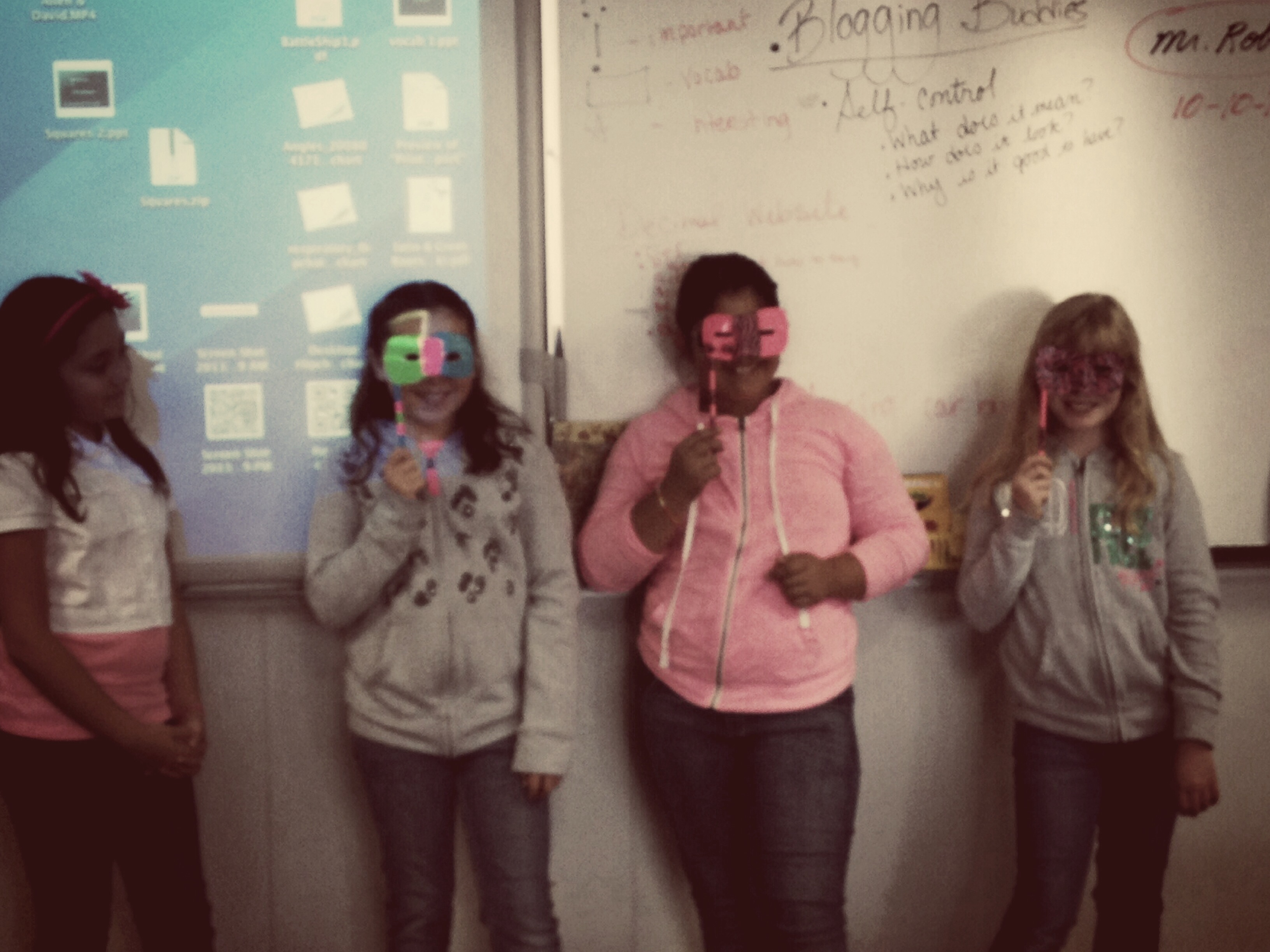
A fun, creative, messy, engaging, and active hour! This is a time for your students to research, learn, and construct what they are interested in. It’s an amazing time for all. Students are put in charge of their own learning experience for the hour. The teacher stands back and watches the students go! Student Presentations There are many resources to find out how to get started. Some are Kate Petty’s 20 Time In Education and Joy Kerr’s Blog.
Why I Chose to incorporate Genius Hour This Year

The shift to Common Core Standards invites creativity, freedom, and deeper thinking and understanding. I have long been an advocate of a student-centered classroom. Allowing students to discover and explore their passions is the epitome of a student-centered classroom. After reading about and attending conference sessions on the topic, I decided to give it a go. I shared my research and acquired knowledge with my principal, and he was on board. Once I understood what Genius Hour was, I realized that I had participated in this a few years ago – well, to some extent. 2 years ago, I showed my 3rd graders how to set up a Google Site. That year, I had 4 girls get together to create one site. They created bracelets, keychains, and necklaces. They sold their product at school and used their Website to promote their project. They took pictures, listed prices, and used a Google Form to take online orders. In the end, they raised $125 which they donated to St. Jude’s Children’s Hospital. After discovering that I had done Genius Hour before, I knew that I could do it, and that it would be successful. And I was right!

The First Few Weeks

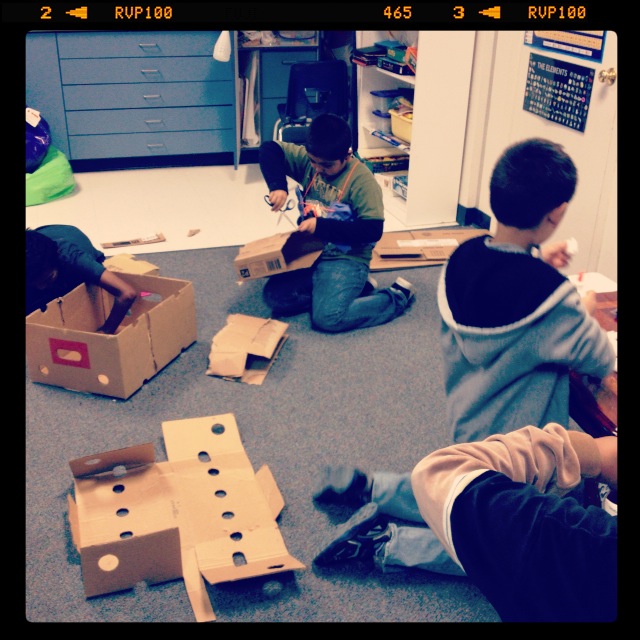
The first week was more of an explanation of what Genius Hour is. We created a Google Doc and brainstormed things that we were interested in. We looked at DIY.org for additional ideas. We watched a few videos that focused on students participating in Genius Hour. They were excited! Then came the first week students participated in Genius Hour…To say that they were a bit lost would be an understatement. They wanted to participate, but just weren’t sure how to get started. Some knew what they wanted to learn. Student 25 knew he wanted to learn more about D-Day. He immediately began researching and creating a diorama. However, most students were at a loss. I walked around in order to help guide students. THAT was the first week. Since then, productivity has improved – greatly. I now have a group of boys who work together creating structures in MineCraft, students who create ‘forts’ out of cardboard boxes (although I suspect they enjoy going in the recycling dumpster more than the creating), and a miriad of duct tape projects. It’s messy, noisy, and my favorite part of the week! Genius Hour
What Students Have To Say

One Friday before school, there was a small group of students in the classroom. They were hanging out and getting organized for the day. As they organized, one girl looked at another and asked, “What’s your favorite part of Fridays? Art or Genius Hour?” Without hesitation, the other girl answered, “Genius Hour.” The first girl agreed with her friend. Intrigued by this, I  asked why. I asked not only because I was curious (and secretly thrilled), but because the girls that were discussing it love art. To my surprise, they said all the things that I had read: it allowed them to “Do what we want”. Yeah, I was thrilled

Final Thoughts

If you’re not sure you should (or want) to start this in your classroom, just do it! You will be amazed and what the students will do. Here’s a glimpse of what might happen. This video was a Genius Hour project one week. A few girls decided to create an Animoto video on Genius Hour.

Awesome Explanation

I LOVE math! I really do. To me it makes so much sense. So for years I have asked my students to explain how they arrived at a certain answer in math. I know, totally doing Common Core before my time. Anyway, I was impressed by the use of academic language and the ease in which this student was able to explain her reasoning. What was more impressive, is that she wrote down her explanation before verbalizing it.

Here is Brooke telling me why there are more zeros in the product of 500 x 8 than 400 x 8

And to add to the awesomeness that is Brooke, she is our class’ first Aurasma Aura! If you’re not familiar with Augmented Reality (AR) or Aurasma, check them out! We took a photo of her & then overlayed the video. So parents & staff can subscribe to our channel and view our Auras, which will soon be all over the school!

To subscribe:

Pretty easy, and a great way to show off student work!

Class Rules

Well, today was Day 2 (178 more to go). Yesterday we began writing down our class rules. I began typing them into Google Docs and in the end shared the document with all the students. One rule the students came up with was No Hats In The Class. Now normally, I’m not too fussy if students wear hats in the class, so I was good with whatever they wanted to do. This one rule lead to a rather lengthy discussion.

This morning the students came in and were eager, yes eager, to begin working. Their first assignment was to COLLABORATE and edit the Class Rules document. I showed them how to insert comments. That’s all it took!

hats in class

So while the conversation lacked any real depth, it was a great beginning. Hidden within the 20 comments were suggestions for your messy hair (get water and tame it). The deeper message most certainly got across; work together, collaborate, create (they changed the colors, fonts, and words) and communicate. I’d say this is a great way to begin the school year.

First Day

So normally a person wouldn’t pair Angry Birds, a sign that reads F.A.I.L (First Attempt in Learning), and school philosophy in a lesson to 5th graders; let alone 5th graders on the 1st day of school. But I did, and I’d say that I’m pretty darn brilliant.

F irst

A ttempt

I n

L earning

Today was the first day of school, and needless to say I was excited. We have common core, I have great technology, a huge imagination, and students that I had a few years ago when I taught 3rd grade. So what’s not to be excited about. For me, today began at 4 a.m. Not by choice, trust me I hate mornings. But today was no ordinary morning. So as I lay there in bed counting sheep, my A.D.D. mind wondered off into lesson planning mode. Don’t ask, just go with it. And that’s when my brilliant plan was hatched. I have listened, and agreed, to Alice Keeler go on about gamification. She often points out that we will try over and over again, learning from our mistakes, in order to make it to the next level of a game we are playing. And if you are on Facebook you can probably relate if you play Candy Crush. So why shouldn’t schools be the same way?

I have always told my students that we learn from our mistakes. But I really feel that this year I will be able to hit a home run with that message. I normally repeat that message throughout the year, but it wasn’t until recently that I realized that that message fell on deaf ears. I never related it to them, until today.

Today I introduced F.A.I.L. and explained it. They weren’t convinced. So I went on and turned on the Interactive white board and fired up Angry Birds. THAT got their attention! So I began playing, and messed up horribly on the first try. I asked them what I should do. Of course they had all sorts of suggestions. So as I began to try again, I pointed out how I wasn’t going to have the bird take the same path. I would adjust it based on what happened the first time. The second bird wasn’t much better, too far in the opposite direction. That’s when I hit them with the heavy stuff! I asked if I should give up. They were emphatic that I keep going. I then related it to school. Ah-Ha! Some light bulbs started going off. So we continued to play. They came up and took turns, shouting advice. When we finally cleared the level, we received 2 (out of 3) stars. One student said, “Let’s do it again and try to get 3 stars.” I couldn’t have asked for a better segue. So I pounced on that one too! I asked them if they took the same approach with school. I’m sure you can guess what the answer was. And from there we talked about the reasons why they gave up so easily in school and not games.

I truly feel that this is going to be a transformational year for all of us. In fact, from this lesson/discussion we have already started to rethink how we are going to view work. The first order of business is to look at how we track the number of pages they are required to read in class weekly. We have decided that there will be a minimum that will grant each reader 1 star, from there we will step it up for 2 and 3 stars. Not sure how it’s all going to work, but we’ll figure it out together. We’ll keep you posted!

I’d say that we’re off to a GREAT start!

CUE RockStar & Lego Movie Maker

This week has been a wonderful experience. I have had the pleasure to meet some AMAZING educators. I LOVE being around so many like minded educators. Today I was excited to show others about Lego Movie Maker. It’s an iPod app, but can be used on the iPad.  My students introduced me to this App last year when they decided to start making stop animation movies.

After an epically disastrous start (which I take blame for), the room was soon abuzz with laughter, excitement, and creativity. Some ideas for classroom uses were: illustrate vocabulary, create scenes from a book, illustrate the rock cycle, and show plate tectonics.

Here is an example by Cathy Lien and Lori Booy from Heideman Elementary, TUSD. They decided to show their principal that sending them to the conference was a GREAT idea, as they were learning a lot.

This example by Jen Alcazar was a quick example of how to use it in her high school class to help engage students in vocabulary.

I would like to thank all the educators today for a fun and productive day. I learned so much from all of you and your ideas.

Our notes and ideas:

Lego Movie Maker App

Last school year I had a few students who were really into Legos. One student found Lego Movie Maker for his iPod. The App was quickly loaded up onto several other devices in the classroom. My students couldn’t STOP making movies!

Being the sort of teacher that I am, I asked them to show me the App. They happily agreed. And yes, several girls got in on the App Frenzy too! I was amazed at the ease in which they created their stop animation videos. And to be quite honest, they weren’t half bad either. They created videos on various topics including recycling.

The App: Lego Movie Maker (Free, iPod) has several features:

  • Onion Skin — allows you to view where the last shot was taken
  • Sound Effects
  • Add Frames
  • Delete Frames
  • Adjust Speed
  • Voice Over (under Record a New Sound)
  • And a variety of other choices

Once you have completed your movie you can upload to YouTube. One thing my students started doing was to further edit their movies in iMovie. The kids are brilliant! I love learning from my students.

Student Example:

While the students didn’t fully use all that the App had to offer, they did get their message across. It was easy, fun, and everyone had a good time. That’s what learning is all about!

Webpage Screenshot (Repost)

Reposting: This is one of my favorite Chrome Extensions. It’ll WOW you every time.

Webpage Screenshot is a wonderful Chrome Extension. It allows you to edit information on a webpage. Great for summarizing, finding the topic, defining words in context clues, and so much more. Check out this video I made. It’s easy to use and has many classroom applications. What will you use it for?

21st Century Classroom

So my friend Alice Keeler created a short video of what a ‘Modern Classroom’ looks like. Before you look at the video, image what most classrooms have looked like:

 Here is one from 1909:

cc licensed ( BY ) flickr photo shared by Wystan

Here’s one from 1963:

cc licensed ( BY ) flickr photo shared by Michael 1952

Now a more recent one, and oddly enough it’s entitled ’21st Century Classroom’:

cc licensed ( BY NC ND ) flickr photo shared by Michael B.

This last photo looks a lot like the one from 1909. Yes, there are some changes; students are sitting in groups, but really it’s the same. Students still sit in seats at desks, whether they are single or in groups. We have progressed from blackboards to whiteboards to interactive boards. Most classrooms have computers, but sadly that’s all that has physically changed.

Our methods and theories have most certainly changed. No longer do students sitting and listening all day (or at least they shouldn’t be). We allow students to move throughout the day. We expect collaboration, creativity, critical thinking, and communication. So my question is; why are we still setting up our classrooms based on 19th Century models? I know what you’re thinking…”I don’t do that”. Um, yes you do — and so do I. Yes, you may have ‘centers’, sitting areas, a cozy reading corner, but it’s still basically the same as it’s always been. All that is about to change! Think about the happiest places to work. For me, Google comes to mind. What makes them different? They are comfortable, fun places to be. Shouldn’t schools be that way too? I think so and so does Alice. Check out this classroom!

I would love coming to school if I were a kid in that classroom! So while we are educating students for the future, let’s give them a classroom that reflects that, not one from 1909.

Twitter

02_Twitter_64I was like many of you in thinking that I cannot handle one more social network. I don’t even use the ones I have. I now see it completely differently! Twitter has been such a huge change/help/benefit to me and my students. It has become one of my most valuable assets. I know, it sounds dorky, but it’s true.

Yes, you can follow Celebs, but why when there are so many fabulous educating rockstars out there!? Many of educators use Pinterest, and chances are you do too. This is the next step. Instead of just pinning what you like, why not talk to the creator? Make connections. Instead of only collaborating with teachers at your site, imagine what a powerful teacher you become when you can collaborate globally! Your PLN (Personal Learning Network) no longer has to be limited by those you work with. The power of Twitter is that you create that global PLN!

Not sure where to begin? Well, after you sign up for an account (remember to post a profile pic. You will get taken more seriously without the default egg) find some educators to follow. Feel free to check me out, and see who I’m following.

Twitter uses # (hashtags). They are sort of like the main idea or topic of your comment (or question). Many hashtags meet and have scheduled discussions. I personally attend #caedchat, they meet Sunday evenings from 8-9 PST. This is a group of educators from CA, and we discuss relevant issues in CA. The hour literally flies by.  Not sure how to find it, just type in #caedchat in the search. Check out what’s going on. They have hashtags for each grade level, disciplines, states, etc. To help you find # and chats that you might like check out this link: http://goo.gl/WS7Zo

By now I’m sure that I have piqued your interest. So here’s what you need to do:

  1. Go to twitter.com and sign up.
  2. Follow at least one person (I’m @NowaTechie). Many of your favorite bloggers are on Twitter, follow them.
  3. Post a pic. Most people will not follow you back unless you have a pic. The egg just doesn’t cut it.
  4. It will keep asking you to follow people, once you follow one, you can skip ahead.
  5. Search for hashtags and find more people to follow that way. Example: in the search box type: #3rdchat This will lead you to all ‘tweets’ related to 3rd grade. Most of the tweeters will be 3rd grade teachers.
  6. Not ready to post yet? That’s fine. Just sit back and observe. You’ll learn a lot and get links to many great sites.
  7. Post a tweet when you’re ready. It can be as simple as “Hi, I’m new to this. I teach…”
  8. Any questions? just ask. Everyone on Twitter is eager to help and share our knowledge.