Celebrating Creative Teaching Techniques in Classrooms

One of the things I love most about my role as an instructional coach/tech TOSA (Teacher on Special Assignment) is the opportunity to visit all the elementary sites in our district. Each school has its own rhythm and energy, and every teacher brings something special to the table. I get to see it all – the creative ideas, the quiet moments of connection, and the unique ways teachers make their classrooms feel like home for their students.

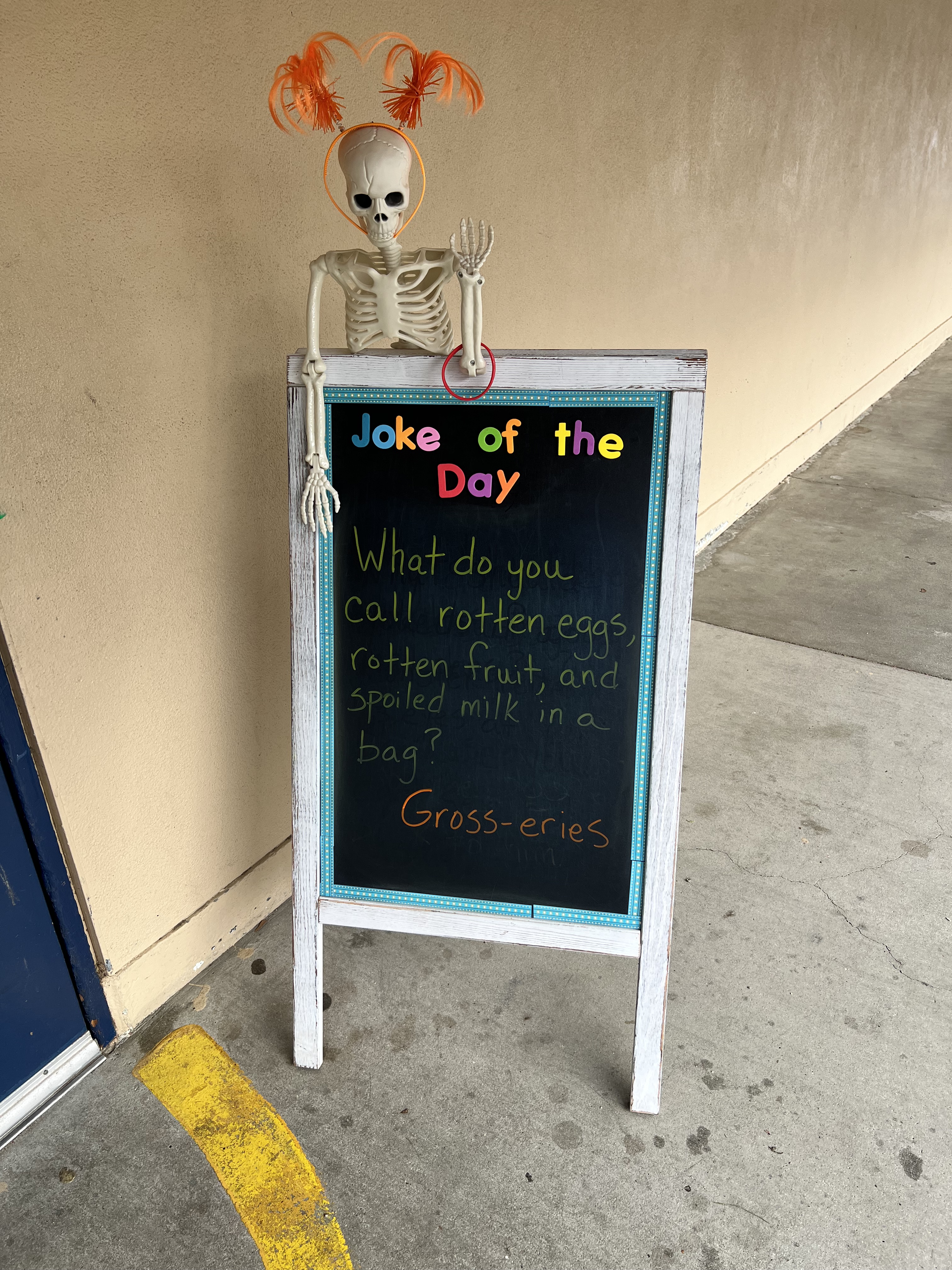
For example, at one school, a teacher sets out a small chalkboard outside her classroom each day. On it, she writes a Joke of the Day – something silly and lighthearted, but always guaranteed to get a few smiles and spark conversation. (Today’s joke: “What do you call rotten eggs, rotten fruit, and spoiled milk in a bag? Gross-eries!”) I love how she’s zhuzhed up the board, complete with a festive skeleton and a splash of color. It’s such a small thing, but it builds community and connection.

Another teacher has found a meaningful way to help students express themselves through emoji writing. I’m still learning exactly how she structures it, but I know students get the chance to write about their thoughts and feelings, and share them if they choose. It’s such a beautiful example of using something familiar and fun to help students build emotional awareness and voice.

Then there’s a teacher at another site who’s rethinking her approach to reading. She’s diving into novel studies, aligning them to the standards while keeping student engagement and learning front and center. It’s exciting to see teachers continually reflect, innovate, and take risks for the sake of their students.

Every week I’m reminded that innovation in education doesn’t always come from big changes—it’s often found in the small, thoughtful touches teachers bring to their classrooms.

The teachers in our district are doing amazing things every single day. I feel incredibly lucky to have a front-row seat to their creativity and care. One of my favorite parts of my job is being able to share these ideas, anonymously, of course, across the district. When I visit another site and a teacher says, “I’ve been wanting to try something new; any ideas?” I get to say, “Actually, I saw someone doing something really neat…”

I love this perk of my job. I love celebrating great teaching and helping ideas spread from one classroom to another. Because when we share, we all grow, and our students benefit most of all. And if you know me, you know that I’m a chronic over-sharer!

Your turn: What’s something small but meaningful you’ve seen or done in a classroom that builds connection or joy? Share it in the comments or with a colleague—it might just spark an idea that makes someone else’s classroom shine a little brighter.

The Power of Practice: Why MathReps Are the Missing Piece in Math Education

MathReps are more than just a worksheet—they are a targeted, daily instructional frame designed to leverage the science of learning to create genuine mathematical mastery. Here is a look at their inherent power and how they succeed where traditional, rigid curriculums often fail.

The Power of MathReps—What Makes Them Effective?

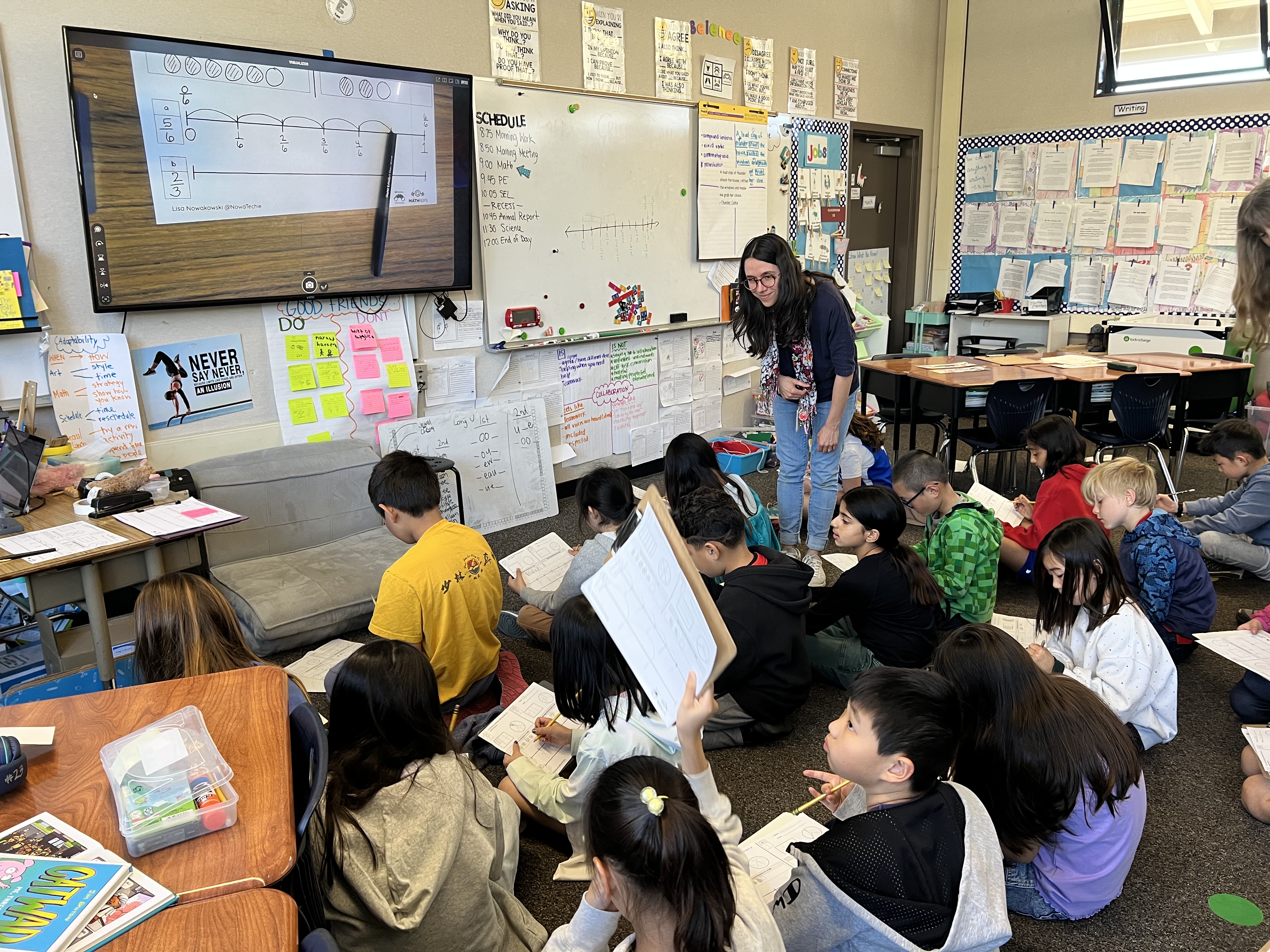
MathReps are powerful because their structure is built on proven principles of cognitive science and student-centered learning. (Note: MathReps are not a curriculum, rather a powerful tool that can enhance any curriculum.)

ReasonExplanation
Systematic Spaced Repetition (The Forgetting Curve)The daily repetition directly combats the ‘forgetting curve,’ a term that describes how quickly we forget new information. By consistently allowing students to revisit skills, MathReps move concepts from short-term memory into long-term mastery (fluency) in a way that end-of-unit tests or once-a-year review packets cannot.
Reduced Cognitive LoadThe basic lesson frame/graphic organizer is predictable and familiar. When the structure is constant, students don’t waste mental energy figuring out the assignment’s format, allowing them to dedicate all their cognitive load to solving the problem, making connections, and mastering the skill.
Connection Between Concepts and StrategiesMathReps are designed to promote a deeper understanding by requiring students to connect multiple representations (e.g., area models, partial quotients, and the traditional algorithm) on a single page. This helps them bridge the ‘how’ (procedural fluency) with the ‘why’ (conceptual understanding).
Daily Spiral Review of Multiple StandardsUnlike unit-by-unit curriculums that drop a topic once the unit is over, MathReps embed daily spiral review for several standards at once. This ensures that skills learned in September are still being practiced and reinforced in February, building confidence and preventing skill degradation.
Customization and DifferentiationThey are fully customizable, allowing teachers to select skills based on student data and individual needs. This makes MathReps a personalized learning tool that meets each student exactly where they are—a crucial advantage over a standardized textbook.
Fosters Long-Term SuccessReal-world evidence shows their success. One 3rd-grade team, for example, reported an increase in fraction proficiency from 19% to over 82% after implementing the daily repetition of MathReps.

How MathReps Do What Traditional Curriculums Fail To Do

Traditional math curriculums, whether purely procedural or heavily conceptual, often fail in three key areas that MathReps are specifically designed to address.

Failure of Traditional CurriculumsHow MathReps Solve It
Failure to Ensure Skill RetentionTraditional curriculums move on too quickly. If a student misses a concept or needs more time, they “fall off the train” and develop a learning gap that a built-in review system can’t fix.
Failure to Bridge Conceptual and Procedural FluencyCurriculums often lean too heavily in one direction: either “drill and kill” (rote memorization without understanding) or purely conceptual (understanding the theory but lacking computational skill). Often focusing on one skill at a time and never showing the connections.
Failure to Adequately Address Learning GapsStandardized, one-size-fits-all textbooks cannot accommodate a classroom where students may have learning gaps spanning multiple years. Pushing “high expectations” without addressing prior knowledge often leads to student failure.

MathReps provide the crucial daily rhythm of practice and reflection that students need to connect, internalize, and ultimately master their math skills, setting them up for success when confronted with more complex material.

You can find the full collection at MathReps.com.

You can see a deeper dive into the format and utility of these organizers in this video: MathReps is Where It’s At!.

Public Education: More Than a Viral Post

Lately, it feels like my social media feed has been sprinkled with negative takes on teachers and public education. Over the summer, I noticed an uptick in posts that painted educators in an unflattering light. Some parents shared that they didn’t want to purchase back-to-school supplies, suggesting that the teachers should go buy them themselves or go to donation drives and do the legwork themselves. Others shared stories of classrooms that weren’t ‘cute enough’ or didn’t have rugs, implying that the lack of decoration somehow reflected poorly on the teacher – “how dare they not make the room perfect for my child.”

And then there are the posts about rules and policies – things like cell phone bans in classrooms that teachers have no control over. In some cases, parents have gone as far as encouraging their children to disobey those rules, placing teachers in an impossible position.

Viral posts don’t tell the whole story of public education: our communities do.

I’ll be honest, when these posts go viral, it can feel disheartening. But here’s the thing: I don’t believe they reflect the majority of families across the United States. Instead, they seem to be part of a louder narrative that seeks to chip away at public education and those who dedicate their lives to it. And this is a problem.

The truth is, public education is one of the cornerstones of our country. It has always been, and should always be, a place where every child has access to learning, growth, and opportunity. Funding cuts at every level – from Kinder through universities – have made the work harder, but the mission remains the same: serving students and setting them up for future success.

And here’s the good news: in my community, I see something different from what goes viral. I’m sure you do too. I see families who send their students to school with supplies. I see kindness, collaboration, and a shared commitment to doing what’s best for kids.

That’s the story we need to remember and share. Viral posts may grab attention, but they don’t represent the heart of our communities. Let’s not fall prey to negativity; there’s already too much of that. Instead, let’s lift up the good, celebrate the work being done, and continue to build strong schools for our students. They deserve the best, no matter their zip code.

Because in the end, when we support public education, we’re not just supporting teachers, we’re investing in our children and in the future we all share.

Navigating Adult Cliques: Cultivating Kindness in Schools

The idea that cliques exist as an adult is weird. Don’t get me wrong, I get that there are people I would rather hang out with, but being cliquish about it is a whole other thing.

This is one of the many thoughts I have as I prepare to return to school. As educators, we strive to instill kindness in our students. We teach them that while they may not get along with everyone, it is important to be kind; inviting peers to play at recess, greeting one another, and engaging with those who are alone are essential actions. However, when we step into the teachers’ lounge, the reality often reflects a different story. Sadly, many can relate to this experience.

As an adult, I have observed cliques, exclusion, and unkind behaviors, which is perplexing. We should strive to be kind to everyone. If we advocate for inclusion, we must also practice it. If we promote equality, we should embody it. When we discuss kindness and compassion, it is essential to implement these values in our daily lives.

As we approach the new school year, it’s important to reflect on our community. This transition brings new teachers, some of whom may be unfamiliar with their surroundings or have just moved to the area for their new positions. In this spirit, let us practice kindness and inclusivity by inviting everyone to join us at our tables. A simple smile or a friendly greeting in passing can truly brighten someone’s day.

One final thought. Many years ago, Ed Campos talked about ways to include others and bring them into our circles. He focused on doing this at conferences. He shared his idea when standing around and talking to others: leave a space open for others to join. Having a closed circle is uninviting, but by leaving a space, that circle is open and inviting. So, I guess I’m drawing inspiration from Ed; leave a space for others to join, you never know what greatness is out there.

Clothesline Math: Engaging Students with Interactive Learning

For those unfamiliar with clothesline math, think of it as an interactive number line. Chris Shore is an outspoken champion of this hands-on teaching tool that helps students better understand Number Sense. This tool goes beyond placing numbers on a number line. It can be incorporated into most math concepts.

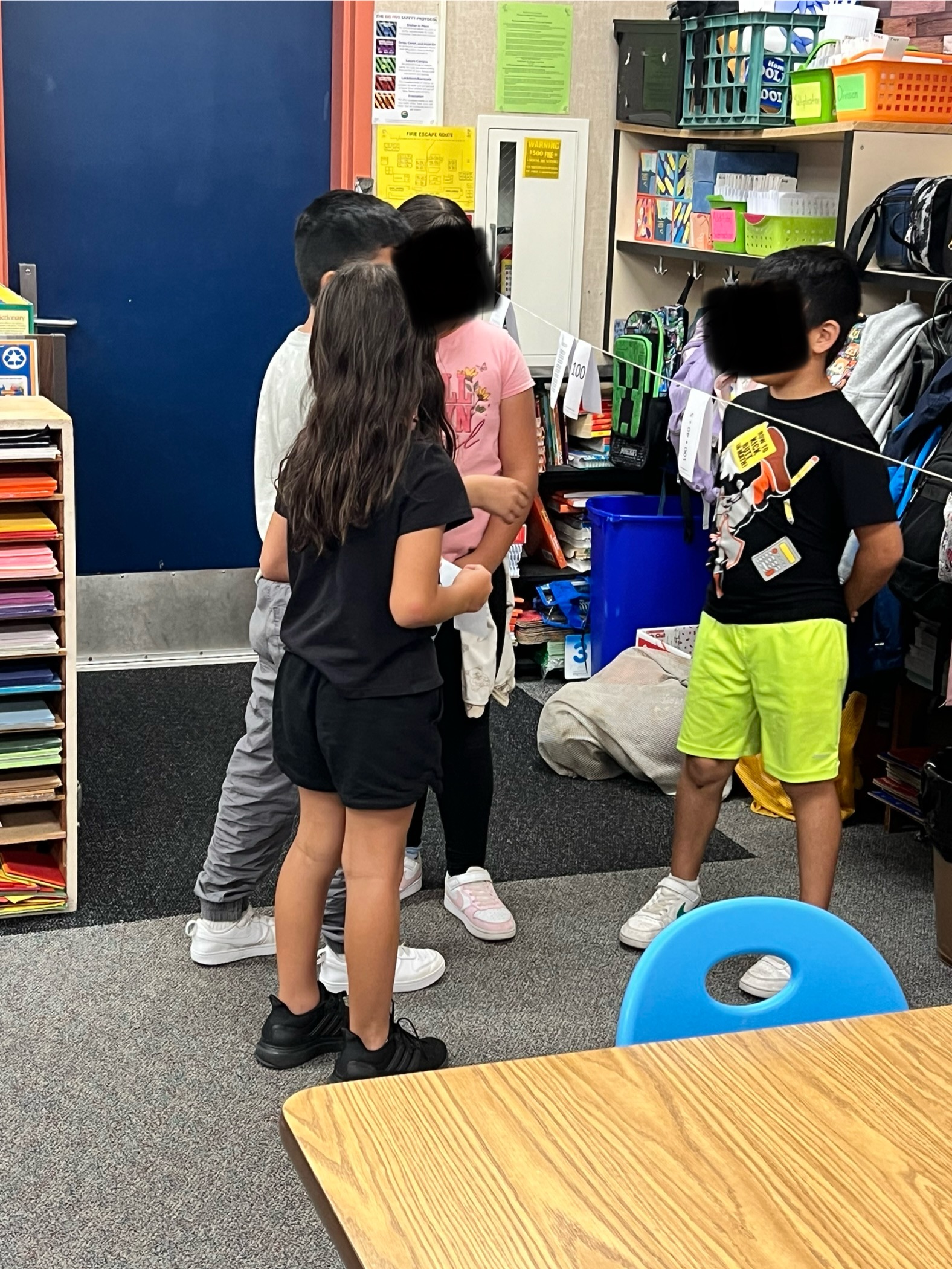
Earlier this year, I introduced a group of 3rd-grade teachers to this concept. We started with a relatively simple concept to acclimate the students to the task. I copied Kristen Acosta’s 2nd Base 10 activity. In it, students were given a card and were tasked with understanding the number being represented. The example below (Kristen Acosta) shows different ways the numbers were represented. The students were then placed in groups of 3-4 and ordered their numbers. Then, each group went to the large number line (literal clothesline stretched from one end of the room to the other) and placed their numbers on the class number line. The slip of paper was folded so that the number ‘hung’ on the number line. You can also use clothes pins to secure the numbers in place. This led to many rich discussions on placement and spacing.

Create Your Own

This was a huge hit with the students and teachers. This led to teachers asking for others. We found a multiplication activity (Kristen Acosta). Then teachers wanted division, area and perimeter. Try as I might, I couldn’t find anything online that was already created. This, then, led to me creating them. This became a labor of love.

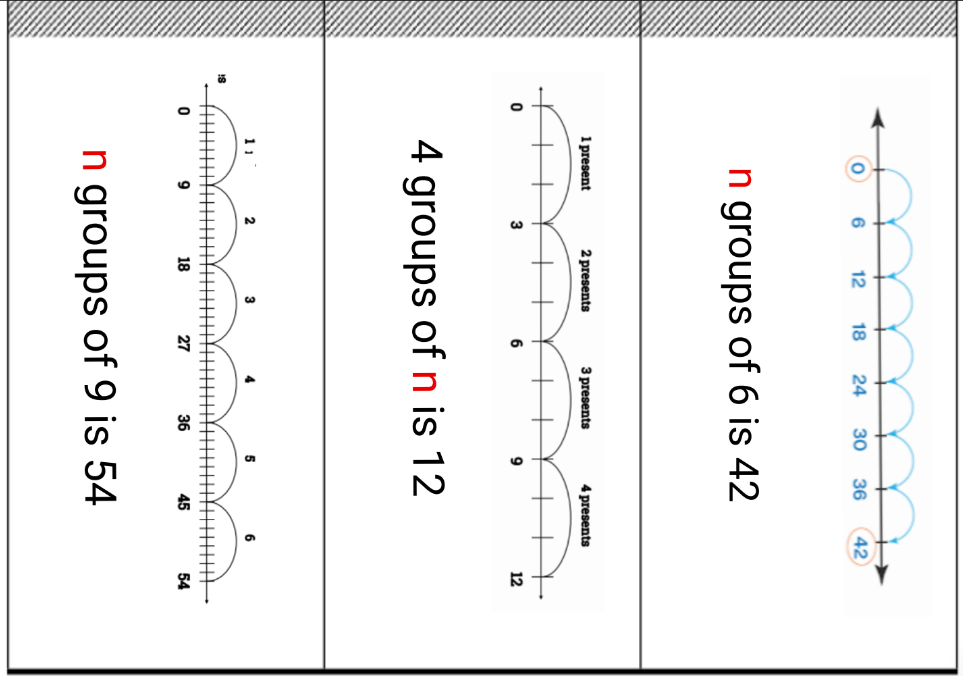
Like other math resources I create, I looked at the standard and the framework when I created these. The division clothesline has various representations of division: standard form, number line, and images. In each the missing number could have been the quotient, dividend, or divisor. The missing number (n) is the number that is placed on the number line.

It took me a bit to decide how to approach the area/perimeter. Ultimately, I decided that students should find either the area or the perimeter. I made sure that the students were exposed to a variety of images and challenges in order to find each. Some had a missing side, others only gave two side measurements to find the area or perimeter of a rectangle.

Notes From Grown-Ups Update

Back in 2019, I was blown away by the incredible energy and enthusiasm that filled the air during Back to School Night! The atmosphere was simply electric as students eagerly walked around their new room. Their grown-ups also had a job to do: write messages to the students. The results were fantastic and I couldn’t help but be captivated by the sheer brilliance and boundless positivity that jumped off the poster. These messages were like shimmering gems, glistening with love and inspiration, ready to guide and uplift the students throughout their entire journey. It was an absolute adrenaline rush of joy and motivation, leaving everyone buzzing with excitement for the amazing year ahead! If you want to relive that thrilling and heartwarming moment, head over to this link to read more about it!

What began as a humble idea in my classroom, born from a fleeting moment of inspiration in 2019, has blossomed into something truly remarkable. The joy that this concept brings has now spread far beyond the walls of my own classroom, reaching other classes, schools, districts, and even states. The impact of this simple idea has been truly astounding.

Allow me to share with you one particularly heartwarming story that exemplifies the reach and power of this concept. Martha Klein Conway, a dedicated educator and member of the EduProtocols Community Facebook Group, decided to implement this activity for the parents of her 5th-grade students. Recognizing the profound impact it could have on fostering a sense of connection and engagement, she eagerly created a space to share messages. The response from both parents and students was overwhelmingly positive, and it served as a testament to the transformative power of this idea.

Message board from parents

Notes From Their Grown-ups

My district holds Back to School Night the night before school starts, at least for the TK – 5 schools. I personally love this. No parents are asking about behaviors, assignments, etc. I get to meet them and get to know each family a bit. It also helps the kiddos see where to report to in the morning. I really enjoy this model.

This leads me to August 2019. Sometime during my classroom setup, I got the idea to post a giant poster in the room and invite parents to write little words of encouragement. This was the last year in elementary before they went off to middle school. I wanted to make it memorable. Little did any of us realize that the universe was most certainly going to make it a memorable school year!

Some notes touched on the importance of making mistakes, believing in yourself, and asking for help when needed. This poster stayed up in our room for a long time after school started. I referred to them from time to time reminding them of what their families wanted them to know.

We have many multilingual families and some monolingual families (non-English). They were invited to write in the language of their choice. Had a parent wanted something written for them, I certainly would have helped with that too. Their words mattered. Side note, as I sat to write this today, I realized I wrote about it in 2019 too. Funny how a great idea sticks with you.

Inspirational Quotes

I have the honor to go into a 3rd-grade classroom in my district. Each time I am in there, the teacher has an inspirational quote posted. This isn’t your everyday quote. No, this teacher organically connects these quotes to social-emotional learning (SEL).

As you can see, the teacher is helping the students to have a healthy mindset about previously made choices. Not only does the teacher write these words, but demonstrates them to the students daily. The students are also reminded that mistakes are okay but in an authentic voice. It’s one thing to tell students, but it’s another thing to experience the compassion and encouragement to be gentle with oneself.

I have learned so much from this teacher. And hopefully, you learned a thing or two as well.

California Missions

I know that there are mixed feelings regarding creating California Missions. I’m going to focus on the positive. I work with a fourth-grade class in my district. The teacher went “old school’, her words, not mine. She had the students create physical models.

Now before anyone is concerned about equity, I assure you all student creations were created equally. How? Students created them in class with teacher-provided materials. She provided the cardboard, basic dimensions, paint, rulers, and scissors, while she hot-glued the walls together. Some students did bring in some extra decorations and happily shared them with others. Check out some of their work

Clearly, these were all student created. In order to get ready for this project, they did their research. The students began by learning about the colonization of California and the role Missions played in changing it. Then each student researched a mission: its history, founder, indigenous people, and its current use. They then produced a slideshow to present to the class. There was a lot of learning that occurred before this culminating activity.

All in all, I was blown away by their work. They did an amazing job and each student was proud of themself.

Distance Relationships

My district has been in distance learning since August. One apprehension I have had with my new position (Tech TOSA) is not being able to connect with students. How wrong I was.

This past week, I had a few different interactions with students. Student A is a former student. They have had a hard time with the distance learning and personal issues. I have been encouraging them all year. This week they contacted me to let me know they got a B+. They were very excited! As a result, they get brownies. Anything to encourage them to keep working.

Then there are two sisters from my previous site that celebrate Diwali. Remembering how excited they were to share information about their holiday last year, I made sure to wish them a Happy Diwali celebration this year. The sisters were excited and shared pictures of their hands with me. Their mom does it for them each year.

Then there was the student in a class that I regularly assist in. This student is not a fan of communicating at all. I met them virtually in this class this year. They independently reached out in Google Chat (school account). This is HUGE for them. I contacted the teacher to let her know. We both celebrated!

My point to all this is that virtual, face to face, or hybrid model, we can connect with students. We don’t need to limit ourselves to those in our classroom. We can keep in contact with former students. We can encourage them and celebrate them. We can make new connections with students.