When teachers first see MathReps in action, their biggest question isn’t usually why it works; it’s how to keep it going day after day.
How do you run a daily math routine without burying yourself in a mountain of grading every evening? The secret to sustainability lies in closing the feedback loop immediately during class time. This is true for all EduProtocols.
In John Hattie’s extensive Visible Learning research, feedback ranks among the highest-leverage instructional practices with an effect size between 0.70 and 0.75. Considering Hattie’s 0.40 “hinge point” represents a standard year of academic growth, actionable feedback nearly doubles the rate of student learning. But that research assumes feedback happens when it matters most: in the moment of learning, not two days later on a returned worksheet.
Whether you operate in a high-tech 1:1 digital environment, prefer the simplicity of paper-and-pencil, or use a hybrid approach, MathReps is designed to deliver high-impact feedback without burning you out.
Here are four ways to make MathReps sustainable in your daily routine:
1. The Low-Tech, Low-Stakes Standard: Dry-Erase Sleeves
One of my personal favorite ways to run MathReps is using clear plastic sheet protectors or menu sleeves with dry-erase markers. The fine-tip dry-erase markers work the best.
Slide a printed MathRep template into the sleeve, and students are ready to work. This approach offers two major advantages:
- Low-Threat Environment: If a student makes a mistake, a quick swipe of an eraser fixes it instantly. The low risk encourages students to try strategies they might hesitate to write down on paper.
- Real-Time Clipboard Feedback: Because students complete the work in 5 to 10 minutes, you can roam the room with a dry-erase marker, providing that high-effect-size feedback in real time. Misconceptions are addressed on the spot, and mastery is checked off live.
When the time is up, students erase their boards, leaving the template pristine and ready for tomorrow morning; no copying required.
Bonus: place an example on the opposite side of the blank MathRep for students to reference.
2. Paper & Pencil Checks
If you prefer paper, sustainability comes down to shifting when and where grading happens. Instead of collecting papers to grade at your desk, make feedback active.
As students work through their MathRep, walk the room. Spot-check key concepts, stamp completed work, and address misconceptions right at the student’s desk. By the time the 10-minute timer rings, 90% of your feedback has already been delivered face-to-face, eliminating the need to take papers home.
3. Leveraging Tech for Instant Feedback: Snorkl
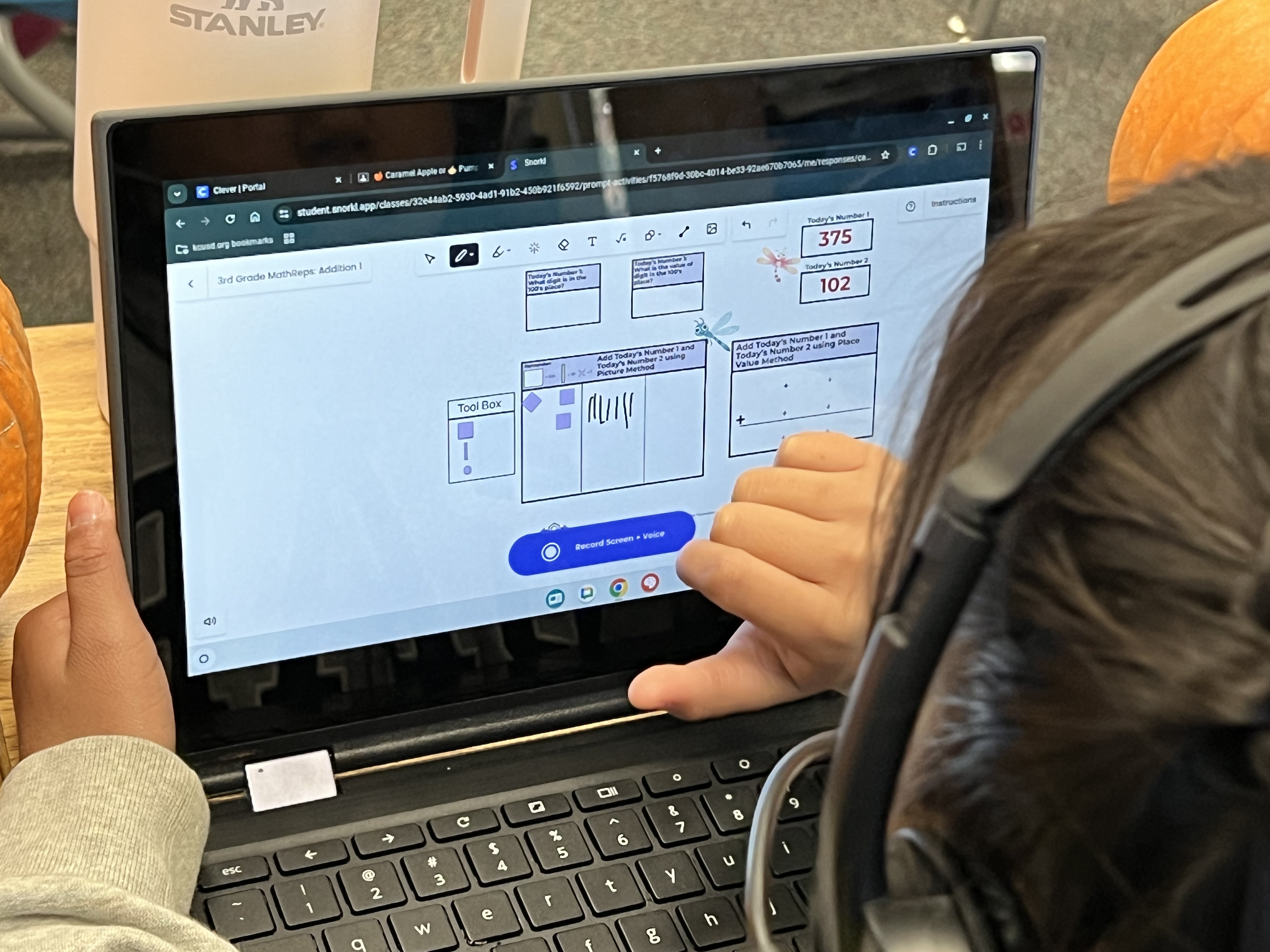
If you want to streamline your digital workflow and enhance student explanations, Snorkl is a powerful partner tool for MathReps.
Snorkl provides immediate, automated feedback to students as they record and explain their thinking, hitting Hattie’s feedback sweet spot automatically. Even better, pre-built MathReps templates for Grades K through 5 are already built into the Snorkl library and ready to assign.
The Hybrid Wipebook Workflow: You don’t have to choose strictly between physical and digital. Many teachers have students complete their MathRep on a non-permanent surface, such as a Wipebook (or dry-erase sleeve), take a quick photo of their work, and upload it to Snorkl. Students then record a brief audio explanation of their reasoning over the image. Snorkl provides immediate feedback on their explanation, giving students double the processing power without adding to your evening workload.
4. Small-Group Targeted Interventions (Tier 2)
Sustainability also means using your instructional time efficiently. While the majority of the class works independently or in partners on their daily MathRep, you (or an instructional aide) can pull a small group of students who need targeted support.
Using a foundational or modified MathRep template, you can address specific skill gaps in a small-group setting. Because the format matches what the rest of the class is doing, students receive targeted, high-dosage feedback without feeling isolated or singled out.
Work Smarter, Not Harder
A daily routine is only as good as its longevity. By leveraging immediate feedback – whether through a dry-erase marker while roaming the room or an audio-recording tool like Snorkl – you tap into one of the most powerful learning effects in educational research while keeping your time manageable.
How do you run MathReps in your classroom? Are you team dry-erase sleeve, team paper, or team Snorkl? Let me know in the comments below!


