Celebrating Creative Teaching Techniques in Classrooms

One of the things I love most about my role as an instructional coach/tech TOSA (Teacher on Special Assignment) is the opportunity to visit all the elementary sites in our district. Each school has its own rhythm and energy, and every teacher brings something special to the table. I get to see it all – the creative ideas, the quiet moments of connection, and the unique ways teachers make their classrooms feel like home for their students.

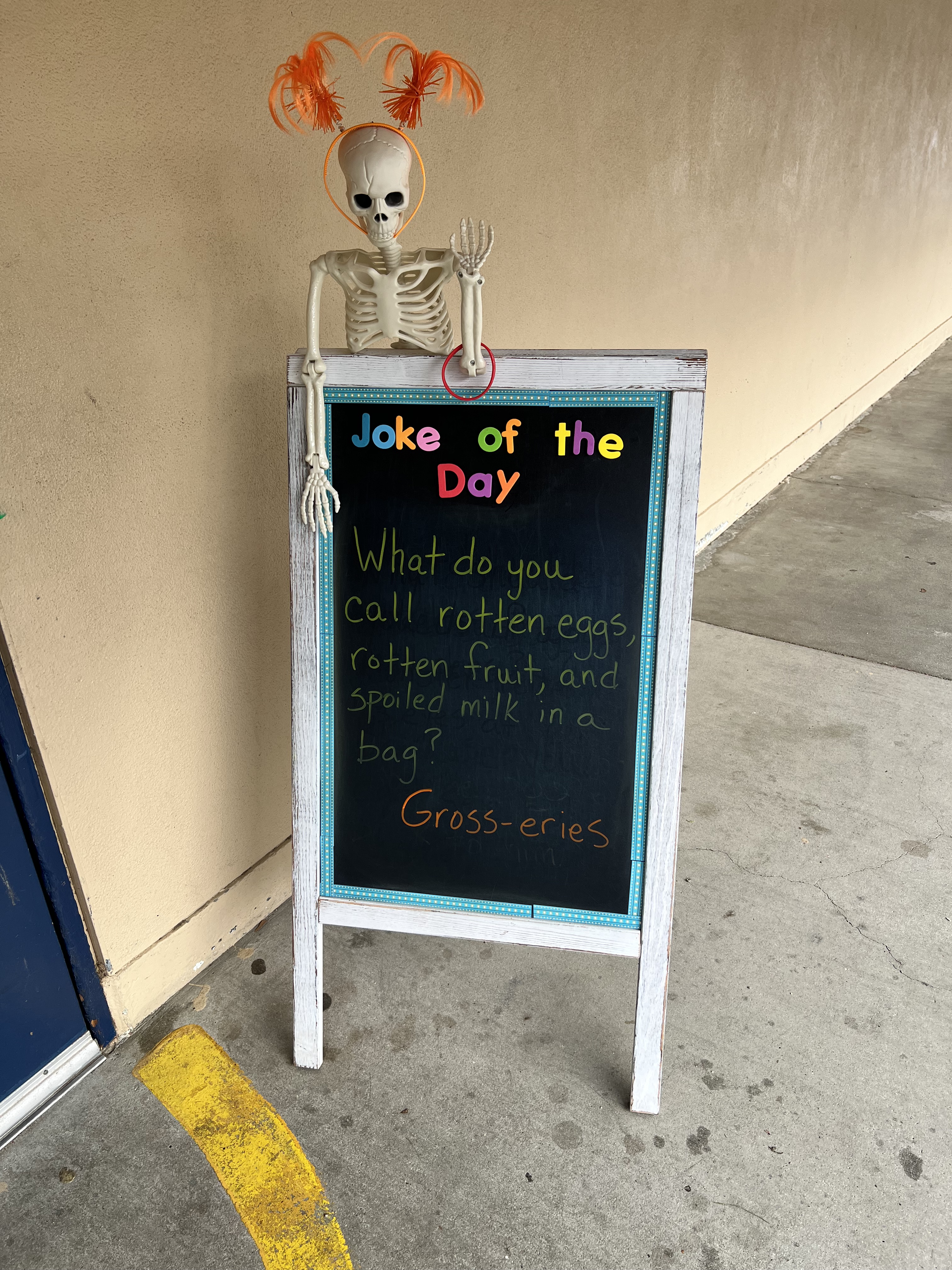
For example, at one school, a teacher sets out a small chalkboard outside her classroom each day. On it, she writes a Joke of the Day – something silly and lighthearted, but always guaranteed to get a few smiles and spark conversation. (Today’s joke: “What do you call rotten eggs, rotten fruit, and spoiled milk in a bag? Gross-eries!”) I love how she’s zhuzhed up the board, complete with a festive skeleton and a splash of color. It’s such a small thing, but it builds community and connection.

Another teacher has found a meaningful way to help students express themselves through emoji writing. I’m still learning exactly how she structures it, but I know students get the chance to write about their thoughts and feelings, and share them if they choose. It’s such a beautiful example of using something familiar and fun to help students build emotional awareness and voice.

Then there’s a teacher at another site who’s rethinking her approach to reading. She’s diving into novel studies, aligning them to the standards while keeping student engagement and learning front and center. It’s exciting to see teachers continually reflect, innovate, and take risks for the sake of their students.

Every week I’m reminded that innovation in education doesn’t always come from big changes—it’s often found in the small, thoughtful touches teachers bring to their classrooms.

The teachers in our district are doing amazing things every single day. I feel incredibly lucky to have a front-row seat to their creativity and care. One of my favorite parts of my job is being able to share these ideas, anonymously, of course, across the district. When I visit another site and a teacher says, “I’ve been wanting to try something new; any ideas?” I get to say, “Actually, I saw someone doing something really neat…”

I love this perk of my job. I love celebrating great teaching and helping ideas spread from one classroom to another. Because when we share, we all grow, and our students benefit most of all. And if you know me, you know that I’m a chronic over-sharer!

Your turn: What’s something small but meaningful you’ve seen or done in a classroom that builds connection or joy? Share it in the comments or with a colleague—it might just spark an idea that makes someone else’s classroom shine a little brighter.

Public Education: More Than a Viral Post

Lately, it feels like my social media feed has been sprinkled with negative takes on teachers and public education. Over the summer, I noticed an uptick in posts that painted educators in an unflattering light. Some parents shared that they didn’t want to purchase back-to-school supplies, suggesting that the teachers should go buy them themselves or go to donation drives and do the legwork themselves. Others shared stories of classrooms that weren’t ‘cute enough’ or didn’t have rugs, implying that the lack of decoration somehow reflected poorly on the teacher – “how dare they not make the room perfect for my child.”

And then there are the posts about rules and policies – things like cell phone bans in classrooms that teachers have no control over. In some cases, parents have gone as far as encouraging their children to disobey those rules, placing teachers in an impossible position.

Viral posts don’t tell the whole story of public education: our communities do.

I’ll be honest, when these posts go viral, it can feel disheartening. But here’s the thing: I don’t believe they reflect the majority of families across the United States. Instead, they seem to be part of a louder narrative that seeks to chip away at public education and those who dedicate their lives to it. And this is a problem.

The truth is, public education is one of the cornerstones of our country. It has always been, and should always be, a place where every child has access to learning, growth, and opportunity. Funding cuts at every level – from Kinder through universities – have made the work harder, but the mission remains the same: serving students and setting them up for future success.

And here’s the good news: in my community, I see something different from what goes viral. I’m sure you do too. I see families who send their students to school with supplies. I see kindness, collaboration, and a shared commitment to doing what’s best for kids.

That’s the story we need to remember and share. Viral posts may grab attention, but they don’t represent the heart of our communities. Let’s not fall prey to negativity; there’s already too much of that. Instead, let’s lift up the good, celebrate the work being done, and continue to build strong schools for our students. They deserve the best, no matter their zip code.

Because in the end, when we support public education, we’re not just supporting teachers, we’re investing in our children and in the future we all share.

Navigating Adult Cliques: Cultivating Kindness in Schools

The idea that cliques exist as an adult is weird. Don’t get me wrong, I get that there are people I would rather hang out with, but being cliquish about it is a whole other thing.

This is one of the many thoughts I have as I prepare to return to school. As educators, we strive to instill kindness in our students. We teach them that while they may not get along with everyone, it is important to be kind; inviting peers to play at recess, greeting one another, and engaging with those who are alone are essential actions. However, when we step into the teachers’ lounge, the reality often reflects a different story. Sadly, many can relate to this experience.

As an adult, I have observed cliques, exclusion, and unkind behaviors, which is perplexing. We should strive to be kind to everyone. If we advocate for inclusion, we must also practice it. If we promote equality, we should embody it. When we discuss kindness and compassion, it is essential to implement these values in our daily lives.

As we approach the new school year, it’s important to reflect on our community. This transition brings new teachers, some of whom may be unfamiliar with their surroundings or have just moved to the area for their new positions. In this spirit, let us practice kindness and inclusivity by inviting everyone to join us at our tables. A simple smile or a friendly greeting in passing can truly brighten someone’s day.

One final thought. Many years ago, Ed Campos talked about ways to include others and bring them into our circles. He focused on doing this at conferences. He shared his idea when standing around and talking to others: leave a space open for others to join. Having a closed circle is uninviting, but by leaving a space, that circle is open and inviting. So, I guess I’m drawing inspiration from Ed; leave a space for others to join, you never know what greatness is out there.

Engaging Kids in Math: Using Play-Doh for Multiplication

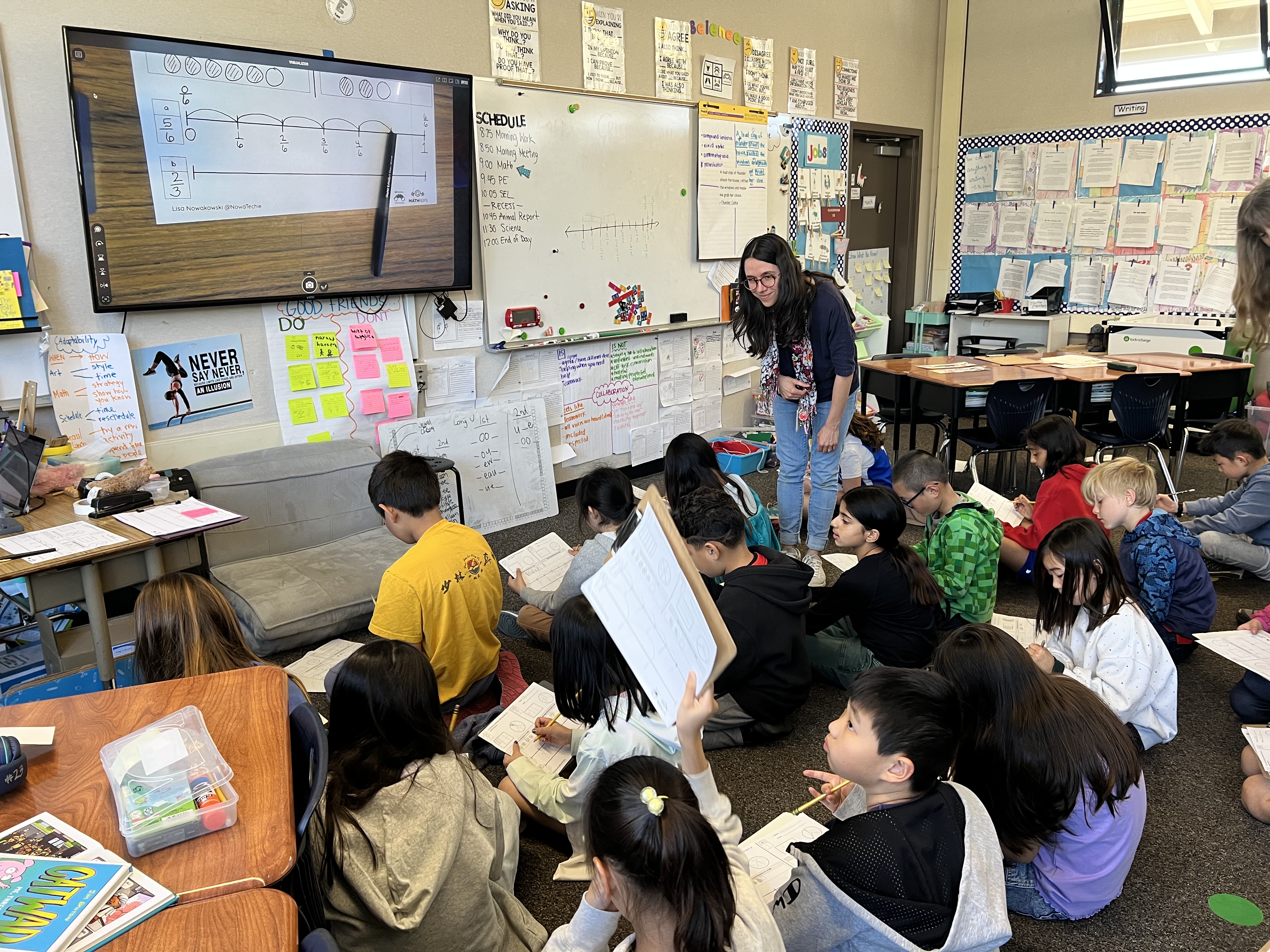
This school year, I have had the privilege of collaborating with several 3rd-grade teachers. During one meeting, I shared an innovative idea from a 4th-grade teacher, Ben Cogswell. He introduced the use of Play-Doh to help his students understand multiplication through hands-on activities. I really like how he incorporated MathReps into this lesson. In the accompanying image, you can see students recording their findings in a MathReps, along with an instructional video they can reference for guidance.

Students using Play-Doh and MathReps to assist in their understanding of Multiplication and Division.

Fast forward a few months into 3rd-grade. While meeting with one of the groups, one teacher, Jensen Hall, was excited to share that she had purchased some Play-Doh for her students to use as they begin learning about multiplication. Then, about a week later, she sends me this message with images:

Message: I meant to send this to you earlier but I'm so excited about it I had to make sure I didn't forget again (sorry it's after hours). I introduced multiplication today using the play doh and it was a massive success! Such a great idea you shared!!
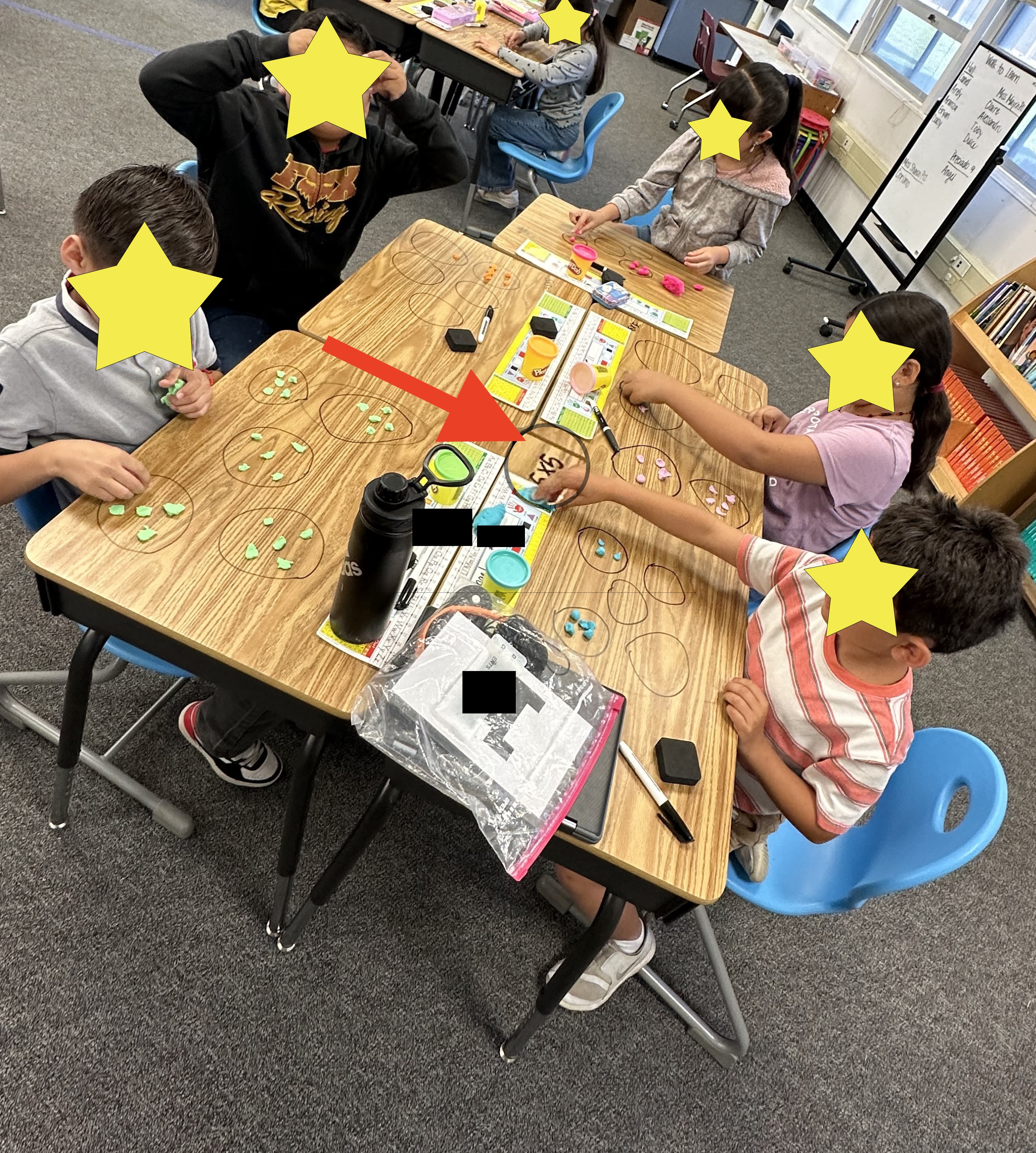
Students showing off their work.

Taking a closer look at the image, the red arrow points to where a student wrote out the problem on their desk. Using equal sets, students were able to model how to solve the problem. While the faces have been hidden, I can assure you that they were all smiling and clearly having a good time.

We all want our students to be excited and engaged with math. In the rush to fit everything into a school day—assessments, end-of-the-year testing, and much more—we often forget how to make learning fun and hands-on. Starting with concrete models is essential when teaching new skills like multiplication. Taking the time to begin with concrete models will ultimately save us time later and allow students to truly understand these foundational skills, setting them up for future success.

The story and images have been shared with permission from the teacher.

Magic School AI

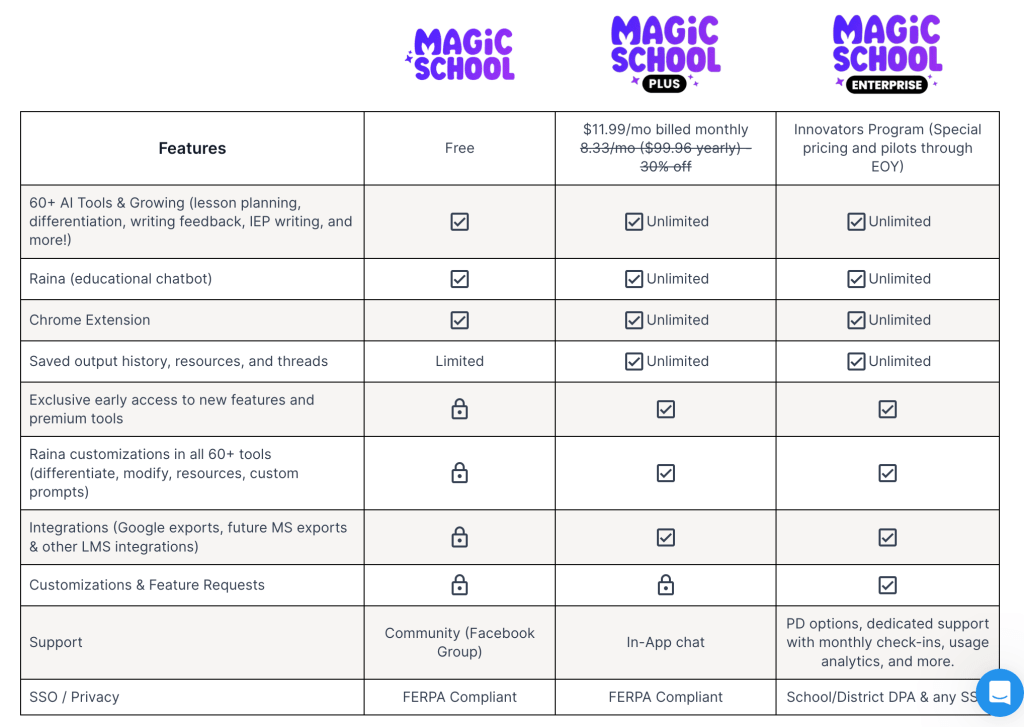
The world of AI tools is vast and ever-evolving. Amongst the sea of options, one particular tool has caught my attention: Magic School. With a focus on teachers and schools, it offers a unique approach that sets it apart from the rest. Its comprehensive range of categories opens up exciting possibilities for integrating AI into different educational contexts. The best part? It comes in both a free and paid version, tailored to suit varying needs. Allow me to share an image of its advantages from their official website. Get ready to dive into a world of innovative possibilities!

Compare subscription options for Magic School

On the home page, you will find 66 different categories. Some examples of these categories include Math Spiral Review, Standards Unpacker, Sentence Starters, Text Leveler, and IEP Generator, among many others. As I was curious, I decided to take a closer look at the Standards Unpacker category. What caught my attention was the fact that it addresses the specific skills that students need to succeed, provides clear Learning Targets, and summarizes the standard. However, I found the Instruction and Assessment Plan section to be somewhat vague. Nevertheless, one interesting aspect is that you can go back to the tool and use that initial plan as a starting point to create a more detailed and thorough plan.


Standard: 5.NBT.A.1

Break Down Standard:

Skills: Recognizing place value in multi-digit numbers
Knowledge: Understanding how the value of a digit changes as it moves to the left or right in a number
Concepts: Place value, base-ten number system, positional notation

Define Expectations:
In this standard, 5th-grade students are expected to understand the concept of place value in multi-digit numbers. They should recognize that each digit in a number has a specific value determined by its position. Additionally, they should understand that the value of a digit in one place is 10 times greater than its value in the place to its right, and 1/10 of what it represents in the place to its left.

Formulate Learning Targets:
By the end of this standard, students should be able to:

-Identify the place value of digits in multi-digit numbers.
-Determine the value of a digit based on its position within a number.
-Describe the relationship between the value of a digit and its position.

Instruction and Assessment Strategies:
Use manipulatives, such as base-ten blocks, to help students visualize and understand the concept of place value.
Provide opportunities for students to explore and compare the values of digits in different positions within a number.
Use number lines and number charts to reinforce the concept and relationship of place value.
Engage students in problem-solving activities that require them to apply their understanding of place value.
Assess students' understanding through quizzes, worksheets, and real-life problem-solving tasks that involve place value.

Summarize:
In this standard, 5th-grade students are expected to develop a deep understanding of place value in multi-digit numbers. They should be able to recognize the value of each digit based on its position within the number and understand the relationship of each digit to its neighboring digits. Instructional strategies such as hands-on manipulatives, visual aids, and problem-solving activities can help students master this concept. Assessment strategies should include both formal and informal methods to gauge students' understanding and application of place value.

From my brief exploration, I believe that this tool has the potential to greatly assist teachers in working more efficiently. It eliminates the need for teachers to come up with learning objectives, develop grading criteria, and design lesson plans. Although AI should not replace all of a teacher’s work, it can certainly assist them in the more demanding tasks. Teachers will still have the ability to review and customize the generated outputs to suit their specific requirements. Overall, I am optimistic about the potential of this tool.

Gamification: Here’s the Deal

And what a deal it is! I have written about my use of Mangahigh in my classroom in the past (Gamify My Homework, Math In the Summer, Engage Student With Mangahigh, and Online Homework). I really do like the tool!

Here’s an opportunity to check it out…for FREE (for a limited time). Not only do you get to check out all the features, your class/school can participate in an online challenge! Adding to the gamification fun. Go ahead, sign up for the challenge. What do you have to lose? It’s FREE.

10% Discount

And if you like it and decide to purchase…You can receive a 10% discount and a 30-day FREE trial. See, it just keeps getting better! Email Amber (amber@mangahigh.com) with the code: NOWATECHIE10.

Mangahigh

Challenge Details

The challenge will run from February 1st – 15th 2016 for all K-10 students at schools in the US and Canada. It’s completely free to participate and we encourage you to take advantage of this opportunity to explore Mangahigh and see the impact digital games-based solutions can have on students’ learning.


During the challenge, you will have full access to all of Mangahigh’s premium features, including 600+ activities aligned to Common Core and other state standards. You can assign specific challenges to support the topic you are currently teaching, or simply allow students to complete challenges independently.

What do we win?

The school that scores the most points during the competition will be crowned the Math Bowl Champion, winning a $500 Amazon voucher, $500 Mangahigh voucher, trophy plus medals and certificates for their top 10 students.

The 9 runners up with all receive a $100 Amazon voucher$200 Mangahigh vouchermedals, and certificates for their top 10 students.

Students with 200 points or more will receive a Mangahigh medal!

Who can enter?

The competition is open to all schools in the US and Canada for grades K-10 regardless of school size, location and previous experience with Mangahigh.com. You are welcome to enrol as many teachers and students as you like.

Who will join me?

I’ve already signed up. Who will join in the challenge?


Working WITH Technology

This school year has had its ups and downs. One of the ‘Ups’ were my students’ State Reports. We used Google Maps to accomplish the same task that use to take 10 type written pages. I still maintain, no one wants to read a 10 page report – let alone 47? Yeah, much happier with the Maps idea. As we went through it, I saw ways to improve; and will implement those changes next year.
Then there were the ‘Downs’. Yeah, some of those made me want to pound my head against a brick wall. My ‘Road To the Revolution’ project. I thought I was soooo brilliant. Not so much! I will attempt it again next year, but will make several changes. Then, there are the downers that I have little to no control over. One that popped up throughout the year, were the ones where teachers and/admin wanted to block/ban sites. (This is where my head hangs low, before I hit a wall) Banning/blocking is NOT the answer. As with anything, education is. We not only need to educate our students, but we need to educate the teachers.

The answer is to teach our teachers HOW to work with technology. We need to show teachers and students what it means to integrate technology. When students are doing research; provide a list of acceptable sites,create a custom search engine via Google, and teach students HOW to search. Typing ‘What is the state flower of Maine?’ is not an efficient search. These are tools that students, and teachers, need. It is a district’s responsibility to provide the training so that quality instruction can occur. Far too often, a district thinks that giving a classroom a set of computers will be the answer, but it’s not. What ends up happening – more often than I care to think about – is that the computer becomes a babysitter, time filler, or dust collector.

I understand the need to block certain sites – like the super bad ones (remember: I’m coming from an elementary perspective). But in general, I am an advocate of keeping the sites open. Yes, students will push the limits. Yes, they will try to find inappropriate pictures, videos, whatever. But it’s our job to guide them along the path.

Teachers need to work WITH technology. We need to use the inappropriate searches as teachable moments. We need to monitor, walk around, give students the tools to be successful. Will we catch everything? No. But my teachers didn’t catch all the notes and things I tried to get away with, and I came out fine – mostly.

Inspiring Teachers

Lately I’ve been thinking, what makes a great teacher, an inspiring teacher?  What characteristics do they possess? Who do I aspire to be like?

creative commons licensed ( BY-NC-SA ) flickr photo shared by courosa

1. Sharing is Caring

These people share everything they do – FREELY. They share their ideas, successes, and failures. Whether they are sharing with people in the department, site, or on the Internet via blogging or tweeting. They realize that by sharing, not only are they impacting their students, they can impact hundreds.

2. It’s Not About Them

This goes along with sharing. These teachers realize that education is bigger than them, or their classrooms. It’s about helping to create thinkers, doers, and problem solvers. They understand that what they do is for the greater good.

3. Connected

These educators realize that in order to grow and learn, they need to seek out others. You can find them on Twitter, Google+, LinkdIn, writing blogs, etc. They attend conferences, local and otherwise.

4. A Need to Learn

The learning never stops. Thus the conferences, blog reading, #brewcues, #coffeecues, and ed tech meet-ups. They go back to school, enroll in MOOCs, or take courses. There is a constant need to learn and improve themselves.

5. Collaborators

Along with sharing and being connected, collaboration is another key. They listen, and welcome, other ideas. The act of building upon one another’s ideas is a regular conversation.

6 Humble and Uplifting

When I really thought about it, I realized these people are humble about their abilities and help others along on their journey. This, I think, is by far their greatest asset.

These are the qualities of a great teacher. This is what I aspire to be.

Becoming a Teacher

This week’s #youredustory topic is:

“What was the defining moment you decided to be a teacher?”

Smoke Plume

So imagine that you are sitting in a smoke filled, windowless back room working as a telemarketer for some shady company one summer. Now imagine that you have decided to change your major, yet again. This is the story of how I decided to become a teacher.

Most people have some really great story about becoming a teacher. They were inspired by a teacher in their youth, maybe they were inspired by a parent who happened to be a teacher, or it was a drive within them that they’ve had since childhood. Yeah, my story isn’t flowery or touching; in fact, my story is somewhat embarrassing/depressing, in a ‘I can’t believe that really happened’ kind of way.

One summer I had returned home from college waffling over my latest choice in majors. I began college declaring I was going to be a Physical Therapist when I grew up. Then I changed my mind and declared I would be a nurse. Needless to say, neither one of those worked out and I needed to make some decisions.

That summer I was taking classes at a University that was closer to home and needed a job to pay for expenses. It was at this job, that I HATED, that I made the life choice to become a teacher – in a most uninspiring way.

I was hired to do telemarketing for a shady company. They sold magazines, and I was charged with calling places like Kmart and Sears in locations like Florida. My first day on the job, one of the other workers warned me that the company won’t mail out W2’s so I should keep all my pay stubs in order to file taxes (I did as suggested, and no the company never mailed out W2’s). All the other telemarketers were in their late teens early 20’s. I just remember a lot of cigarette smoke, no windows, and having to shower once I got home because of the stench.

One day at lunch I decided I needed to sit down and look at what majors my University offered. I had put in a few years and didn’t want to lose credits by changing universities (this was back in Michigan). And I was lazy and didn’t really want to apply at another university – too much work involved. So I pulled out the paper that listed all the majors available. I went through the list and thought, “Shit, nothing appeals to me”. I then decided to go through the list again – I was seriously NOT changing schools – and thought, “Okay, it will go on ‘the list’ [of possibilities] if I can even remotely see myself doing it”. I got to the E’s and found Elementary Education. I sighed and thought to myself that yeah, I can imagine doing this, but I’m only in the E’s there’ll be something else that catches my eye. I wasn’t all THAT thrilled. AND… I got to the end of the listed majors; Elementary Education was the only thing on my list of possibilities. So the next week, I went to my University and officially changed majors, again.

I told you it wasn’t the most inspiring story, but makes a great story to tell others. I clearly enjoyed the classes and my choice. Otherwise, I would have gone through that list and changed majors yet again.

I can honestly say that I have never regretted my decision. My journey to becoming the teacher I am today may have started off in a smoke filled, windowless room; it has taken me to amazing heights, down passion-filled roads, and connected me with inspiring educators. This is my story, and I’m sticking to it!

Why I Love My Partner Teacher

In the beginning of the 2013-14 school year, a new 5th grade teacher was brought in. I’ll admit I was excited yet skeptical. I’ve worked with lots of teachers at my grade level and generally have gotten along with them, but never truly ‘clicked’ with another teacher. Until Mrs. Pursley came along.

And here is why I love (working with) her – in no particular order:

  • I can talk her into doing almost anything in a classroom, no matter how crazy it is. Within 2 months she was doing Genius Hour with me.
  • We both have a student-centered classroom.
  • I get random texts from her saying things like, “You complete me <3”
  • When asked if we do A.R. (Accelerated Reader) we both respond no (in a disgusted tone) and she adds ‘Cuz AR sucks’.
  • She calls me a Dork, when I’m being one.
  • I get to call her a Dork when she’s being one.
  • She will text me at random moments just to say something smarmy.
  • We share random 80’s aerobics videos back and forth – and we both secretly love them!
  • We generally have the same mentality (age) – that of a 12 year old.
  • We constantly laugh, mainly cuz of the mentality issue.

Seriously though, she’s awesome and just felt like sharing her awesomeness with the world.

Oh, and she’s one hell of a great teacher!