Explain Your Answer

Shifts in Math

2000px-math-svgOne of the bigger shifts in math, aside from the building blocks in the CCSS Framework, is the ever dreaded ‘Explain your answer’. When this first came out, I wasn’t sure what they meant, the frameworks hadn’t been written yet. I had students explaining that they ‘added the ones then regrouped to get the answer.’ And while they were technically correct, there was a lot missing.

Better Understanding

Now, I have a better understanding of what is needed. The students need to break down each step and explain, using academic language, what their thought process is. I furthered my understanding when I went to a training on this. Honestly, it wasn’t the best training, but it got me thinking. I used some of the techniques to create a better lesson.

The Lesson

First, I created a template that the students were going to be using. Then, as a group, we walked through each part of the template and filled it in. There was  A LOT of guidance this first time. I’m hoping with practice, they will become more independent. Students worked in table groups to solve their table problem. Finally, they were to film their process of solving the problem. Using their ‘scripts’ students explained the process for division. Here’s an example:

sample

Multiplication & Division Basics

In the beginning of the school year, I created Place Value Basics. This was meant as a daily review to get students thinking quickly about some of the basics we learn. It was a big hit! My students went from doing it in 40 minutes (I know, but they needed the time) to around 8 minutes. Pretty good, right!?

Well, they had been bugging me to change it up. THIS is a good sign. So I came up with Multiplication and Division Basics. As some were still having a bit of trouble with Prime Factors, I kept in on this version.

Each year I teach this before Winter Break. Then after this, we head into fractions. Fractions take up all of the 2nd Trimester and by the time 3rd Trimester and the State Test roll around, students have forgotten how to multiply and (deep sigh here) divide. The problem is they have a shaky footing on these concepts before hitting fractions. I know, I’m the teacher… I should go with what they know and base lessons around them. Yes, in an ideal world that is happening. However, the pressure to do Benchmark Assessments and my district’s pacing (don’t get me started on that), and prepping them for the next grade are all too much for me – and them I suspect.

I have seen a great success with my students and the Place Value Basics. I am hoping that they can have the same success with this. How long will it take us in the beginning? Ugh, I hope not the 40 minutes! It’ll take us a while the first week or so, but in time they will successfully complete it in 8 minutes or less! Again, I will start off doing this whole class.

Which One Doesn’t Belong

Last year I was introduced to a great website called Which One Doesn’t Belong by my friend, Nancy Minicozzi. The site is full of visuals in which students must decide which of the 4 images doesn’t belong.

Looking at the following, which would you say doesn’t belong?

screen-shot-2016-10-04-at-7-10-38-pm

Based on your perception you may have said the heart because it is the only one that is NOT a polygon. Or perhaps you thought the star for the lack of the red outline. Possibly you were drawn to the green arrow as it is comprised of two different shapes. Or maybe it was the last shape because it lacked a color on the inside. No matter what you thought, you were right.

This is a fantastic, low-risk activity for students to participate in. I have done it a few different ways. I have had students study the image and then move to different parts of the room. While gathered there, they talk about why they chose the image they did. Other times I have used tools like Padlet for them to record their thoughts. No matter what method I use, they enjoy the activity.

This year I have 1 non-English speaker. At first, he was reluctant to participate, but now he regularly raises his hand to explain why he chose the image he did. I also have students moving from table to table because they can see how the different images don’t belong.

In addition to the low-risk appeal, I am able to teach my students how to have conversations. We begin sentences with, “I agree with…. because…”, or “I disagree with… because…”, or even better, “In addition to what … said…” Quality language, thought process, and communication skills that are being utilized daily.

Mini BreakoutEDU Games

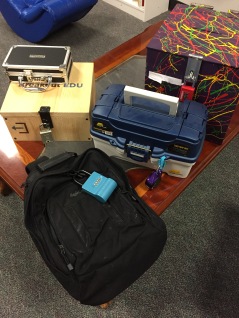
This week I wanted a fun review of the objectives that we have learned in Math thus far. So my ‘brilliant’ idea was to create 5 mini BreakoutEDU games for the students to rotate through. I have 5 tables groups, thus the 5 mini games. I went through our math program and copied some challenge problems for the students to solve. I gave them 5 minutes to complete each game.

img_4672Yes, one of the breakout boxes is a backpack! This was their first exposure to BreakoutEDU. At first, they thought it was going to be easy. A few decided that they would just ‘mess’ with the locks. They soon figured out, it wasn’t so easy!

So during the first round, only 1 of the 5 groups was successful. The other groups were disappointed that they didn’t succeed. I also think they thought it would be much easier than it was. The next round was a bit more successful: 2 groups succeeded. I even had one group that went 3-2 for games. All in all, 11 of the 25 games were successful. Not bad for our first try.

At one point, one of the groups that hadn’t cracked any locks asked if we were going to do it again on Monday. I was a bit nervous that the lack of success with this group (based on the kids in the group) was proving to be discouraging. However, when I answered no they were disappointed that they WEREN’T doing it again on Monday! They went on to tell me how much fun it was! This will be happening again this year.

Mathbowl 2016

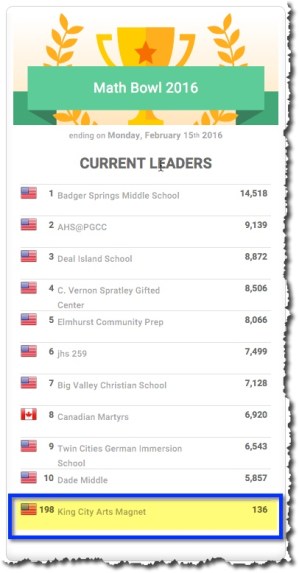
WMathbowl 1hile our school didn’t win, we had a lot of fun! I have never seen my students so focused and determined. One student asked if I could assign MORE challenges! Yes, MORE! How awesome is that?

In the midst of it all, we were challenged to participate in a Fai-To! This is where our school and another go head to head. Considering that our Internet went down twice in the past week, I was pleased to learn that we WON the last Fai-To!

There aren’t many classrooms at my school using Mangahigh, so to have 136 points is pretty big for us.

mathbowl 2

To top it all off, I had an IEP for a student on Friday. The parents commented how much the student, who struggles academically, enjoys Mangahigh. The student often asks to try, “Just one more time,” in order to achieve a higher score, beat another student, or gain another medal.

Just another reason to love this program! And to all the winners, congratulations!

Make It Ourselves!

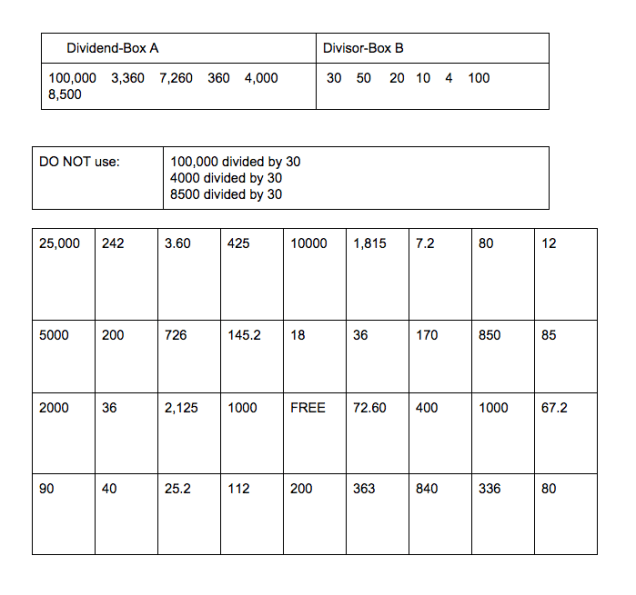
We have been working on division with and without decimals. To help my students gain experience with the computation, I found a game (Four in a Row) in Georgia Math. They enjoy the game, but you always have those few who get board because it’s too easy. And yes, I had some of those. However, these 3 boys didn’t complain. Instead, they asked if they could make their own.


Screen Shot 2015-12-14 at 5.22.42 PM
Credit: J-Jey, Julian, and Adan

The boys chose the numbers and did the division to fill in the boxes with the quotient. This week, the rest of the class was able to enjoy the fruits of their labor. It was a hit.

Now, this same group has decided to recreate another game. It was a multiplication board game, also found in Georgia Math. They are pretty excited.

Why was this so important? First of all, we talk about differentiation but aren’t alway great at it. This allowed my more proficient students to be challenged yet work on the same goals as the rest of the class. Secondly, and more importantly, my students took control over their learning and thought of a way to challenge themselves. What a powerful lesson for all.


They Asked The Questions

Recently I wrote about jazzing up Math class. I was going to have them use real world situations to make the learning more relevant. After writing Ugh, Math, John Stevens suggested having the students come up with the questions. The idea being that they will come up with better questions than I could.

candy We looked at different candies. Here were some of their questions:

  • How many of each candy are there?
  • How much protein in each candy?
  • How much calcium in all the candies?
  • How much does the bag weigh?

There were some pretty great questions that would require a lot of math. We started working out how much the entire bag weighs. We are basing it on the weight of the candy.

John was right, the questions were better and I had instant buy-in to boot! I will definitely be doing more of this.

Ugh, Math

Now don’t get me wrong, I love Math. To me, it’s like a puzzle and I like puzzles. However, that is not the case for many. Most of the time, it’s dry, boring, and disconnected from everyday life – at least that’s how the publishers present it. Which is yet another reason I hate publishers – come on, put some effort into your lessons. Less snazzy pictures – which there really aren’t that many – and more snazzy lessons!

This week I introduced long division to my 5th graders – you all groaned on that one didn’t you? Yeah, not the most interesting Math concept. It’s mostly procedural and very dry. And the publishers… a list of division problems to work out. BORING! Then there are the word problems:

A candy factory produces 9,876 pounds of chocolate in 24 hours. How many pounds to they produce in 1 hour?

Even the person who loves Math, like me, is thinking, “Who cares?” I mean really unless I’m the production manager, I couldn’t care less.

Fortunately, I have been inspired by the likes of La Cucina Matematica (John Stevens and Matt Vaudry) and Andrew Stadel (Estimation 180). They make Math relevant and fun. This is what I want for my students. And coming up with examples of how division can be relevant to my students isn’t THAT hard.

So what am I doing tomorrow in Math? Working with a bag of Halloween Candy. Amazingly, I still have some hanging around the house. Now, I can’t actually bring in a whole bag – which would totally be better (maybe I’ll swing by the store and see what’s on sale); they could manipulate the pieces. But… I sort of ate an embarrassing amount of the bag. Banana Laffy Taffy is a weakness of mine. So I did the next best thing, took a picture of the Nutritional Label – which I didn’t really read based on my consumption of said contents.

IMG_3319

That means I can eat 4 pieces of my beloved Banana Laffy Taffy, and that is 1 serving (nice to know). So in a bag of 200 pieces how many are Laffy Taffy? Of that, how many servings of Laffy Taffy are there? It is also important to note that there are 2 flavors of Laffy Taffy. So you can further break it down and figure out roughly how many servings of Banana Laffy Taffy I ate. We could go on to find out how many servings of the candy are in the bag, or how many calories are in 1 Laffy Taffy. We could take the total number of pieces and split them up among all of us.

Is this the most innovative lesson ever? Not even close. Is it better than the dreaded publishers’ nonsense? Absolutely. Lessons like this could go on with items such as Hot Cheetos, chips, Taquis, and anything else the kids are into. I also get to sneak in lessons about serving size and portions.

Math Reasoning & App Smashing

While at Fall CUE a few weeks ago, I learned about Which One Doesn’t Belong from Nancy MInicozzi. The beauty of Which One Doesn’t Belong is that depending on your perspective any of the 4 choices is correct. This has been wildly popular with my students. They feel successful because of the low risk.

Given the above choices and Padlet, my students are required to defend their answer. Recently, one of my students began experimenting with the options on Padlet. She realized that she could embed a voice recording. The next day, she decided she didn’t like the sound of her voice, so typed her response in Voki, recorded the chosen voice, then embedded it on the Padlet. Now the rest of the class wants to learn how to do it. However, she is a bit devious. She refuses to help them because she wants them to figure it out on their own. I also suspect that she likes the fact that she is the only person who knows how to do it. I love when they try to outdo each other. I can’t wait to see what they come up with next!

Success In Math

Did you ever have one of those days, in teaching, where you thought, “YES! This is what it’s all about”? Yeah, I had one of those moments today.

We have been talking about place value and really digging in deep in math. Today we organically began talking about exponents. I say organically because while I’ve touched on the subject before, the students really hadn’t grasped the concept. Yet today, they began making connections. And THAT was super cool! We really only focused on exponents as they relate to the base ten number system. For example 10 x 10 = 100 = 10

This led to one student wondering if exponents “only work” with 10 or does it work with other numbers. We briefly discussed this. Then another student started making connections about the number of zeros and the exponent.

THIS is exactly what Common Core Math is about – looking deeper into the systems and the ‘why’ and discovering the connections and shortcuts. Knowledge IS power!

cc 0.0
cc 0.0