Measurement & Data Excite Me!

When you think about data, the first thoughts that come to mind might be how dull or uninspiring it can be. But what if there was a way to turn that perception around and make learning about data an exciting journey for elementary school students?

Enter the newest MathRep. This template is designed to engage students while teaching bar graphs and picture graphs to young learners.

In this blog, we will delve into how this new MathReps template is exciting elementary math students. It offers educators a fresh and dynamic method to ignite enthusiasm for data interpretation among their students. Get ready to explore the possibilities and discover how this MathRep can make a real difference in the classroom!

Picture This

This is an example that aligns to 3rd-grade standards: 3.MD.B.3 Draw a scaled picture graph and a scaled bar graph to represent a data set with several categories. Solve one- and two-step “how many more” and “how many less” problems using information presented in scaled bar graphs.

You’ll notice that the same information is used to complete each of the graphs. This leaves quadrant 4. It can have questions about how many more and how many less, but why not allow students to observe the data and make their own observations. Leaving it open-ended like this allows all students to be successful. In addition, you will have students making observations that go beyond how many more/less.

The Setup

When first introducing this MathRep activity, it is recommended to provide students with the information located in the center of the paper. Subsequently, they can proceed to create the graphs themselves. Once they have gained proficiency in graph creation, the teacher can fill in the graph and task the students with completing the remaining sections, including the center. For a more advanced approach, the teacher can fill in the ‘Mathematical Observations’ square (quadrant 4), leaving the rest to the students. This adaptable strategy can effectively challenge students at various proficiency levels, guiding them toward a deeper comprehension of the material.

What Will You Do?

The power of this MathRep lies in its ability to enable students to interact with data in multiple ways simultaneously. This allows students the opportunity to make connections between different representations of information, leading to a deeper understanding. Teaching skills in isolation should and has been discontinued according to the Common Core Math Clusters, as math is intertwined with all aspects of learning. This MathRep illustrates these connections, preparing students for future success.

Number Paths for Students

Primary teachers have been embracing the concept of number paths as a valuable tool to foster fluency and number sense among young learners. A number path is a linear visual representation of numbers, which serves as a versatile aid in helping primary students comprehend and engage with numbers more effectively. As I have been collaborating with a group of primary teachers, it has become evident that they recognize the significance of number paths in facilitating a deeper understanding of numerical concepts. This has led to an increasing demand for additional number paths, reflecting the enthusiastic adoption of this resource within their educational practice.

Why?

After spending a few weeks working with small groups, the teachers quickly realized the potential of this tool for the whole class. They noticed an improvement in their students’ abilities, prompting another teacher to request number paths from 21 to 40 for practicing addition and subtraction with larger numbers. These number paths are completely customizable, so whatever your needs are, you’re covered.

Create

Initially, I created the prototype with cardstock, pipe cleaner/craft sticks, and a bead. That proved not to be the best. So, for the teachers, I laminated the cardstock, switched to a piece of yarn, and changed out the bead style. They work fantastically. I also made sure to take a piece of packing tape to the back to secure the yarn after it was knotted.

Result

It was a huge success! Students can easily manipulate the beads, allowing them to learn about numbers in a hands-on fashion. If you would like a copy of the templates, feel free to download them. They are in the Kinder and 1st-grade MathReps slide decks. I have also created some number path games that I will post about later this week.

How are you using number paths in your primary classrooms, and how are your students responding?

Download the template

MathReps Deliver Results

For years, I’ve questioned the effectiveness of MathReps and pondered whether the skills transferred to everyday math tasks. Known for overthinking and constantly questioning things, I’ve been intrigued by recent data from teachers showcasing the positive impact of MathReps on their students.

There are numerous reasons to celebrate these results. Firstly, this is a multi-year comparison illustrating a significant improvement. The 2024 year initially showed a much lower proficiency level than the 2023 year. However, it is important to note that their overall gains were greater in 2024. Secondly, the teaching staff remained consistent over these two years; there were no departures or new additions. Remarkably, one particular class saw an astounding increase from 5% to 90% proficiency in just 4 weeks. It’s worth noting that this exceptional progress happened after the teacher conducted the final assessment earlier than planned due to external circumstances. Subsequently, the same group of students took the SBAC IAB for Fractions, which resulted in 14% below the standard and 86% at or above it. This is particularly noteworthy as the class had only been 5% proficient with fractions a few weeks earlier. While the teacher deserves full credit, she acknowledged that regular completion of MathReps played a role in this achievement. Furthermore, the IAB takes the students’ knowledge of the subject matter and requires them to use that knowledge in context. This further supports knowledge transfer is happening. This is just one example of the success that can be achieved through the use of MathReps.

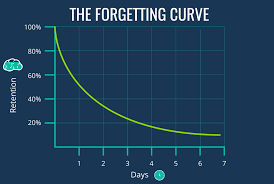
Why do I bring this up? Students are struggling, and teachers are noticing. Too often students come without the basic skills necessary to succeed with the expected standards. I witnessed this many years ago (pre-pandemic) and created the first MathRep. I noticed that my 5th-graders could master the expected skills during the first trimester. Then, the skill expectations shifted to fractions in the second trimester. This is where many of my students lost the skills they acquired in the first trimester. So by the time the third trimester rolled around, all was forgotten from the beginning of the year. Needless to say, this is less than ideal, especially when state testing is right around the corner. So MathReps were born!

So, after several years and an ever-growing library of MathReps I have started hearing from countless teachers from across the county witnessing the same success I am seeing with teachers in my district. I love that they also share stories about their students and how they have gained confidence through MathReps. All this is to say, if you haven’t tried them, you should!

What are MathReps?

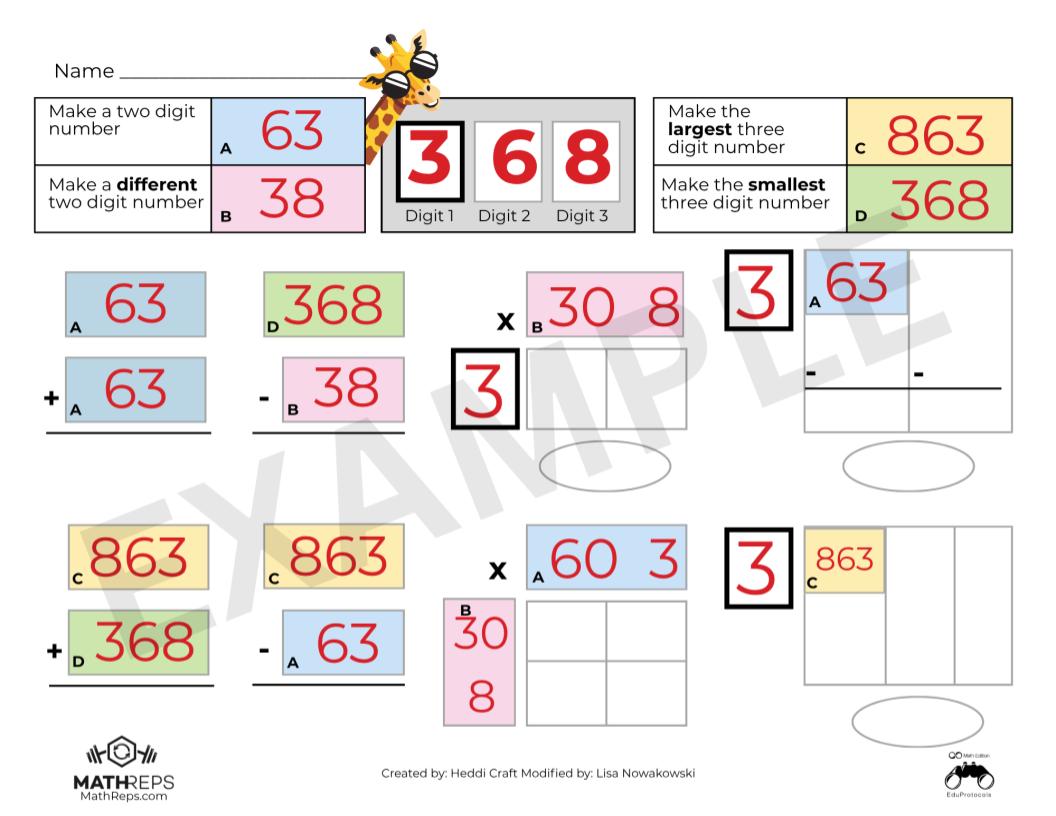
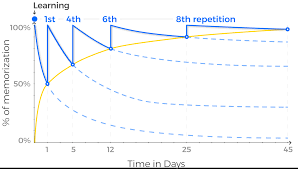
MathReps are carefully crafted templates that incorporate interconnecting skills/standards. MathReps allows students to make connections between skills and concepts seamlessly. They are customizable and versatile. The repetition allows students to master the skills without the cognitive load of navigating a new ‘review page’ each day. The format remains the same. The teacher changes the number each day, allowing students to work through a series of skills. The teacher provides immediate feedback by walking around the classroom or checking the work as a whole, leaving zero paperwork for the teacher to deal with at the end of the day.

MathReps explanation video

Where to Start

With this data, it’s a no-brainer. MathReps work. If you’re looking to get started, head on over to MathReps.com and find a template that’s right for you! No need to worry about the cost, it’s FREE! The templates are all teacher-generated. That’s right, made by teachers just like you for students just like yours.

Ditch the C.U.B.E.S. Strategy in Math

First of all, I want to acknowledge the tremendous impact of Robert Kaplinsky’s insights, which have resonated with many for years. His thought-provoking posts “Is Problem Solving Complex or Complicated?” and “Why Do We Have Word Problems?” are invaluable resources. Today, I want to not only express my appreciation for Kaplinsky’s work but also highlight an alternative strategy to the C.U.B.E.S. approach. We can broaden our problem-solving toolset by exploring new perspectives, and I believe this strategy will further enhance our problem-solving skills. Don’t miss out on the original posts: Is Problem Solving Complex or Complicated? and Why Do We Have Word Problems?.

This image shows what the acronym C.U.B.E.S. represents. Many teachers use this to teach an easy way for students can begin to tackle word problems. I, in fact, had an anchor chart displaying this very technique many years ago. As the saying goes, “Know better, do better.” I now know better and therefore do better. I know you might be asking yourself, “Okay, but I still don’t get why this isn’t ideal?”


Let’s consider the problem to the right. With our adult brains, we understand that it is a two-step problem. We understand we need to add the adults and children together and then subtract the number of males who were in attendance. Now imagine your 8-year-old self reading this and not yet having reading mastered let alone the comprehension skills to decode what is being asked. (Okay, maybe that was just me and my learning disability) You can see that I also went through the CUBES strategy. I circled the numbers, underlined the question, boxed keywords, and got rid of extra information. Arguably, the statement that everyone showed up might also be considered extra information to a young learner. An 8-year-old will start the CUBES process. They will look at the boxed words to find out what operation they need to use. And this is where we run into our first problem. It only says, “How many.” It doesn’t say, “how many more,” or “how many less.” Being around kids, we know that their default is to add. So what are they going to do? You guessed it, add 12, 25, and 15. Even if the question that is underlined is: How many females were there? chances are students are still going to add it all up because they are specifically looking for keywords like ‘in all’, ‘altogether’, ‘less’, ‘more’, etc.

Years ago, I used to teach my elementary students these strategies, as it was what I knew at the time. However, as I learned better strategies to help students, one of my favorite methods became the 3-Read Protocol. You can find more information about it in the blog post Mastering Mathematical Language Routine 6: Three Reads. This approach helps students concentrate on understanding the story, identifying units and quantities, and focusing on the question or task. By following the 3-Read Protocol, students can comprehend the context, which enables them to think critically instead of simply focusing on a procedure that may or may not work.

Finally, to help students effectively apply the information from the story, I highly recommend integrating MathReps into your classroom. MathReps are strategically practiced sets of skills that allow students to practice basic math concepts in similar skill clusters and receive immediate feedback. This approach promotes automaticity and fluency, freeing students to focus on what is needed rather than both what to do and how to do it. You can delve deeper into MathReps by reading a series of blog posts. I suggest starting with The Power of MathReps.

It Doesn’t Always Start Off Smoothly

When I first started attending tech and innovative teaching conferences, I felt completely overwhelmed. It’s common to feel this way when surrounded by so much new information and ideas. Many of us are eager to try everything at once, but then struggle to figure out where to begin and how it will all come together. I have to admit, I often wondered if I could even pull off some of the amazing things I saw. It took me far too long to realize that presenters, including myself now, tend to showcase only the very best. Starting something new is rarely a smooth process; in fact, it’s often quite messy and can even be painful at times. But embracing the challenges is all part of the journey. And that’s what this post is about.

Messy MathReps

When presenting on MathReps, I am very open and honest about the time it took my 5th-grade class to complete the first MathRep – 45 minutes, in case you were wondering. As a teacher, I am acutely aware of the learning curve involved in implementing MathReps. Some students may breeze through independently and accurately within three days, while others may require weeks of support. This variability is the inevitable, albeit messy, aspect of introducing MathReps or any new routine/learning opportunity.

Why do I bring this up? I understand the frustration of the messiness of beginning something new and wanting to revert back to a previous routine or way. The idea of starting something new after the school year has started can be daunting. There are pacing guides, expectations, benchmark assessments, and a million other tasks that weigh on us. We often hear that we should give it time, but all too often it doesn’t feel as if we have the time to give. But some things are worth spending time on.

Why Is MathReps Worth It?

MathReps is undeniably worth the investment due to the proven effectiveness of repetition in skill acquisition. As with any new skill, whether it is teaching, riding a bike, or knitting, initial proficiency is typically lacking. Through consistent practice and the repetition of key actions, one can develop heightened confidence, risk-taking, and greater speed. Similarly, MathReps specifically aims to provide students with ample opportunities for repetitive practice, thereby enabling mathematical skills to become second nature. Once proficiency is achieved, students can then apply their knowledge in varied contexts, such as solving word problems. Without this foundational knowledge, tackling word problems becomes an overwhelming task. For instance, even if a student knows that they need to multiply a two-digit number by a three-digit number, without understanding the process of multiplication, they are left unable to proceed effectively. It is akin to attempting to walk before mastering the skill of crawling. Through consistent practice and the connections facilitated by MathReps, students are empowered to enhance their confidence, adaptability in thinking, and fluency in their mathematical abilities.

More 2nd-grade MathReps on Wipebook

After sharing my post about the amazing NBT standards on Wipebook, the response has been incredible! So many people have reached out, eager to discover what other fantastic MathReps are available on this innovative platform. And guess what? I’ve got another gem for you – skip counting! This incredible resource delves into three NBT.A standards, making it an essential tool for mastering mathematical concepts. Let’s dive in and explore this MathRep on Wipebook and the standards found on it!

  • 2.NBT.A.1: Understand that the three digits of a three-digit number represent amounts of hundreds, tens, and ones; e.g., 706 equals 7 hundreds, 0 tens, and 6 ones. Understand the following as special cases
  • 2.NBT.A.2: Count within 1000; skip-count by 5s, 10s, and 100s.
  • 2.NBT.A.3: Read and write numbers to 1000 using base-ten numerals, number names, and expanded form
  • 2.OA.C.3:Determine whether a group of objects (up to 20) has an odd or even number of members, e.g., by pairing objects or counting them by 2s; write an equation to express an even number as a sum of two equal addends

Bonuses of Using MathReps on Wipebooks

  • Concept Connection: Using MathReps allows students to make connections between concepts, helping them master the skills necessary to access higher thinking skills.
  • Reusable Surface: MathReps on Wipebooks provides a reusable surface, allowing students to practice multiple repetitions in one go.
  • Student Engagement: Teachers who have implemented MathReps on Wipebooks have found great success, with students cheering when asked to complete them.

Watch the video below that explains how to implement MathReps in your classroom.

2nd Grade NBT MathRep

The captivating world of MathReps is even more exciting with this second-grade MathReps on Wipebook! What sets this apart is its eco-friendly design that saves paper, its reusable surface allowing for multiple reps in one go, and its seamless integration with a scanning app. Not to mention, it covers three of the four NBT standards in second grade. Be sure to check out the accompanying video for a closer look at this game-changing MathRep on Wipebook!

Mastering Mathematical Language Routine 7: Compare and Connect

In the previous Mathematical Language Routine (MLR) discussions, we explored a variety of essential skills. MLR 1 focused on enhancing our understanding by revisiting and reinforcing key concepts, making our knowledge “Stronger and Clearer Each Time.” We then moved on to MLR 2, where we delved into the crucial skill of “Collecting and Displaying” data effectively. Building on this foundation, MLR 3 emphasized the importance of “Critiquing, Correcting, and Clarifying” our models and methodologies for optimal results. In MLR 4, we explored the “Information Gap” and how to use this strategy to be thoughtful of the information needed to solve problems. Continuing this journey, MLR 5 introduced the skill of “Co-Crafting Questions and Problems” collaboratively to foster innovative approaches and insights. Finally, in MLR 6, we explored the technique of “Three Reads,” emphasizing the significance of multiple reads in order to enhance student understanding. Let’s now embark on our next MLR discussion, MLR 7 Compare and Connect.

MLR 7: “Compare and Connect,” has the purpose of fostering students’ meta-awareness in their exploration of different mathematical approaches, representations, concepts, examples, and language. Through this MLR, students are encouraged to reflect on and verbally respond to these comparisons. This involves analyzing why certain mathematical actions or statements are done in a particular way, identifying and explaining connections between various mathematical representations or methods, and pondering how one idea relates to others in terms of both concepts and language. To support this learning process, teachers should model their thinking aloud when addressing these questions. This routine allows students to engage in rich mathematical conversations. We will explore two ways in which to accomplish this.

Which one doesn't belong

Getting students to engage in discussions about math, make connections, and consider different perspectives can be quite challenging. I often encounter students who simply say, “It was in my brain” or “My brain told me the answer.” However, by modeling and encouraging metacognitive awareness, students can begin to make connections on their own. One effective routine that focuses on linguistic skills is called ‘Which One Doesn’t Belong‘. This activity can be done in groups, in pairs, or as a whole class. Students are presented with four images, equations, numbers, graphs, or geometric shapes, and they are asked to identify a commonality among three of them and explain their reasoning. The interesting twist is that any combination of three out of the four options can be correct. For example, in the orange example, one could argue that the three triangles go together and the hexagon is the odd one out. Alternatively, one could justify grouping all the white-filled shapes while excluding the shaded shape. This activity is both enjoyable for students and provides the opportunity to hear and consider different viewpoints.

Another interesting activity that aligns well with this MLR is the Math EduProtocol Sous Chef from The EduProtocols Field Guide Math Edition (Chapter 9, page 56). In this activity, students are grouped together to solve a problem using different approaches and then present their work to the class. For instance, if students were given the task of solving 4 x 6 in third grade, one student might use equal groups, another could opt for repeated addition, a third student may create an array, while the last student represents the equation with the area model. Through this activity, students can establish connections with previously learned concepts and broaden their understanding. There are numerous ways to implement Sous Chef, but the central focus remains on fostering connections among ideas and encouraging students to share their thought processes orally.

In conclusion, incorporating this MLR into your math class will greatly benefit your students. It will help them enhance their meta-awareness, make connections between different concepts, and foster a deeper understanding of the subject. While we have explored two approaches to this MLR, there are numerous other equally powerful techniques available. In our next discussion, we will delve into MLR 8: Discussion Supports, which focuses on stimulating rich and meaningful conversations in the classroom.

Mastering Mathematical Language Routine 3: Critique, Correct, and Clarify

Welcome to the fourth installment of our series, where we delve into the fascinating realm of Mathematical Language Routines (MLRs). In our previous discussions on MLR 1: Stronger and Clearer Each Time and MLR 2: Collect and Display, we explored the crucial role they play in cultivating critical thinking skills and fostering a deep understanding of mathematical concepts. Let’s continue our journey toward mathematical success by exploring the next MLR in line.

MLR 3: Critique, Correct, and Clarify is a routine designed to enhance mathematical writing and discussions. The primary purpose of MLR 3 is to foster a culture of critique and improvement in mathematical conversations. By engaging in this routine, students are encouraged to actively evaluate, correct, and articulate mathematical concepts with clarity. Through collaborative groups or partner talks, students can refine their thinking as they work together. To introduce this routine, teachers can model it by providing a predetermined piece of writing for critique, ensuring that it includes common errors and vague language to encourage more precise language. This approach empowers students to identify and rectify mistakes while enhancing their ability to clarify their ideas effectively.

Beginning this routine can be tricky, especially since it involves critiquing and correcting another person’s work. However, there are strategies that can help create a safe space where students feel comfortable critiquing and correcting each other’s mathematical reasoning.

At the middle school and high school levels, it is a bit easier as students change classes, and using an example from another class can happen – with names removed.

For elementary-level students, making up a problem/solution that they can use to critique is advisable. It’s important to ensure that the problem/solution contains common errors related to the content being studied.

Once this routine is established, it will become easier for students to seek out peer feedback. Teachers play a crucial role in creating a safe environment where students feel encouraged to seek out one another for critiquing. By implementing these strategies, teachers can foster a supportive and collaborative atmosphere for students to improve their mathematical reasoning skills together.

One Math EduProtocol that works well with this MLR is Nacho Problem. This EduProtocol was developed by Ligia Ayala-Rodriguez with the intention of addressing common errors exhibited by students. The main concept behind Nacho Problem is to task students with identifying and explaining the errors they encounter. Let’s take a look at an example to better understand how it works:

Second-Grade Nacho Problem Example

Ms. Daines needs to drive to San Jose which is 109 miles away. Along the way she stopped in Salinas which is 48 miles away. When she began driving from Salinas, how far away was Ms. Daines from San Jose? The work was provided but no explanation was given. This allowed for students to critique and analyze the provided work, find the error, and clarify their reasoning. 

In this example, which was taken from an introductory lesson using Nacho Problem, the wording is kept basic and straightforward. However, as students progress with this EduProtocol, their written expression and complexity will naturally grow.

The beauty of Nacho Problem lies in its simplicity and effectiveness. By encouraging students to find errors and explain their reasoning, it promotes a deeper understanding of mathematical concepts. So, if you’re looking for an educational approach that fosters critical thinking and problem-solving skills, Nacho Problem is definitely worth considering, but not your only option. Sometimes, always, never is another good approach to this MLR.

Incorporating MLR 3 into your math class can greatly enhance your students’ understanding and written communication skills, which are vital for their success. This instructional approach can be implemented as early as kindergarten, allowing students to develop the valuable ability to analyze others’ work critically. This fosters a deeper comprehension of mathematical concepts and empowers them to ask more precise and insightful questions. In our next discussion, we will explore MLR 4: Information Gap, where students are encouraged to engage in critical thinking by identifying the necessary information to solve word problems.

Mastering Mathematical Language Routine 1: Stronger and Clearer Each Time

Mathematical Language Routines (MLRs) play a crucial role in enhancing students’ comprehension and communication skills in mathematics. Developed to meet the diverse language needs of learners, these frameworks have become an invaluable tool in promoting a deeper understanding of mathematical concepts. In this series, we will explore each MLR in detail, starting with MLR 1: “Stronger and Clearer Each Time.”

Mathematical Language Routine 1: Stronger and Clearer Each Time

MLR 1: “Stronger and Clearer Each Time” focuses on refining students’ ideas and communication through various activities. By incorporating writing, listening, explaining, and integrating new language, students are encouraged to continually improve their understanding of mathematical concepts. This routine, often conducted in pairs, provides students with the opportunity to collaborate and build upon each other’s ideas, fostering a culture of shared learning and growth.

Throughout this series, we will delve into the different structures and strategies that can be employed within MLR 1, unveiling how this routine nurtures students’ confidence and fluency in mathematics. Join us as we explore the remarkable impact of MLR 1 and its profound influence on students’ language development and mathematical achievements.

The purpose of this routine is to foster the refinement of students’ verbal and written output through structured conversation and revision. By engaging in this process, students can enhance both their thinking and their expression of it.

In this routine, students initially work individually or in groups, gradually progressing towards partner work. This approach allows students to acclimate to the task and build their confidence. For those who may be less familiar with writing, explaining, and refining their thoughts, supportive strategies can be implemented to ensure their success.

Once the structures are in place, it is crucial for students to recognize the ultimate goal, which is either a deep understanding of the concept or the ability to articulate it like an expert. The listener’s role becomes significant as they ask clarifying questions, enabling a comprehensive understanding of the speaker’s thoughts. Simultaneously, the speaker benefits from this exchange, refining their thinking more clearly.

To encourage thorough responses, it is valuable to have students switch partners multiple times during the routine. By engaging in back-and-forth conversation, with equal emphasis on speaking and listening, students not only refine their thoughts but also strengthen their language and reasoning skills. The iterative nature of this process reinforces the importance of pressing for details and encourages the continual refinement of ideas.

Convince Me That, by Daniel Kaufmann, is a highly effective protocol that teachers can implement in their math lessons to foster deeper understanding and engagement among students. To successfully introduce and implement this routine, educators can follow these step-by-step guidelines:

  1. Introduce the Problem: Begin by presenting a math problem along with its solution to the students. For instance, students can be asked to explain why 3 x 4 equals 12.
  2. Form Partners or Small Groups: Divide the students into pairs or small groups to facilitate collaborative learning. This structure encourages peer interaction and promotes the sharing of ideas.
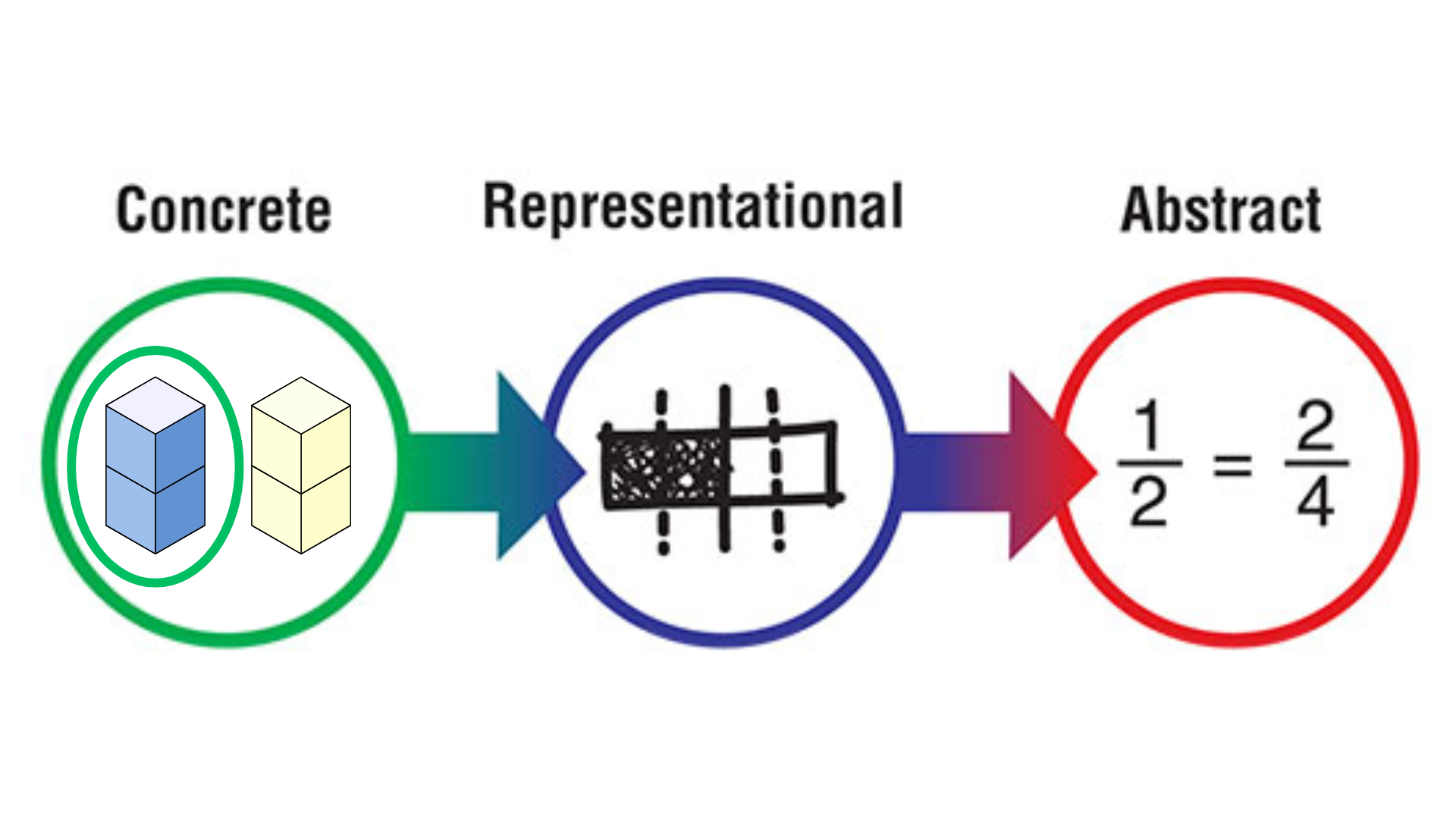
  3. Restrict Algorithmic Thinking: Emphasize that students should focus on concrete or pictorial methods rather than relying on algorithms. This restriction encourages students to think deeply about the problem and explore alternative approaches.
  4. Initiate Individual Thinking: Give students time to think individually about the problem and develop their own explanations for the solution. This step helps to build independence and promotes critical thinking skills.
  5. Structured Pairing: After individual thinking, partners or group members should share their explanations with each other. This process enables students to refine their understanding through constructive discussions and peer feedback.
  6. Revise Written Responses: Encourage students to revise and improve their written explanations based on the feedback received during the structured pairing phase. This step promotes self-reflection and reinforces learning.

To facilitate the refinement process and prompt students effectively, here are some examples suitable for Math Learning Routine (MLR) 1:

  • “Convince your partner why the sum of any two even numbers is always even.”
  • “Explain to your group why dividing by zero is undefined and cannot result in a finite number.”
  • “Justify why the product of any number and zero is always zero.”

These prompts stimulate students to think critically, apply their knowledge, and refine their explanations. By implementing the Convince Me That routine with these strategies and prompts, educators can foster deeper conversations, encourage active learning, and enable students to demonstrate a more profound understanding of mathematical concepts.

For a more detailed explanation and implementation guidelines, you can refer to Chapter 19 of The EduProtocols Field Guide Math Edition. This invaluable resource offers comprehensive insights and practical tips for effectively utilizing the Convince Me That routine in math classrooms.

In conclusion, the implementation of MLR 1 has proven to be highly beneficial for students. It provides them with a structured platform to refine their thinking, improve their communication skills, and deepen their understanding of the subject matter. By engaging in the collaborative and iterative process of MLR 1, students are empowered to develop clearer and more coherent responses.

We invite you to stay engaged with our series and continue exploring the world of Mathematical Language Routines. The second routine in our series, MLR2: “Collect and Display”, has a specific purpose. It aims to capture students’ oral words and phrases and transform them into a stable, collective reference. The main goal is to preserve the language that students use and use it as a reference point for developing their mathematical language.