Mastering Elementary Math: The Power of MathReps and Math Eduprotocols Pt. 1

According to (California) Mathematics Framework Chapter 3: Number Sense (2023), “To develop fluency, students need to have opportunities to explicitly connect their conceptual understanding with facts and procedures (including standard algorithms) in ways that make sense to them.” So what does all this mean?

To develop fluency, students need to have opportunities to explicitly connect their conceptual understanding with facts and procedures (including standard algorithms) in ways that make sense to them.

(California) Mathematics Framework Chapter 3: Number Sense (2023)

Building upon basic math concepts in early elementary is crucial for laying a strong foundation for future math concepts and overall academic success. By introducing and reinforcing fundamental mathematical skills, students develop essential problem-solving abilities, logical reasoning, critical thinking, and analytical skills.

When children acquire a strong understanding of basic math concepts, they are better equipped to tackle more complex mathematical ideas in later grades. By gradually introducing new concepts and building upon prior knowledge, students can gradually develop their mathematical proficiency. This progressive learning approach optimizes their chances of grasping and mastering higher-level math topics.
Moreover, the repeated practice of these basic math concepts is essential for long-term retention and automaticity. MathReps and Math EduProtocols provide valuable support in this process. Through systematic and repeated practice, students reinforce their understanding of basic math skills and improve their fluency.

Furthermore, the early development of strong math skills has a significant impact beyond the classroom. The critical thinking and problem-solving abilities fostered through the study of math are transferrable skills that have real-world applications. Proficiency in math opens doors to careers in various fields such as science, technology, engineering, finance, and even art, where mathematical reasoning plays a vital role.

In conclusion, building upon basic math concepts in early elementary is crucial for a child’s future academic success. By laying a strong foundation, students develop essential skills and pave the way for a deeper understanding of more complex mathematical concepts. MathReps and Math EduProtocols contribute to this process by providing systematic, repeated practice to reinforce these fundamental skills and promote mathematical fluency.

This captivating series explores the immense power of MathReps and Math EduProtocols, revealing their transformative impact on student success. Embark on a journey filled with insights, practical benefits, and step-by-step implementation strategies. Delve into inspiring examples and hear firsthand testimonials that will leave you motivated and ready to empower your students for a future of achievement. Don’t miss out, follow along and unlock your students’ true potential.

MathReps on Wipebooks

August 8, 2023, marked the beginning of the school year for my district. As the school buzzed with energy and anticipation, it was a bit crazy but in the best kind of way. It felt good to be back, surrounded by familiar faces and the promise of a fresh start.

One of my primary tasks as a TOSA (teacher on special assignment) and coach is to coach teachers, assisting them in their professional development and helping them navigate the nuances of teaching and new pedagogy. Before that first day, amidst the flurry of preparations and moving classrooms, a teacher approached me with a spirited enthusiasm. She had recently decided to switch grade levels, seeking a new challenge and fresh perspectives in her teaching journey.

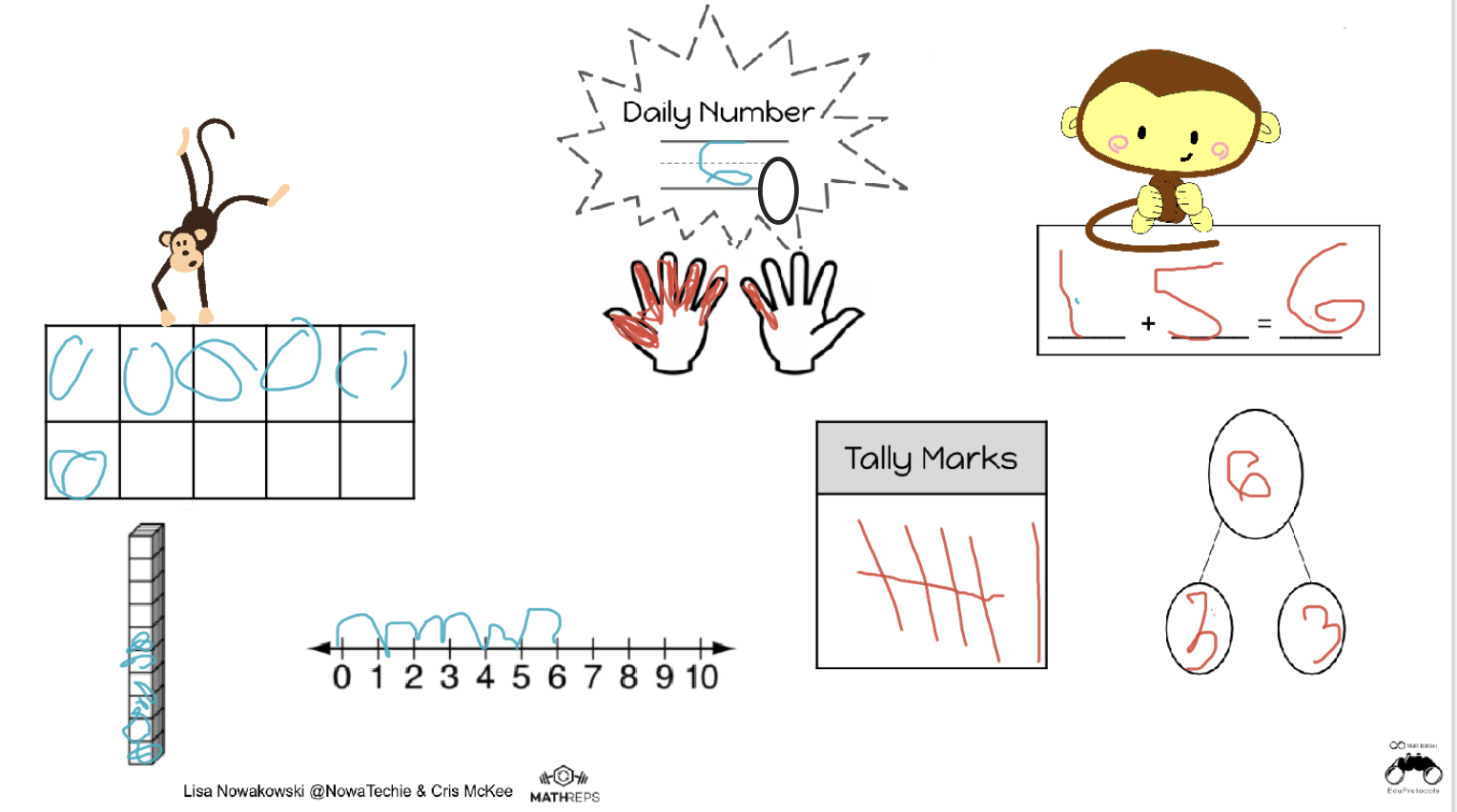
Eager to make the year a resounding success, she shared her latest plan with me. She had purchased MathReps, a comprehensive resource designed to enhance mathematical understanding and fluency, on Wipebooks.

With MathReps in her possession, she was eager to begin using them with her students. The versatility of Wipebooks, with their erasable surfaces, offered a tangible way for students to participate actively in their learning, fostering a sense of ownership and empowerment.

Off to a good start

The teacher had a great way to start her students on their learning journey by employing a technique that harnessed a low cognitive load. With the objective of introducing the concept of Numbers in Base-Ten (NBT) to her enthusiastic young learners, she began the lesson by carefully reviewing the NBT standards page.

She decided to ease her students into the topic to ensure a smooth and effective start by initially focusing on 2-digit numbers. By doing so, she created a comfortable and approachable learning environment, which allowed her students to grasp the fundamental format and expectations effortlessly.

With the teacher’s thoughtful approach and dedicated efforts, the classroom became a space where students actively participated, their confidence grew, and they developed a deep understanding of Numbers in Base-Ten. The teacher’s commitment to ensuring a low cognitive load at the outset proved to be an effective strategy that set her students up for success, fostering a positive and empowering learning experience for all.

This is where I come in

While the teacher was confident in all the tasks on the page, she did ask for a demonstration on how to round using the number line. On Friday, I went into the classroom to work with the class. They were amazing. They could easily explain many of the concepts being covered.

As we delved into the topic of rounding, I began by asking the students to think about a number line. We discussed how a number line can help us visualize and understand the process of rounding.

The students quickly caught on and started rounding with ease. It was truly inspiring to see their confidence grow as they mastered the concept of rounding using the number line.

Overall, it was a rewarding experience witnessing the students’ enthusiasm and progress in their mathematical journey. The classroom atmosphere was filled with excitement and a sense of accomplishment. I am confident that these young minds will continue to excel in their mathematical abilities, thanks to their dedication and eagerness to learn.

Nacho Problem

What’s a problem that’s not yours? Nacho Problem!

It’s that time of year, Test Prep time. Which makes me think about using EduProtocols for Test Prep. One great one that really promotes deeper thinking and understanding is Nacho Problem. This was created by Ligia Ayala-Rodriguez. It’s a fun way to do error analysis with your students. I have done this with students as young as 7.

One of the advantages is that you begin by telling the students the answer is wrong. This seemingly takes the pressure off. I like to have the students talk it out the first few times. I guide them along the way to help set the expectations. Just like in an ‘Analyze the Error’ on the test, students are expected to express their thoughts in writing. This can present an additional challenge if they haven’t exercised this skill. I’m not saying we should do this solely to prepare for the state test; the benefits of students being able to do this go far beyond that idea.

How to Get Started

As a class, they are presented with a Nacho Problem. We read and analyzed the problem together; starting with “What do you notice?” and “What do you wonder?” I explicitly tell them the answer is wrong and that we must find where I went wrong. I have found that looking at the question and working out the problem allows us to focus on the process (that the problem is asking us to solve) rather than the arduous task of finding a mistake. Once we work it out together, and later independently, students can then go back and compare their process with the original (wrong) process. It makes it more obvious where the original problem solver went wrong.

The written explanation can be the most difficult part. When I started doing problems like this, students would explain, in an addition problem, “I started in the ones and added 8+7. I left the 5 in the one’s place and regrouped the 1.” While technically that is true and we as teachers understand, that’s not showing an understanding. That is why practicing the structure of Claim, Evidence, and Reasoning (CER) is so important.

Claim: Ms. N. did not draw a quadrilateral.
Evidence: The student example with explanation.
Reasoning: Definition of a polygon and Ms. N’s error.

Finding Problems

One of the easiest ways to collect incorrect problems is from your class. Whether you use exit tickets or collect information from the day’s lesson, you have a plethora of options. When using student errors, it’s advisable to use a common mistake by many students. Done early, this can correct any misconceptions before they become habits. Ligia suggests using mathmistakes.org

Results

Teachers and students alike enjoy this math EduProtocol. Students find it ‘fun’ to find the mistakes. Teachers report that it takes little time to begin implementing in their classes. Doing this a few times a week can really improve understanding. Let’s face it, students LOVE to point out teachers’ mistakes.

If you use this, I would love to hear how it went. What changes did you make? How have your students improved with error analysis?

Summer Presentations

This summer, I will be presenting at two academies for EduProtocols. My sessions will have a math emphasis; shocking, I know. So this past week when I was asked to come up with titles and descriptions, I struggled. I wasn’t feeling it. Luckily, a friend called before I could toil for too long. I relayed to her my lack of motivation at the time, and she came up with some catchy titles.

  • 🍸The Mixology of MathReps – MathReps
  • Wheel Of Word Problems – Word Problems with Random Emoji
  • Playing with Parts – 8 p*ARTS meets word problems
  • 🌶️🌶️ Spicey Solutions to a Bland Curriculum – Nacho Problem
  • 👩🏽‍🍳Chef’s Kiss – Sous Chef
  • Frayas for Ya Playas – Frayer and, honestly, my favorite title
  • 🦹🏻‍♂️Math is a Villain: Comic Strip Math

Then it was time to get started on the descriptions. This is where I got inspired. I doubled down on the titles and all descriptions fit that theme. I mean, check out this description for Comic Strip Math:

In a world full of villains, the fine citizens of Mathemagicalville are up against the most evil, vile, sinister one around. Master of Dark is relentless in the pursuit of conquering the city. It is up to you, the superhero, to prove Master of Dark wrong and find the errors that were made. You create the comic, find errors, explain processes, and become the hero the city needs.

Yes, Mathemagicalville is a mouthful, but the names I wanted were all taken, and so I had to become creative. When I was creating this description, I felt that I had to be very careful with my wording. The character ‘Master of Dark’ was created by my 5th-grade class at the time, around 2019. The character was created to be gender-neutral. However, in today’s political climate, with hundreds of anti-trans laws being introduced throughout the country, I want to be sensitive to this. In 2019, the intent was to NOT represent one group as ‘evil’ or ‘bad’ but to keep the focus on math while empowering ALL the students in my classroom. The empowerment came from not having the gender stereotypes that boys are better at math than girls, and by taking the gender out of character seemed like a good solution at the time. However, as I began writing the description, I tried avoiding any pronouns. I don’t want to put a negative focus on any group.

I may be overthinking all this, and I may not be. However, in cases like this, I would rather err on the side of caution. So what do you think? Am I overthinking this? Does this character need to be revisited? Do I simply avoid using any pronouns as it’s not critical to the purpose of thinking critically about math? I would love to hear from everyone, especially those in marginalized communities.

Okay, that took a serious turn. NOW if you’d like to join me in Laguna Beach or Notre Dame this summer, here’s more information. I can’t guarantee that all seven sessions will be presented at both, but I can say that MathReps and Comic Strip Math will be presented at both – if I have a say.

Next Level with MathReps

Recently I was in a 3rd-grade classroom doing a geometry MathRep. As I was walking around I noticed that one student wasn’t just writing the answer using just numbers, he was also putting it in word form. Needless to say, I thought this was great! Which then led to a discussion on different ways we could represent the answer. We talked about using tally marks, equations, and shapes.

I then went into another class and did the same lesson. Well, another student leveled it up yet again! I was having students state their answers out loud in complete sentences. As the students were being creative in reporting their answers on their paper, one girl wrote out the complete sentence! Yes! What a win. We celebrated her and her work.

Currently, I am a Tech TOSA (Teacher on Special Assignment) in my district. I love my job for so many reasons. One of which is the ability to go into classrooms and become inspired by the teachers I work with and their students.

If you are interested in this MathRep or others that are available, please head over to MathReps.com to view them all. The best part, they are all FREE! We have kinder through high school.

MathReps Love at CUE

March 16-18 was Spring CUE, a California educator conference. There were many great sessions to choose from. In addition to all the great sessions, I was able to reconnect with friends. The night before the conference a few friends and I were able to have a fantastic dinner at our traditional ‘night before the conference starts’ restaurant. And it did NOT disappoint.

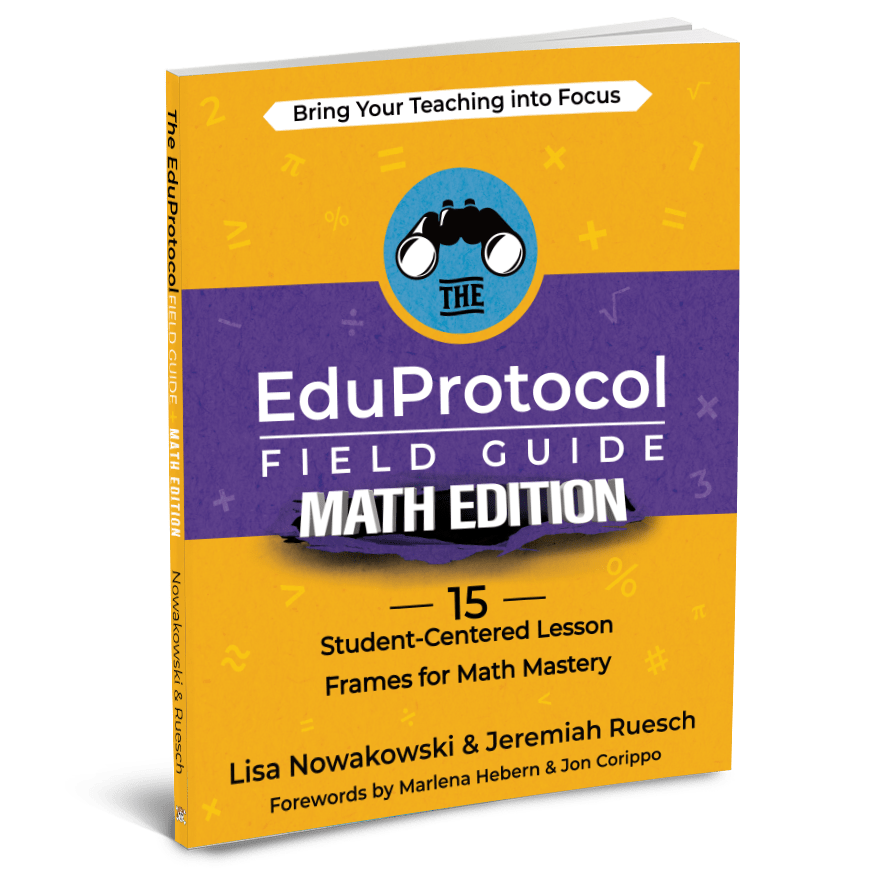
EduProtocols Math Edition available on Amazon

When I say that there was lots of love for MathReps, I’m not kidding. It felt like it was everywhere. I was not the only person presenting on it. It was in sessions, in the exhibit hall with the vendors, and people talking about them. It was everywhere! The vendor one was cool. As a friend and I were checking out the different booths, she stops me, points to an interactive whiteboard, and says, “Hey, that’s your stuff.” She was right. It was a 3rd-grade MathRep. I chatted with the vendor for a bit. I introduced myself to the person who displayed it. He commented on how he enjoys showing it on the boards because it’s so user-friendly

I was able to present MathReps and Comic Strip Math on the last day. There was lots of interest and lots of great questions. Several attendees wanted to know where they could purchase the book. Fortunately, on the book image, I had a link to Amazon.

So, all in all, it was a GOOD conference!

I’m Back!

Photo by Maksim Goncharenok on Pexels.com

Well, it’s been a hot 🔥 minute since I’ve written anything on here. I’m not exactly sure where to begin so I think I’ll just jump right in with what’s new. But before that let me reintroduce myself. I’m a lot of things but primarily a teacher, author (The EduProtocols Field Guide Math Edition), and creator of MathReps. More recently, I have started embroidery, bread making, and homemade vanilla extract.

In no particular order:

  • The MathReps Facebook Group continues to grow
  • I’ve been doing a lot of work creating new MathReps for various grades
  • EduProtocols Plus has launched and has included me in the fun!
  • Jeremiah Ruesch and I have launched our EP+ Math Show
  • I’ve been terrible about posting my resources after presenting. I will be better at that. I’ve already updated my presentation page to include Spring CUE. Go me!
  • I’ve created a course for EduProtocols Plus on implementing MathReps

I intended this one to be a quick reintroduction/catch-up post. I will write more soon about some of the amazing things that I experienced at Spring CUE 23! Quizizz was amazing and loving the new updates – that’ll be one post on its own. There was LOTS of LOVE ❤️ for MathReps during the conference. It felt like it was mentioned or highlighted everywhere from sessions to hallway discussions to the vendor hall.

I would like to thank Kyle Anderson for inspiring me to blog again. He too took a hiatus, although a shorter one than myself, and is now back at it!

MathReps on Jamboard

It’s no secret my new love is Jamboard. I began exploring it a little over a year ago. I liked some of the features: ease of writing, collaboration, and simplicity. I did NOT love some of the features: no revision history, inability to lock background, and some other annoyances. Yet, it became one of my favorite Google Tools.

Within the last four months, Google has been quietly updating Jamboard. First came the text and shapes features. Then came the ability for creators to lock a background. Recently, I discovered that a keyboard shortcut allows you to view the revision history. PC – Alt Ctrl Shift H; Mac – ALT Command Shift H

With all these updates, teachers are using Jamboard more and more. Last week I was able to work in a 1st-grade classroom and introduce Jamboard and MathReps to the students and teacher. We used a MathReps that the students could feel success. This way, if the tool was too much for them, they could at least follow along. Well, the tool was NOT too much for them. It does help that our students have touchscreen Chromebooks to use during distance learning (and yes, when we eventually resume in class instruction). The students had fun, the teacher learned about a few new tools, and everyone left feeling successful. Some students started pressing buttons (this is a good thing) and discovered the shapes tool!

Check out their work:

Extra Practice

This year I began using ‘Classroom Economy’. The students have jobs, earn money, and rent or buy their desks. Students have several opportunities to earn extra money. This is important because their monthly paychecks are less than their rent ($1000).

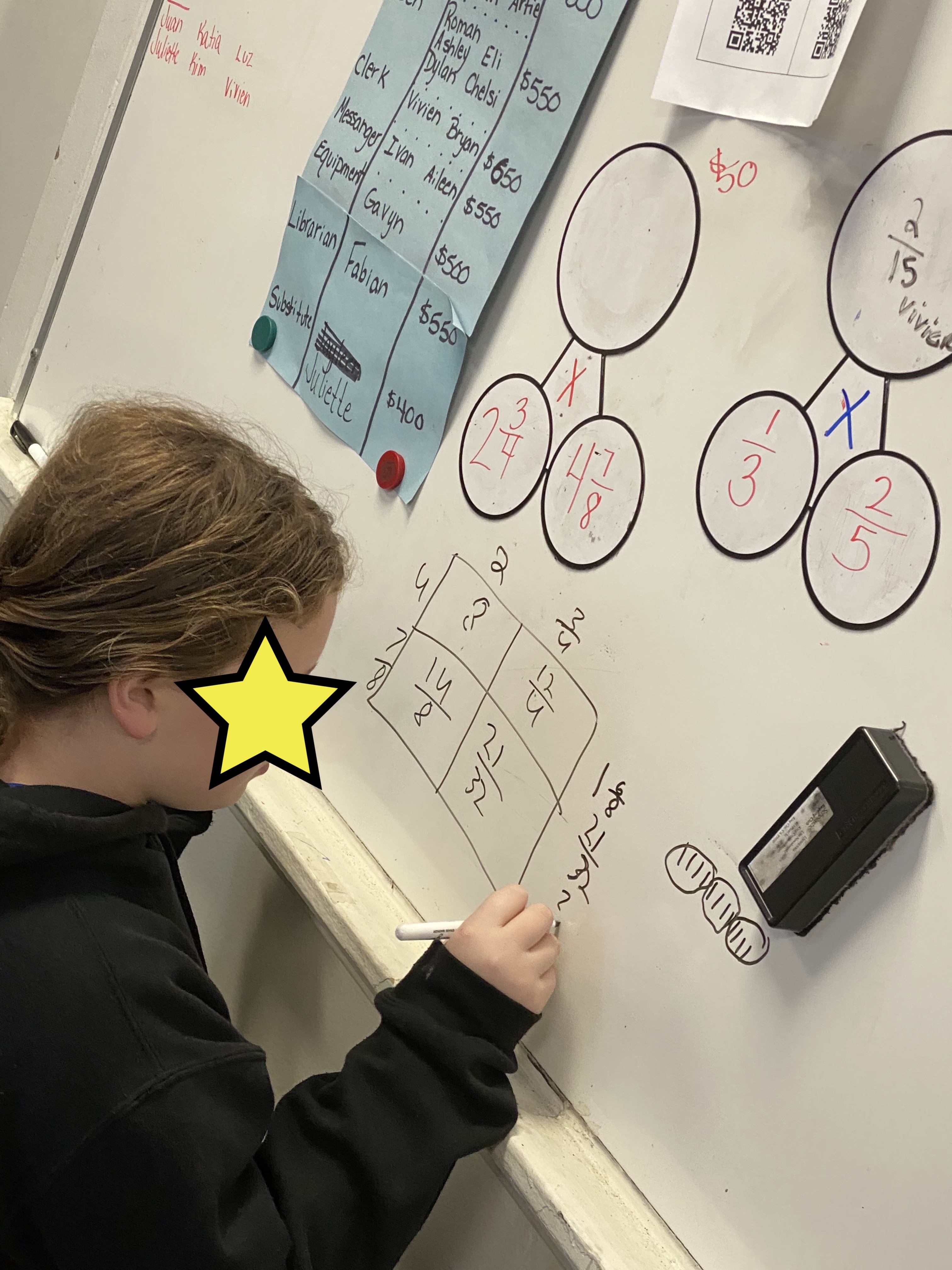
One way they can earn extra money is to solve math problems. I post two problems for anyone in the class to solve. I will only take the first correct answer. One is generally more difficult than the other thus allowing students to challenge themselves. The harder problem will earn them $50 while the easier one will earn them $20.

I was able to snap this photo of a student, who NEVER passes up the opportunity to make extra money, practicing the skills that she has learned. Added bonus, we leave the process a student takes on the board for all to see and learn from.

Math Practice


92%, Say What?

92%So what’s the big deal with 92%? A lot when it comes to having 3 weeks off and the likelihood that none of my students practiced their multiplication facts.

Monday was our first day back after winter break. As we do every day, we practiced our math facts using the Fast & Curious Eduprotocol. I had an anticipated drop from our usual 96% – 98%. I predicted, to myself,  it would drop to around 89%.  I wasn’t too concerned as I knew that they could easily get it back up to our normal within a week.

Well, to my surprise, my class scored 92%. Seriously, I was happily surprised that they really didn’t lose as much as I had feared. YES! The continuous rep practice has worked. The facts are sticking.

I was so giddy, I needed to write this quick post to celebrate the success my class is finding. I was sold before, but now I’m a believer for life!