Experiencing MathReps Success at Cipriani Elementary


A few weeks ago, I had the absolute pleasure of visiting Cipriani Elementary School in Belmont, California, and let me tell you—it was a fantastic day that filled my heart.

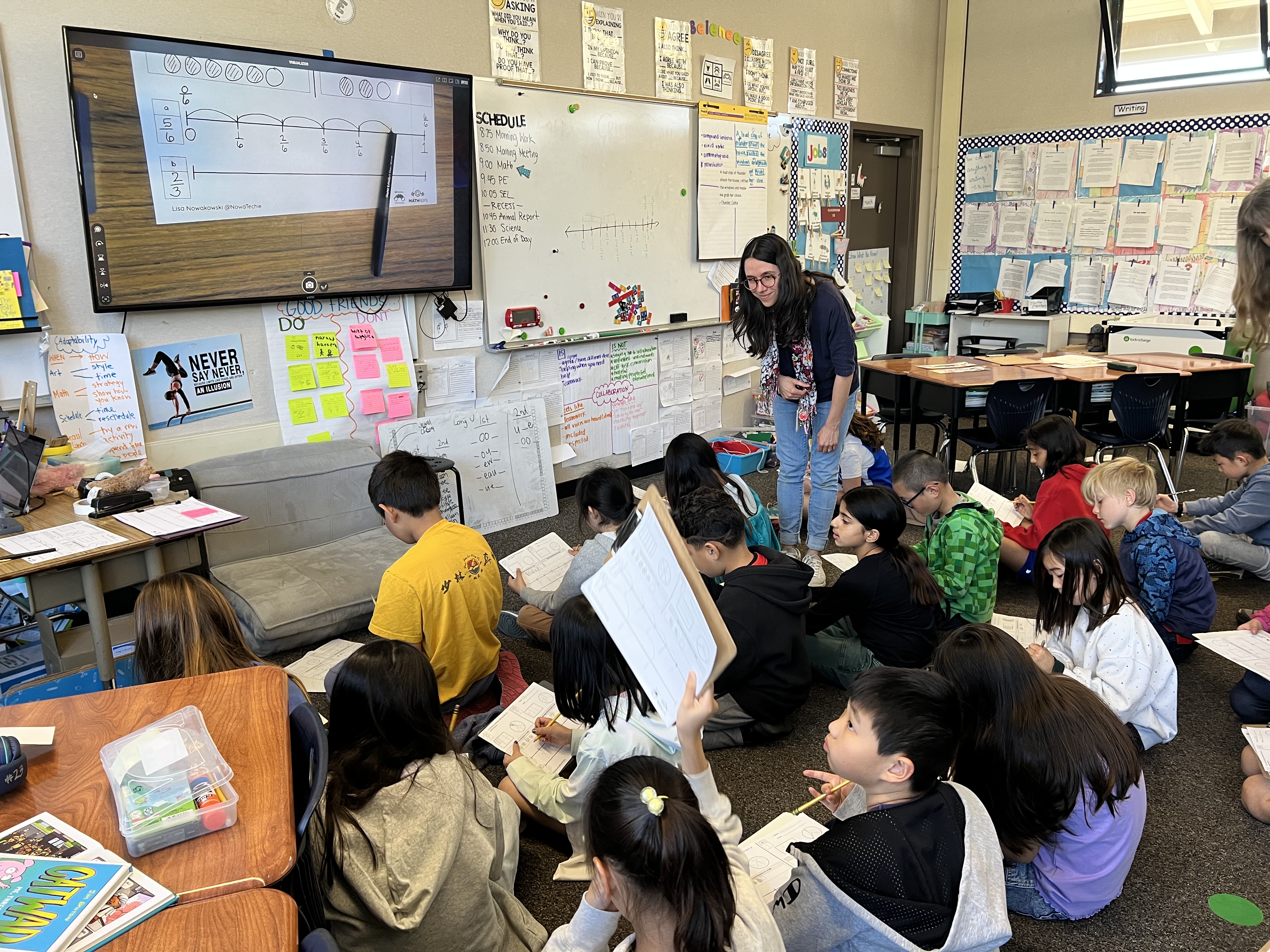
Throughout the day, I was met with warm smiles, welcoming teachers, and the most amazing group of students. I had the opportunity to visit several classrooms ranging from TK through fifth grade, and in each room, I was able to demonstrate MathReps and watch in amazement as students flourished in their math knowledge.

What stood out most to me during these classroom visits was the level of engagement and understanding the students displayed. They were respectful, kind, curious, and so eager to learn. It’s one thing to talk about the power of MathReps—but it’s another thing entirely to see it in action in so many classes.

The Cipriani staff was incredible. Not only were they open and receptive, but they also shared their own tips and tricks for how they modify and adapt MathReps to meet the needs of their students. I was genuinely inspired by the way they’ve made the framework their own. I came to share—but I left having learned so much from them too. That kind of collaborative energy is what makes this work so meaningful.

One of my favorite moments from the day happened in a third-grade classroom. As I was working with the students, one of them looked up at me, wheels turning in their head, and said, “Wait… your name is on the bottom of our MathReps!” The class instantly lit up with excitement. Then they asked, “Did you also make Math Dash Chats?” When I said yes, the energy doubled. That little moment of connection—of realizing that the person who created something they use every day was standing right there with them—was truly special. It reminded me that kids are paying attention, even when we don’t think they are.

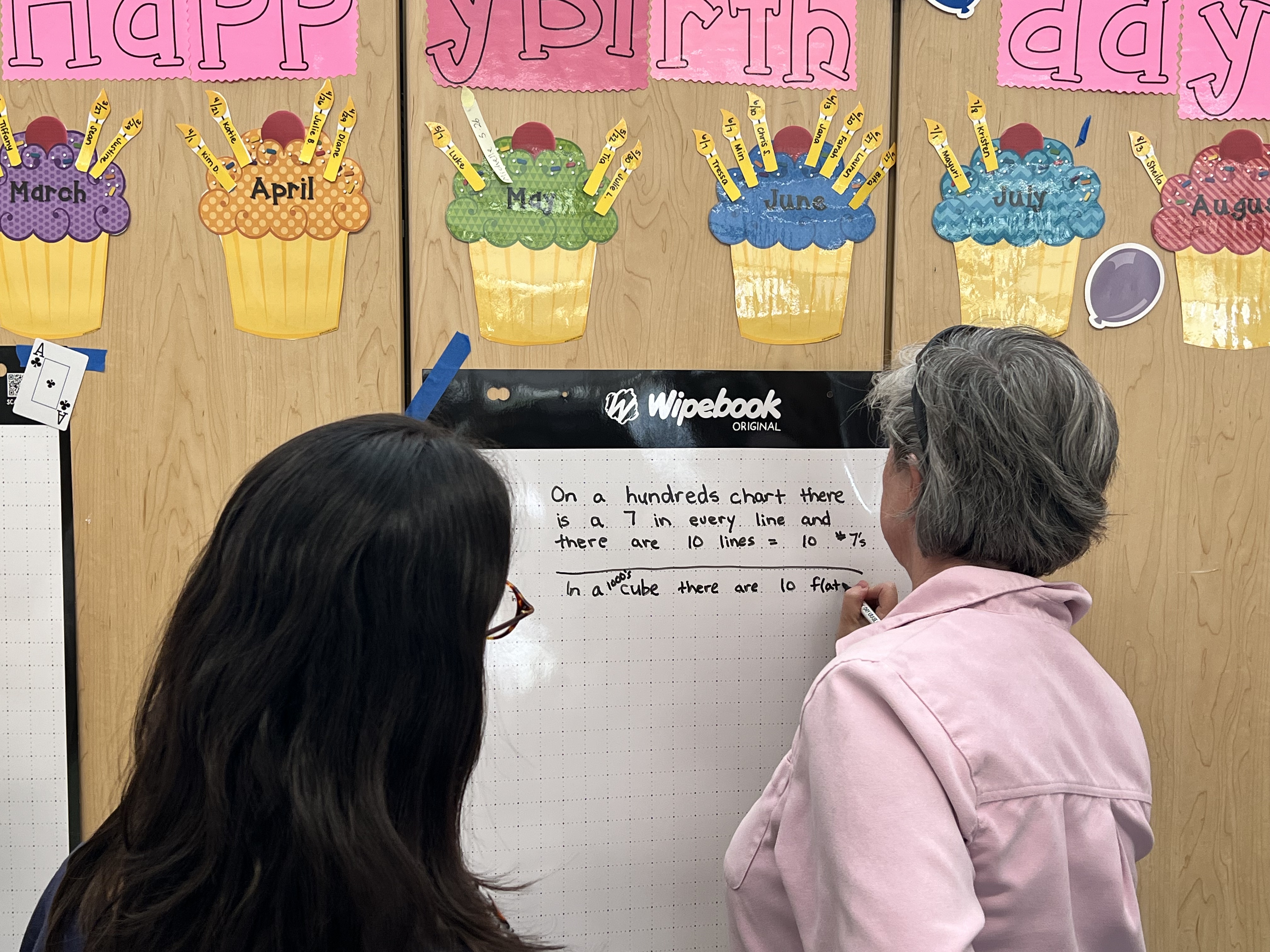
Later that afternoon, I led a Math 360 professional development session with the entire staff. Thanks to our friends at Wipebook, we had large Wipebook flip charts to work with, and it made the experience even more interactive and fun. The discussions were rich and reflective, and once again, the Cipriani teachers brought their full selves to the table—asking great questions, sharing insights, and showing a genuine passion for improving math instruction.

Overall, it was such a rewarding, joy-filled day. I left Cipriani Elementary feeling deeply grateful—and even more motivated to continue visiting classrooms across the country to share the love, importance, and power of MathReps.

I am thankful to everyone at Cipriani Elementary for making me feel so welcome.

Engaging Kids in Math: Using Play-Doh for Multiplication

This school year, I have had the privilege of collaborating with several 3rd-grade teachers. During one meeting, I shared an innovative idea from a 4th-grade teacher, Ben Cogswell. He introduced the use of Play-Doh to help his students understand multiplication through hands-on activities. I really like how he incorporated MathReps into this lesson. In the accompanying image, you can see students recording their findings in a MathReps, along with an instructional video they can reference for guidance.

Students using Play-Doh and MathReps to assist in their understanding of Multiplication and Division.

Fast forward a few months into 3rd-grade. While meeting with one of the groups, one teacher, Jensen Hall, was excited to share that she had purchased some Play-Doh for her students to use as they begin learning about multiplication. Then, about a week later, she sends me this message with images:

Message: I meant to send this to you earlier but I'm so excited about it I had to make sure I didn't forget again (sorry it's after hours). I introduced multiplication today using the play doh and it was a massive success! Such a great idea you shared!!
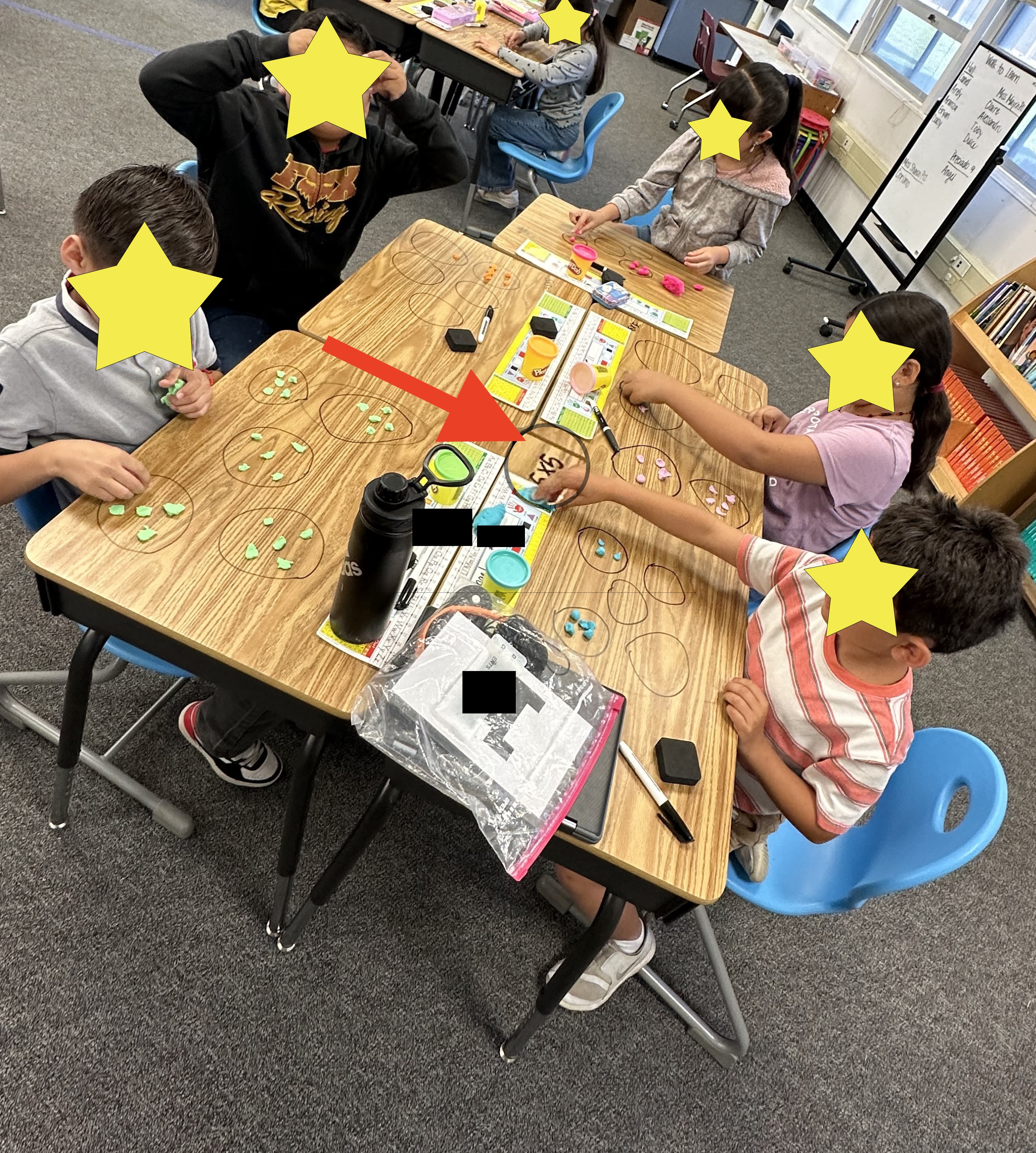
Students showing off their work.

Taking a closer look at the image, the red arrow points to where a student wrote out the problem on their desk. Using equal sets, students were able to model how to solve the problem. While the faces have been hidden, I can assure you that they were all smiling and clearly having a good time.

We all want our students to be excited and engaged with math. In the rush to fit everything into a school day—assessments, end-of-the-year testing, and much more—we often forget how to make learning fun and hands-on. Starting with concrete models is essential when teaching new skills like multiplication. Taking the time to begin with concrete models will ultimately save us time later and allow students to truly understand these foundational skills, setting them up for future success.

The story and images have been shared with permission from the teacher.

Magic School AI

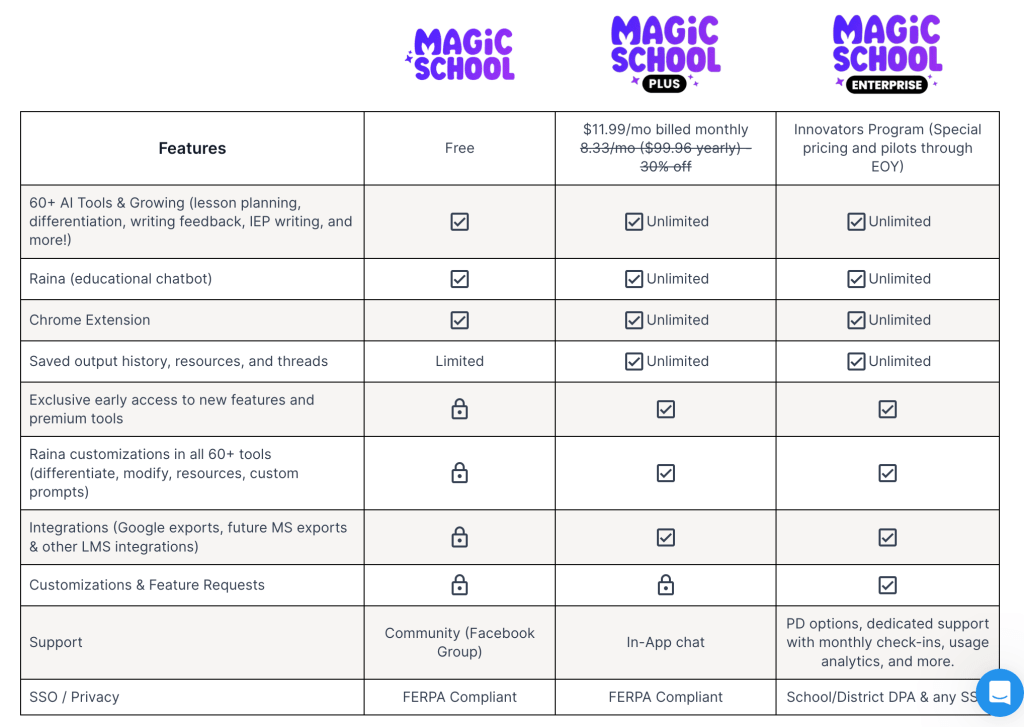
The world of AI tools is vast and ever-evolving. Amongst the sea of options, one particular tool has caught my attention: Magic School. With a focus on teachers and schools, it offers a unique approach that sets it apart from the rest. Its comprehensive range of categories opens up exciting possibilities for integrating AI into different educational contexts. The best part? It comes in both a free and paid version, tailored to suit varying needs. Allow me to share an image of its advantages from their official website. Get ready to dive into a world of innovative possibilities!

Compare subscription options for Magic School

On the home page, you will find 66 different categories. Some examples of these categories include Math Spiral Review, Standards Unpacker, Sentence Starters, Text Leveler, and IEP Generator, among many others. As I was curious, I decided to take a closer look at the Standards Unpacker category. What caught my attention was the fact that it addresses the specific skills that students need to succeed, provides clear Learning Targets, and summarizes the standard. However, I found the Instruction and Assessment Plan section to be somewhat vague. Nevertheless, one interesting aspect is that you can go back to the tool and use that initial plan as a starting point to create a more detailed and thorough plan.


Standard: 5.NBT.A.1

Break Down Standard:

Skills: Recognizing place value in multi-digit numbers
Knowledge: Understanding how the value of a digit changes as it moves to the left or right in a number
Concepts: Place value, base-ten number system, positional notation

Define Expectations:
In this standard, 5th-grade students are expected to understand the concept of place value in multi-digit numbers. They should recognize that each digit in a number has a specific value determined by its position. Additionally, they should understand that the value of a digit in one place is 10 times greater than its value in the place to its right, and 1/10 of what it represents in the place to its left.

Formulate Learning Targets:
By the end of this standard, students should be able to:

-Identify the place value of digits in multi-digit numbers.
-Determine the value of a digit based on its position within a number.
-Describe the relationship between the value of a digit and its position.

Instruction and Assessment Strategies:
Use manipulatives, such as base-ten blocks, to help students visualize and understand the concept of place value.
Provide opportunities for students to explore and compare the values of digits in different positions within a number.
Use number lines and number charts to reinforce the concept and relationship of place value.
Engage students in problem-solving activities that require them to apply their understanding of place value.
Assess students' understanding through quizzes, worksheets, and real-life problem-solving tasks that involve place value.

Summarize:
In this standard, 5th-grade students are expected to develop a deep understanding of place value in multi-digit numbers. They should be able to recognize the value of each digit based on its position within the number and understand the relationship of each digit to its neighboring digits. Instructional strategies such as hands-on manipulatives, visual aids, and problem-solving activities can help students master this concept. Assessment strategies should include both formal and informal methods to gauge students' understanding and application of place value.

From my brief exploration, I believe that this tool has the potential to greatly assist teachers in working more efficiently. It eliminates the need for teachers to come up with learning objectives, develop grading criteria, and design lesson plans. Although AI should not replace all of a teacher’s work, it can certainly assist them in the more demanding tasks. Teachers will still have the ability to review and customize the generated outputs to suit their specific requirements. Overall, I am optimistic about the potential of this tool.

Language Monsters

This is what my students are! Several of my students (and myself), have started using Duolingo to learn a new language. Currently I have 5 languages being acquired in my classroom: Spanish (most popular), French, Portuguese, Italian, and English.

duolingoIt all started several months ago with an ELL student. She was still having trouble acquiring English after being here for a few years. One suggestion I received was to have her get on Duolingo. So, we set her up in her native language (Spanish). She took the placement test and began learning English. She loves doing it, and feels that it’s been helping her. In order to have her not feel different during our Silent Reading time, I agreed to brush up on my Spanish. As time has progressed, more and more students have asked to learn a language. Yes, I realize some were asking so they could ‘get out’ of reading during Silent Reading time (SSR). I said, “Yes!” Yup, I’m that teacher that is okay when a student says they hate reading. I know they just haven’t found the right books yet, or it’s hard for them and SSR is no fun. So, learning a new language can be fun – and yes they are reading too!

What really excites me, is that some of the students asking to learn Spanish come from Spanish speaking homes. Some of these students have ‘forgotten’ their first language, in varying degrees, want to speak with their grandparents, or just want to learn the language their family knows. I think it’s all very exciting!

Now my SSR has students reading books – inside or outside; real or digital – learning a new language, listening to a book on CD, or reading a story (and taking a quiz) on Raz-Kids. Will all of them stick with learning a new language? No, and that’s okay. I love their willingness to try and learn new things.

Learning Is…

Define “learning” in 100 words or less.

This prompt made me think; 100 words or 1000 words ,I’m not sure I could ever articulate learning. But, here it goes.

learn-586409_1280

Learning is…

  • messy
  • fun
  • ever-changing
  • diverse
  • hands-on
  • cerebral
  • loud
  • focused
  • collaborative
  • filled with tangents
  • revolutionary
  • intrinsic
  • playful
  • innovative
  • exploration
  • social
  • creative
  • in a classroom
  • thinking
  • trying new things
  • outdoors
  • everywhere
  • different for everyone

Learning is what you make it. I hope you’re making the most of your experiences. (Check me out, I’ve got words to spare!)