This school year, I have had the privilege of collaborating with several 3rd-grade teachers. During one meeting, I shared an innovative idea from a 4th-grade teacher, Ben Cogswell. He introduced the use of Play-Doh to help his students understand multiplication through hands-on activities. I really like how he incorporated MathReps into this lesson. In the accompanying image, you can see students recording their findings in a MathReps, along with an instructional video they can reference for guidance.

Fast forward a few months into 3rd-grade. While meeting with one of the groups, one teacher, Jensen Hall, was excited to share that she had purchased some Play-Doh for her students to use as they begin learning about multiplication. Then, about a week later, she sends me this message with images:

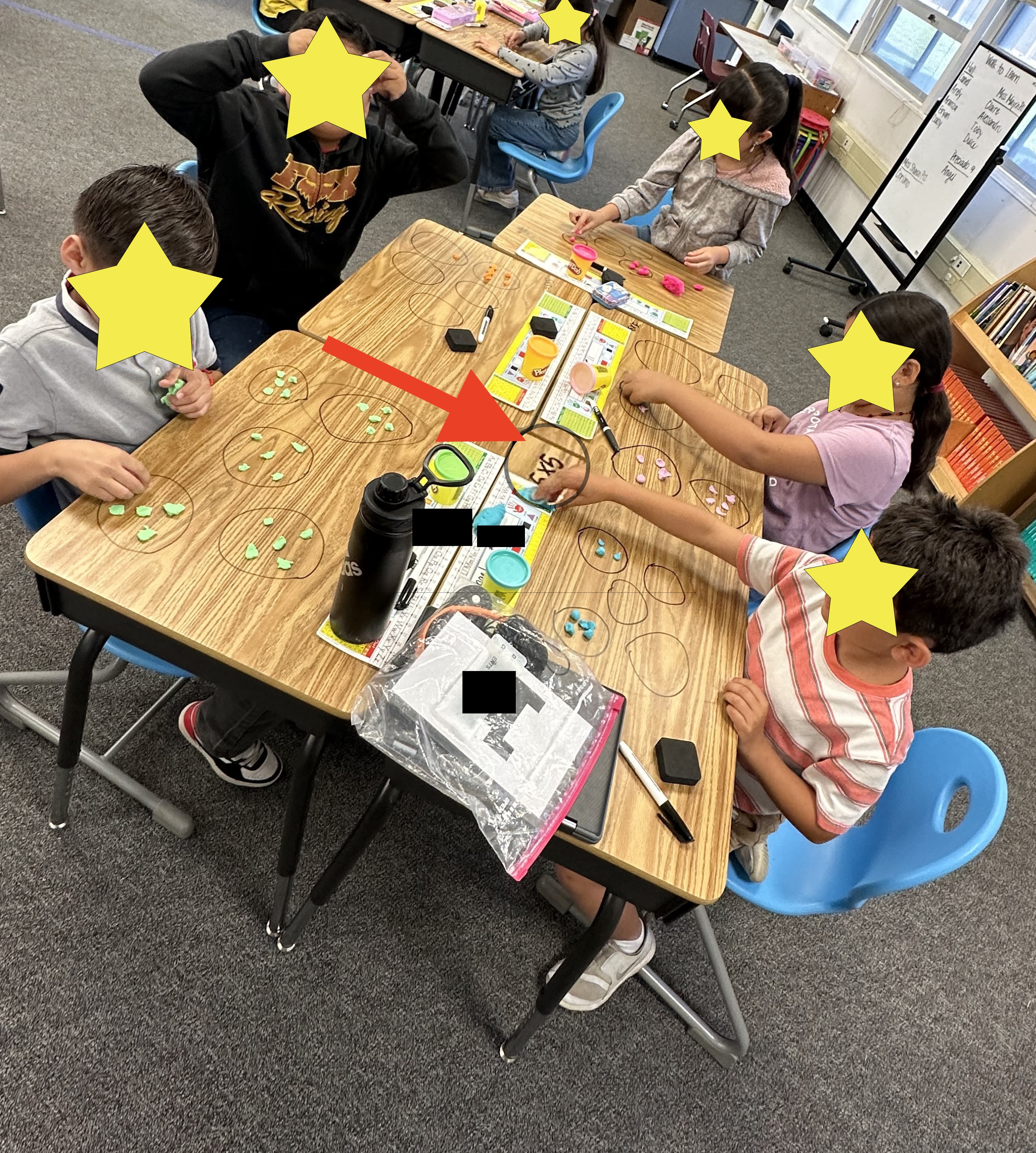
Taking a closer look at the image, the red arrow points to where a student wrote out the problem on their desk. Using equal sets, students were able to model how to solve the problem. While the faces have been hidden, I can assure you that they were all smiling and clearly having a good time.
We all want our students to be excited and engaged with math. In the rush to fit everything into a school day—assessments, end-of-the-year testing, and much more—we often forget how to make learning fun and hands-on. Starting with concrete models is essential when teaching new skills like multiplication. Taking the time to begin with concrete models will ultimately save us time later and allow students to truly understand these foundational skills, setting them up for future success.
The story and images have been shared with permission from the teacher.

 Nowa Techie