Too Much PD?

Is there such a thing as too much PD?

This is something that I have been contemplating. The past few years my district has had teachers participate in weekly PD. In the beginning, this was welcome as not only did we want it, we felt that we needed it. However this current year, I am beginning to ask if there really is too much of a good thing.

How much is too much?

Each week I am asked to participate in 90 minutes ‘collaboration’ time. To me, collaboration is organic, exciting, desired, and teacher-driven. However, when teachers are told what to do, what to discuss, and have someone watching/listening it begins to feel less like collaboration and more like a mandatory meeting. And no one likes long meetings. Then there are the 2.5-hour meetings/PD each month, plus 1.5-hours meetings/PD each month, AND 1/2 hour meetings/PD TWICE per month. This makes a grand total of 12.5 hours of meeting/PD per month. No wait, I forgot the 1.5 hours per month of math PD. So that makes 14 hours of meeting/PD per month. And none of it is teacher-driven.

So what’s the result?

Before I sat down to figure all this out, I had no idea I was getting this much each month. Some of this comes at the expense of face-time with students – a grand total of 8 hours during the regular school day. Times that by the 9 months this occurs, that’s 72 HOURS of lost face-time with my students. Wow!

In addition to the lost face-time, I fear that we are beginning to experience overload. I fear that many teachers have begun tuning out some of the good messages and practices that are being shared. I know I have. Many teachers have begun to dread the monthly 2.5-hour meeting/PD. I don’t find the math PD useful. In fact, watching an hour lesson in which the students FINALLY get to talk after 33 minutes is a bit much, even for me (I love math!). And their actual interaction with other students lasts less than 8 min in that hour.

When can I put it into practice?

If I am missing 8 hours with my students – this doesn’t include the 3 hours that my class must attend First Tee each month – when can I put what I’m learning into practice? I’m honestly not sure. I sure hope I get to do so soon.

What to do?

Honestly, I’m not sure. In and of themselves, each item is worthy. Combined, it’s proving to be a deadly combination. I am hoping that my district reevaluates some of this. Honestly, I think the monthly 2.5-hour meeting/PD needs to go. Remember sitting in those 3-hour classes in college and you were done after about an hour. Yeah, these give you that same feeling. I’m also hoping that the district asks the teachers which ones they find most valuable. Sticking with the top 2 will result in better teaching practices.


Data Driven Vs. Numbers Driven

Are you Data Driven or Numbers Driven? What about your district? In order to answer this question, we need to understand the difference.

Data Driven

data-229113_1280The buzz word from the past 8 years or so. This is where teachers, schools, and/or districts collect data from students in order to guide instruction and progress. Most often this data comes in the form of formal and informal assessments. In my opinion, the most powerful assessments are the informal ones. The ones in which teachers observe students demonstrating understanding of a concept. Based on the information collected, the teacher knows best how to proceed with the students. In short, Data Driven is helpful, guiding, and reflective. It also focuses on the growth that students have made; it recognizes room for growth.

Numbers Driven

This one is a bit trickier. It masks as Data Drive but, in pay-530338_1280fact, is not. Let me try to explain what I mean. It mainly uses the formal assessments that were mentioned above. I have experienced Numbers Driven with districts (and by extension, state and federal). Many districts give summative assessments – benchmarks. I have heard administrators claim that the information will be used to help guide teachers. See, sounds like Data Driven, but this is where it takes a turn. What is said, and the actions that are taken are two different things. This is because there are (still) Pacing Guides. So when a teacher has given the 1st benchmark, regardless of the outcome, they need to move on to the next item(s) on the Pacing Guide. There is no time to reteach confusing concepts (according to the assessments). The Numbers Driven game tends to be competitive, punitive, and unhelpful to the stakeholders – students and teachers. Its sole focus is on the final number; it’s very finite.
My Answer

I tend to be more Data Driven – based more on informal assessments. However, I get tangled in the web of Benchmark Assessments, from time to time. It’s easy to get sucked into the hype when you know you are being judged – and looked down upon – based on scores. Unfortunately, No Child Left Behind helped change the focus to Numbers Driven since that’s how money was/is allocated.

So let me ask my question again, are you Data Driven or Numbers Driven? What about your district?

The Good, The Bad, The Frustrating

The school year ended, for me, two days ago. As most of us do, I reflected upon the year: What went well, what fails did I have, how will I change things for next year?
The Good

There were many good things that occurred this year.

  • Google Maps – This was a big one for me. I slowly began to integrate Custom Maps into my curriculum. The result? A fun interactive way to do State Reports.
  • Splitting the 5th Grade Curriculum with my Partner Teacher – Amber Pursley. She taught ELA and Science; while I taught Math and Social Studies. Together we planned for Writing and ELD. This arrangement allowed for each of us to be creative and push ourselves and the students.
  • Teaching more digital citizenship to my students and staff.
  • Having students enter films in the California Student Media Festival. They didn’t win, but we got our feet wet!
  • Getting a 3D printer via Donors Choose & Chevron.
  • Having a student do research on the 3D printer on her own. She knew more than any of us – and it was one of my shyest girls.
  • Having an AWESOMESAUCE class! They were kind, respectful, worked well together.

The Bad

These were more like ‘FAILs’ (First Attempt In Learning), so I can change it up for the future. Maybe it should be called ‘What I learned’.

  • That really great, “It’s only going to last a month” Road to the Revolution lesson. Yeah, that thing lasted like 3 months! My bad. I had it set up that students would be self guided with questions and tasks. Brilliant idea, right? Not so much. The students were answering the questions, but not retaining the information. So in the middle of the lesson I took out the questions and only had them focus on the tasks. The tasks covered the Stamp Act, Famous People, the Boston Tea Party, and the Battles at Lexington and Concord. Changes will includeDeadlines for each task, better oversight on my part (making sure they are using the resources that I provided for them, and NOT gamifying it. I’m sure there will be more, as each group of students has different needs.
  • Depression sucks! Started the year in a major funk. Fortunately, things got better!
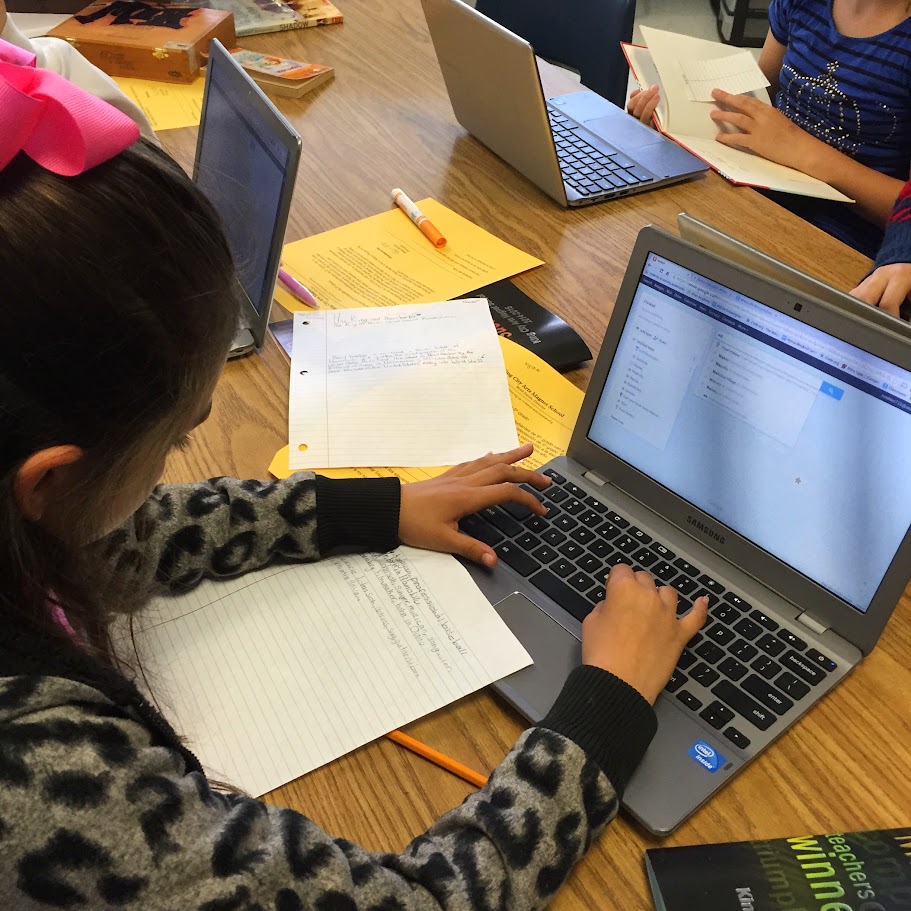
  • Silent Sustained Reading (SSR). This one wasn’t so much a fail as it evolved throughout the year. By the end, I liked what I had. It started off as all students reading, or listening and following along, for half an hour. By the end of the year it had evolved into a half an hour of (your choice): Raz-Kids, reading a book, listening and following along, or Duolingo (there were 5 different languages students were learning). Students often switched it up and didn’t do the same thing everyday.
  • Coding – I started off strong, then it kind of fizzled. Not sure how to transform this. I do want this in my classroom. Will work on this problem during the summer.

The Frustrating

These were things that frustrated the living daylights out of me, and I had zero control. There were a lot this year, so I’ll try to stick to the most frustrating.

  • NO YouTube! – Not for teachers or students. At one point there were work arounds that my students found. We used them to enhance our learning, but they eventually got blocked. There were a myriad of reasons given: not enough bandwidth, can’t filter out the bad stuff, TESTING.
  • NO online editing software – I started the year off using WeVideo. My students have 1:1 Chromebooks so everything we do is online. We have 3 old iPods we use to videotape. We were in the process of editing our video class rules when ALL editing tools were blocked.
  • The ever-changing focus. First it was focusing on opinion writing, then it moved to speaking and listening, then it was ‘You MUST use Engage NY (aka Eureka Math) with fidelity, NO supplements allowed. Okay, full disclosure on this one. I supplemented, then stopped using it. So I guess that wasn’t so frustrating. A teacher’s got to do what he/she feels is best.

All in all, it was a good year. As they say, it’s all in your perspective. I chose to focus on what I could do and change. I tried not to worry about things that were out of my control. So, the ‘Good’ I’ll keep, the ‘Bad’ I learned from, and the ‘Frustrating’ I can only hope it changes for the better next year.

Working WITH Technology

This school year has had its ups and downs. One of the ‘Ups’ were my students’ State Reports. We used Google Maps to accomplish the same task that use to take 10 type written pages. I still maintain, no one wants to read a 10 page report – let alone 47? Yeah, much happier with the Maps idea. As we went through it, I saw ways to improve; and will implement those changes next year.
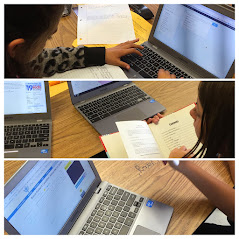
Then there were the ‘Downs’. Yeah, some of those made me want to pound my head against a brick wall. My ‘Road To the Revolution’ project. I thought I was soooo brilliant. Not so much! I will attempt it again next year, but will make several changes. Then, there are the downers that I have little to no control over. One that popped up throughout the year, were the ones where teachers and/admin wanted to block/ban sites. (This is where my head hangs low, before I hit a wall) Banning/blocking is NOT the answer. As with anything, education is. We not only need to educate our students, but we need to educate the teachers.

The answer is to teach our teachers HOW to work with technology. We need to show teachers and students what it means to integrate technology. When students are doing research; provide a list of acceptable sites,create a custom search engine via Google, and teach students HOW to search. Typing ‘What is the state flower of Maine?’ is not an efficient search. These are tools that students, and teachers, need. It is a district’s responsibility to provide the training so that quality instruction can occur. Far too often, a district thinks that giving a classroom a set of computers will be the answer, but it’s not. What ends up happening – more often than I care to think about – is that the computer becomes a babysitter, time filler, or dust collector.

I understand the need to block certain sites – like the super bad ones (remember: I’m coming from an elementary perspective). But in general, I am an advocate of keeping the sites open. Yes, students will push the limits. Yes, they will try to find inappropriate pictures, videos, whatever. But it’s our job to guide them along the path.

Teachers need to work WITH technology. We need to use the inappropriate searches as teachable moments. We need to monitor, walk around, give students the tools to be successful. Will we catch everything? No. But my teachers didn’t catch all the notes and things I tried to get away with, and I came out fine – mostly.

Awards – We’re Doing It Wrong

medal-646943_1280Awards

Awards should be given out to those who earn them. If I have a student who Perseveres, is Enthusiastic, and Cooperative, then they should receive all three awards. Likewise if there is a person who does their job well several months, they should be given “Employee of the Month” for all the months they have earned it.

Why Am I Talking About This?

Recently, we had another Citizen of the Month Award Ceremony. Yeah, it’s become a ‘Let me make you feel good for the few minutes while you get to stand up in front of everyone’ sort of thing. I know this is not just happening in my district. In fact, I’d be willing to bet that it is more common place than I’d care to think about.

This got me thinking, why am I giving out this award? I don’t always necessarily think that student A deserves the Patience award, but they sort of fit that category. And since EVERYONE gets a COM Award, student A gets Patience.

The same goes for teacher awards. Years ago, my district participated in an award that celebrated teachers who brought literacy to their classrooms. It could have been through innovative ways, starting clubs, or getting hundreds of book donations. Those individuals deserved the award. But because my district wanted to be involved in it every year – which I applaud – they would often scramble to find someone to get it. It often times became meaningless.

It’s Okay NOT To Give Someone An Award

Yes, it’s fine NOT to give every child in your class an award. We really want students to work, persevere, be enthusiastic, etc. By the time students hit 3rd grade, they’re on to the game. They know they don’t really have to work at any of the character traits. They know at some point in the year, they will get an award. Then their parents will come with a minimum of 3 mylar balloons, candy and/or a stuffed animal, but that rant is for another time.

Back to the literacy award. I mentioned several reasons why employees received the award, but didn’t talk about the MANY years that we scrambled to have a person. And why did we scramble? Well, there were many times when the discussion was, “Who hasn’t gotten it yet?” That is NOT how we should be celebrating our accomplishments. What if person A created an after-school literacy group year 1; then year 2 provided training for others to have their own literacy group? Well, person A was then out of the running because they had already received the award year 1. What a shame.

What Should We Be Doing Instead?

With my students, each month they should start with a clean slate. If some students don’t get an award that year, that’s okay. If a student gets an award twice, that’s okay too. Looking at the literacy award, if person A did amazing things to improve literacy, they should have received the award more than once, because yes, that’s okay too.

We need to stop making these awards meaningless. My job is not to make a child feel good in the moment, but to teach them to be a better person. Study after study has shown the negative affects of giving everyone an award.

We need to celebrate those that are deserving – even if they’ve been acknowledged before.

Hashtags In 5th Grade

Last week I had a great discussion with my class about the use of hashtags (#). What is appropriate, how many to put in a post, what they really mean. Talking about hashtags in the classroom always reminds me of Diane Main. When I attended the Google Teacher Academy in 2012, she was the one that had the revelation on their meaning and how to use them in the classroom. Diane’s ‘ah-ha’ moment included the idea that hashtags were much like the main idea.

Hashtag

So keeping this in the back of my head, I brought it up to my class last week. We were doing a lesson on dialog. I asked them how they would hashtag the lesson (after explaining that it was the main idea). At this point, I realize that they had missed the point of the entire lesson. Yup, a fail.

So after going back and re-explaining the lesson, they came up with #quotations and #dialog. This has lead me to the conclusion, that I need to ask students, “How would you hashtag this lesson?” Using Diane’s idea – Main Idea – I can quickly get a pulse on the class if they ‘got the point’ of the lesson.

My point? Hashtag your lessons! It’s relevant. It’s fun. It’s informative. And Diane is/was brilliant!

State Reports – 21st Century Style

Today – more accurately starting last week – I feel like a genius. I know that will all change by Wednesday. Actually, that feeling started to change this afternoon when someone thought Canada was a state.

State Reports in 5th Grade

We all do them, students for decades have done them. Little has changed. Students get an outline of what is expected, they write, roughly, a 10 page paper on a state, and the teacher must read all reports. I HATE it! I don’t want to read 47 state reports – I teach 2 classes of Social Studies this year. They are painful to read. They are formulaic – partly the fault of the teacher (yes, I know that would be me). And they are BORING!

Time for a change!

So this year, I’m challenging my students. Their reports will be on a Google Map that they create. They will still have to research all the same information, but the presentation will be different. For example, the directions state that they are to find the state capital (of their state) and mark it with a yellow star. Then they are to find other major cities and mark them with an orange star. The students are then free to insert photos of those cities to further enhance their map. Their maps will look something like this:

Below are the complete directions. Like I said, I feel like a genius today, but by Wednesday, it’ll be a different story. And in the end, I will compile all their maps into 1 map using Thinklink. In addition, I even allowed students to work with a partner. Yup, different from the norm!

How did the students react?

They LOVED it. They couldn’t wait to get started. I have a few email me questions already. When was the last time that happened with a written report? They were so excited. I just need make sure they stay focused and write the necessary paragraphs.

Minor issue

It has been a while since we’ve used Maps, and many of the students had questions about some of the specifics. Fortunately for us, the Techie Chicks are in our classroom. And they have a tutorial on how to create a custom map!

The future

I’m sure there will be tweaking along the way. The students will feel free to give me input, and even come up with better ideas. I’ll keep everyone posted. I’m really excited about this.

1 Week Later

Here’s an update.

What Motivates Learning?

This week’s #youredustory prompt is:

What motivates learning?

Innate curiosity motivates learning.

I know it sounds simple, but we all have it. In the right setting we are encouraged and our curiosity is fostered. In the wrong setting, our curiosity is squashed and we become resistant.

So What Is The Proper Setting?

One in which we are encouraged to ask questions, probe further, and investigate that which interests us. Some great examples of setting that foster learning are: Genius Hour, 20% Time, Maker Space/Maker Movement, and Project Based Learning. In each of these examples, students are encouraged to take ownership over their learning, investigate, create, question, an expand themselves.

What Happens In A Wrong Setting?

In the wrong setting, students have little to no control over what they are to learn. Learning is mandated with a top-down approach. Pacing guides, mandated (use with fidelity, no supplements allowed) curriculum, over testing, high stakes testing, etc. I think you get the idea. Basically, traditional school.

How To Break Free

The excitement is evident. This excitement translates to learning.

Push and challenge the thinking at your school. Start small, and build upon your successes. Begin with Genius Hour. Prove to the powers that be that there IS a different way to teach and learn. MAKE learning fun for your students. Tap into their interests and build on that. Change the culture of your classroom and then the school.

5 Things We Have To Stop Pretending

This challenge was given to me by Alice Chen. This is a part of the #MakeSchoolDifferent Challenge. This couldn’t have come at a better time. I have been thinking about all the things that we do to sabotage ourselves as teachers. How can we change education?


flickr photo shared by schoschie under a Creative Commons ( BY ) license

5 Things To Stop Pretending:

  1. “I have a paperless classroom” – Oh, how we love that phrase. But let’s face it, if you’ve recreated that ditto in a digital format, can you really claim to be paperless? Literally, yes. But I believe that ‘paperless’ refers to transformative. That ditto is NOT transformative.
  2. Using any technology is innovative. We need to stop pretending that just because we can claim to be 1:1 or 2:1 does NOT mean we are using technology to it’s full potential. Playing games, or taking AR quizzes, is not innovative.
  3. Stop jumping on every new theory (aka bandwagon). Trends come and go, stop falling into the trend of the moment.
  4. Policies that are created from the top and pushed upon educators are the best practice.
  5. Isolation is good – No need for PLN.

Solutions:

  1. You want to be paperless? Then be innovative. Create lessons and assignments that require deeper thinking. Will all your lessons magically become innovative and ‘rigorous’? No, but little by little you will change the landscape of your classroom, and the learning of your students. Go ahead, try it with just one lesson this week.
  2. Too many times I have seen districts, including my own, get class sets of computers or iPads, with no training. Technology requires a shift in how we view teaching and learning. Let’s focus on good pedagogy rather than the trendy new techie device. Once this shift happens, the cool techie devices are much more relevant in your instruction.
  3. As a whole, education has too often fallen pray to the ‘latest research’. The truth is, good teachers know what works and integrate new teaching practices that are more conducive to their goals. I’m not saying don’t change, just be selective and know WHY you’re doing what you’re doing.
  4. Education policies need to stop being mandated. Whether it’s NCLB or district policies. Conversations with educators, from all levels (admin to para educators), need to be had. We are all in this together. No one group should be dictating policies.
  5. Share! Seriously, what’s the big deal? Some districts/sites have cultivated a culture of singling out teachers for great work. This is fine done in moderation. However, many (like in my district) refuse to give up their best ideas because someone else might do it better. I say if you can make my idea better, do it, then share! Again, we’re all in this together. We’re here to educate our communities, not some egocentric ‘make you feel good’ trip.

I will now challenge 5 #awesomesauce educators to tell us what we should stop pretending. Let’s here from: Kevin Ashworth, Pam Hernandez, Andy Losik, Rea Fearing, and Travis Phelps.

3D Printer Fun

I believe in thinking BIG! That’s why when I decided I wanted a 3D printer for my class, I wrote a proposal and placed it on Donors Choose. Honestly, I had no idea what I was going to do with it. I figured I would allow students to create objects during Genius Hour. In addition, I was going to have THEM figure out the programs and printer – within reason, it is an expensive item.
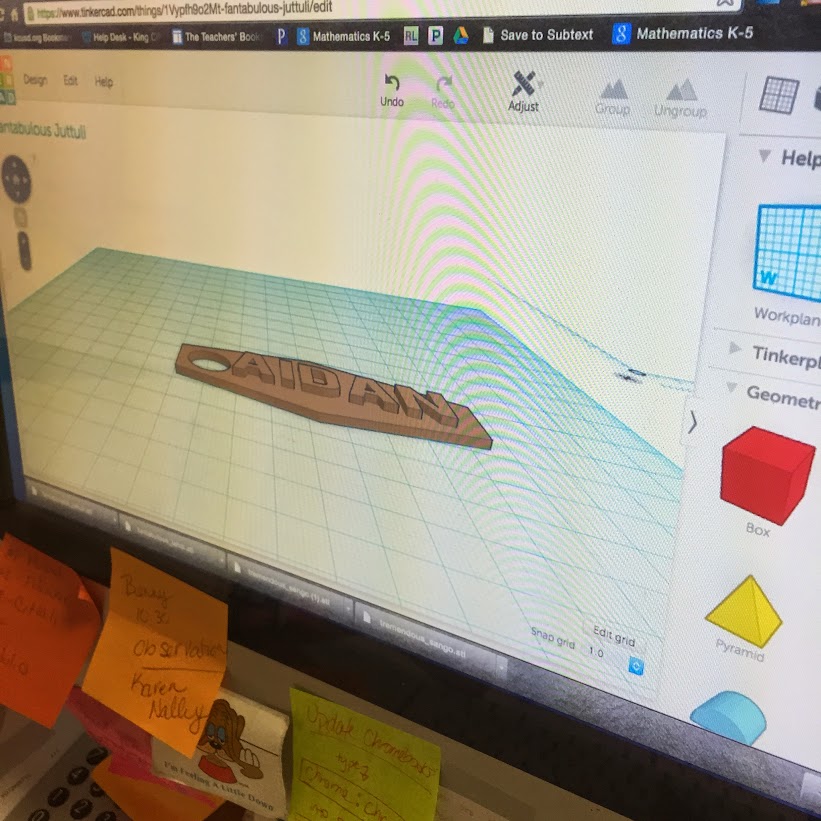
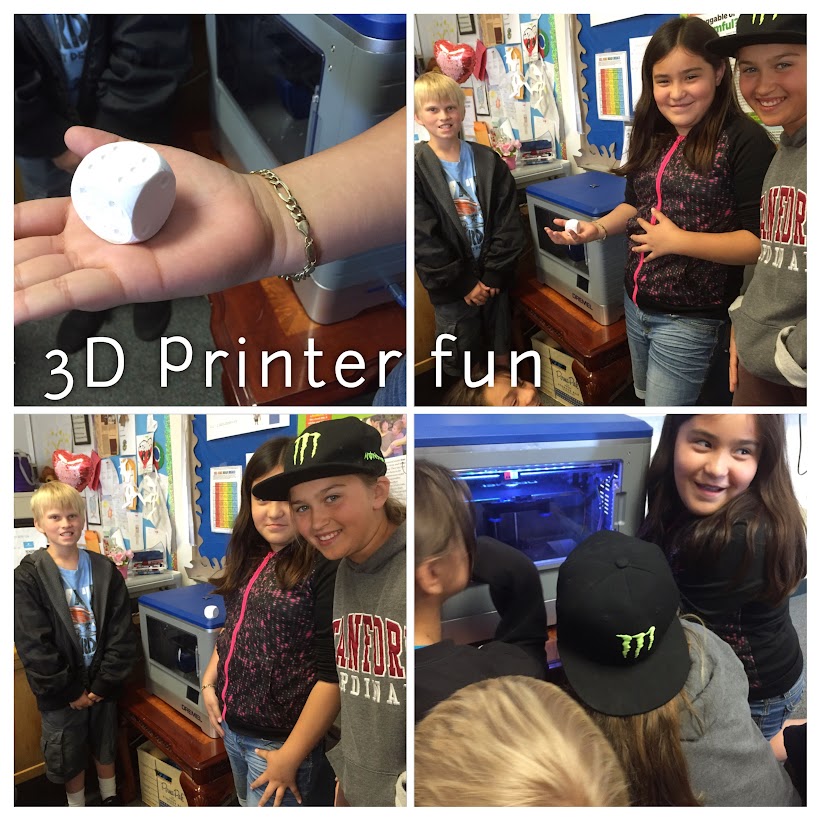
So when I was notified that my project was funded by Chevron, I was beyond thrilled. Just after Spring Break our printer arrived. The following Genius Hour a group of students and I set it up. Fortunately, one of my girls had gone home and done research on the type of printer we received (Dremel). She knew more about the printer than any of us. After setting it up, we printed out a die. It was a pre-fab file on the SD Card. That was pretty cool. Then came the following week…

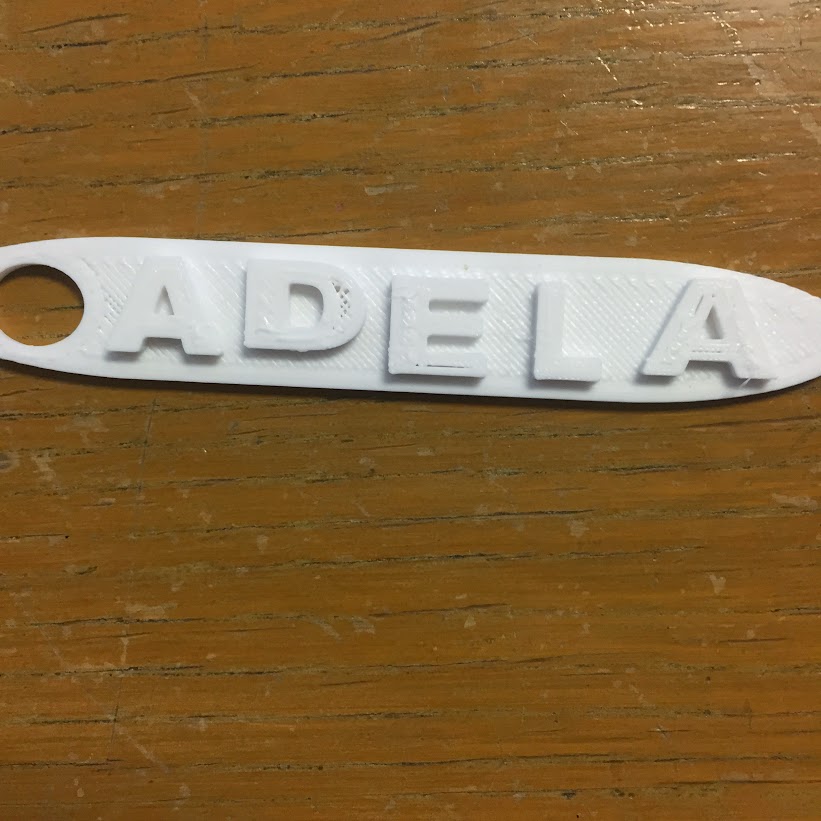
We discovered Tinkercad! Since then we have been creating, creating, creating! The early attempts were simple, but fun. I have students coming to school early wanting to create objects for their moms, brothers, selves…

They work together to solve design issues, and talk about new creations – there is a chicken in the making. I have another girl who went home and taught herself (with the help of the provided lessons on Tinkercad), how to use the program. She is our ‘Go To’ person. She is teaching us some of the ins and outs of the program.

It’s fun to see girls leading the way with this technology. It’s also interesting to watch the students watch the printer. It reminds me of the 1950 ads for TV, where everyone sat around as close as they could. Yeah, that’s what’s happening in my class.

I can now see how I can incorporate this into my curriculum. How fun would it be to have students working together to create the digestive system? Fun right?! Or create geometric shapes based on specific dimensions. Or create an object with a specific volume. Or create a topographic representation of a state. The possibilities are endless. This is just the beginning, I can’t wait to see where this takes us!