Mastering Mathematical Language Routine 3: Critique, Correct, and Clarify

Welcome to the fourth installment of our series, where we delve into the fascinating realm of Mathematical Language Routines (MLRs). In our previous discussions on MLR 1: Stronger and Clearer Each Time and MLR 2: Collect and Display, we explored the crucial role they play in cultivating critical thinking skills and fostering a deep understanding of mathematical concepts. Let’s continue our journey toward mathematical success by exploring the next MLR in line.

MLR 3: Critique, Correct, and Clarify is a routine designed to enhance mathematical writing and discussions. The primary purpose of MLR 3 is to foster a culture of critique and improvement in mathematical conversations. By engaging in this routine, students are encouraged to actively evaluate, correct, and articulate mathematical concepts with clarity. Through collaborative groups or partner talks, students can refine their thinking as they work together. To introduce this routine, teachers can model it by providing a predetermined piece of writing for critique, ensuring that it includes common errors and vague language to encourage more precise language. This approach empowers students to identify and rectify mistakes while enhancing their ability to clarify their ideas effectively.

Beginning this routine can be tricky, especially since it involves critiquing and correcting another person’s work. However, there are strategies that can help create a safe space where students feel comfortable critiquing and correcting each other’s mathematical reasoning.

At the middle school and high school levels, it is a bit easier as students change classes, and using an example from another class can happen – with names removed.

For elementary-level students, making up a problem/solution that they can use to critique is advisable. It’s important to ensure that the problem/solution contains common errors related to the content being studied.

Once this routine is established, it will become easier for students to seek out peer feedback. Teachers play a crucial role in creating a safe environment where students feel encouraged to seek out one another for critiquing. By implementing these strategies, teachers can foster a supportive and collaborative atmosphere for students to improve their mathematical reasoning skills together.

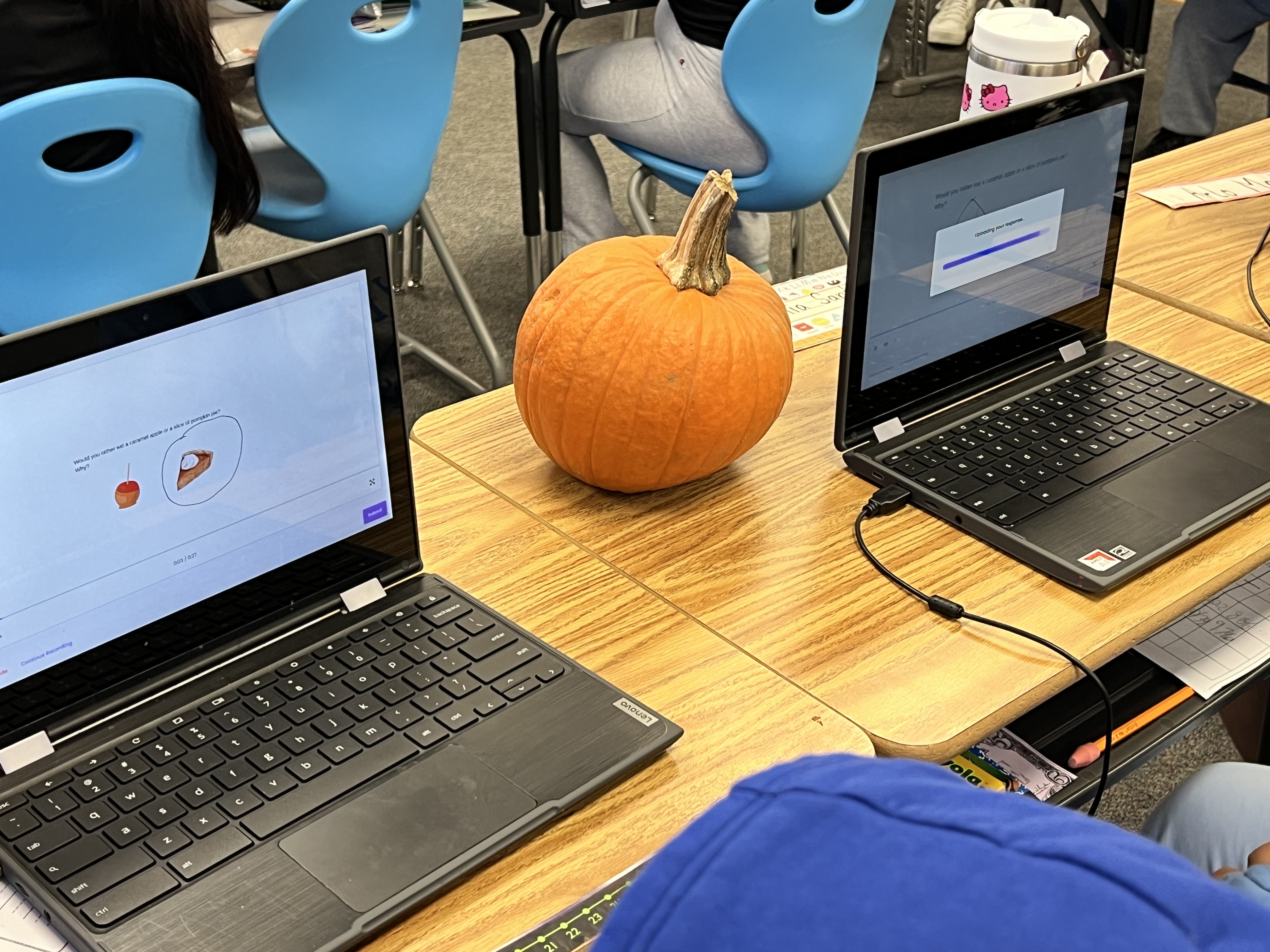
One Math EduProtocol that works well with this MLR is Nacho Problem. This EduProtocol was developed by Ligia Ayala-Rodriguez with the intention of addressing common errors exhibited by students. The main concept behind Nacho Problem is to task students with identifying and explaining the errors they encounter. Let’s take a look at an example to better understand how it works:

Second-Grade Nacho Problem Example

Ms. Daines needs to drive to San Jose which is 109 miles away. Along the way she stopped in Salinas which is 48 miles away. When she began driving from Salinas, how far away was Ms. Daines from San Jose? The work was provided but no explanation was given. This allowed for students to critique and analyze the provided work, find the error, and clarify their reasoning. 

In this example, which was taken from an introductory lesson using Nacho Problem, the wording is kept basic and straightforward. However, as students progress with this EduProtocol, their written expression and complexity will naturally grow.

The beauty of Nacho Problem lies in its simplicity and effectiveness. By encouraging students to find errors and explain their reasoning, it promotes a deeper understanding of mathematical concepts. So, if you’re looking for an educational approach that fosters critical thinking and problem-solving skills, Nacho Problem is definitely worth considering, but not your only option. Sometimes, always, never is another good approach to this MLR.

Incorporating MLR 3 into your math class can greatly enhance your students’ understanding and written communication skills, which are vital for their success. This instructional approach can be implemented as early as kindergarten, allowing students to develop the valuable ability to analyze others’ work critically. This fosters a deeper comprehension of mathematical concepts and empowers them to ask more precise and insightful questions. In our next discussion, we will explore MLR 4: Information Gap, where students are encouraged to engage in critical thinking by identifying the necessary information to solve word problems.

Mastering Mathematical Language Routine 1: Stronger and Clearer Each Time

Mathematical Language Routines (MLRs) play a crucial role in enhancing students’ comprehension and communication skills in mathematics. Developed to meet the diverse language needs of learners, these frameworks have become an invaluable tool in promoting a deeper understanding of mathematical concepts. In this series, we will explore each MLR in detail, starting with MLR 1: “Stronger and Clearer Each Time.”

Mathematical Language Routine 1: Stronger and Clearer Each Time

MLR 1: “Stronger and Clearer Each Time” focuses on refining students’ ideas and communication through various activities. By incorporating writing, listening, explaining, and integrating new language, students are encouraged to continually improve their understanding of mathematical concepts. This routine, often conducted in pairs, provides students with the opportunity to collaborate and build upon each other’s ideas, fostering a culture of shared learning and growth.

Throughout this series, we will delve into the different structures and strategies that can be employed within MLR 1, unveiling how this routine nurtures students’ confidence and fluency in mathematics. Join us as we explore the remarkable impact of MLR 1 and its profound influence on students’ language development and mathematical achievements.

The purpose of this routine is to foster the refinement of students’ verbal and written output through structured conversation and revision. By engaging in this process, students can enhance both their thinking and their expression of it.

In this routine, students initially work individually or in groups, gradually progressing towards partner work. This approach allows students to acclimate to the task and build their confidence. For those who may be less familiar with writing, explaining, and refining their thoughts, supportive strategies can be implemented to ensure their success.

Once the structures are in place, it is crucial for students to recognize the ultimate goal, which is either a deep understanding of the concept or the ability to articulate it like an expert. The listener’s role becomes significant as they ask clarifying questions, enabling a comprehensive understanding of the speaker’s thoughts. Simultaneously, the speaker benefits from this exchange, refining their thinking more clearly.

To encourage thorough responses, it is valuable to have students switch partners multiple times during the routine. By engaging in back-and-forth conversation, with equal emphasis on speaking and listening, students not only refine their thoughts but also strengthen their language and reasoning skills. The iterative nature of this process reinforces the importance of pressing for details and encourages the continual refinement of ideas.

Convince Me That, by Daniel Kaufmann, is a highly effective protocol that teachers can implement in their math lessons to foster deeper understanding and engagement among students. To successfully introduce and implement this routine, educators can follow these step-by-step guidelines:

  1. Introduce the Problem: Begin by presenting a math problem along with its solution to the students. For instance, students can be asked to explain why 3 x 4 equals 12.
  2. Form Partners or Small Groups: Divide the students into pairs or small groups to facilitate collaborative learning. This structure encourages peer interaction and promotes the sharing of ideas.
  3. Restrict Algorithmic Thinking: Emphasize that students should focus on concrete or pictorial methods rather than relying on algorithms. This restriction encourages students to think deeply about the problem and explore alternative approaches.
  4. Initiate Individual Thinking: Give students time to think individually about the problem and develop their own explanations for the solution. This step helps to build independence and promotes critical thinking skills.
  5. Structured Pairing: After individual thinking, partners or group members should share their explanations with each other. This process enables students to refine their understanding through constructive discussions and peer feedback.
  6. Revise Written Responses: Encourage students to revise and improve their written explanations based on the feedback received during the structured pairing phase. This step promotes self-reflection and reinforces learning.

To facilitate the refinement process and prompt students effectively, here are some examples suitable for Math Learning Routine (MLR) 1:

  • “Convince your partner why the sum of any two even numbers is always even.”
  • “Explain to your group why dividing by zero is undefined and cannot result in a finite number.”
  • “Justify why the product of any number and zero is always zero.”

These prompts stimulate students to think critically, apply their knowledge, and refine their explanations. By implementing the Convince Me That routine with these strategies and prompts, educators can foster deeper conversations, encourage active learning, and enable students to demonstrate a more profound understanding of mathematical concepts.

For a more detailed explanation and implementation guidelines, you can refer to Chapter 19 of The EduProtocols Field Guide Math Edition. This invaluable resource offers comprehensive insights and practical tips for effectively utilizing the Convince Me That routine in math classrooms.

In conclusion, the implementation of MLR 1 has proven to be highly beneficial for students. It provides them with a structured platform to refine their thinking, improve their communication skills, and deepen their understanding of the subject matter. By engaging in the collaborative and iterative process of MLR 1, students are empowered to develop clearer and more coherent responses.

We invite you to stay engaged with our series and continue exploring the world of Mathematical Language Routines. The second routine in our series, MLR2: “Collect and Display”, has a specific purpose. It aims to capture students’ oral words and phrases and transform them into a stable, collective reference. The main goal is to preserve the language that students use and use it as a reference point for developing their mathematical language.
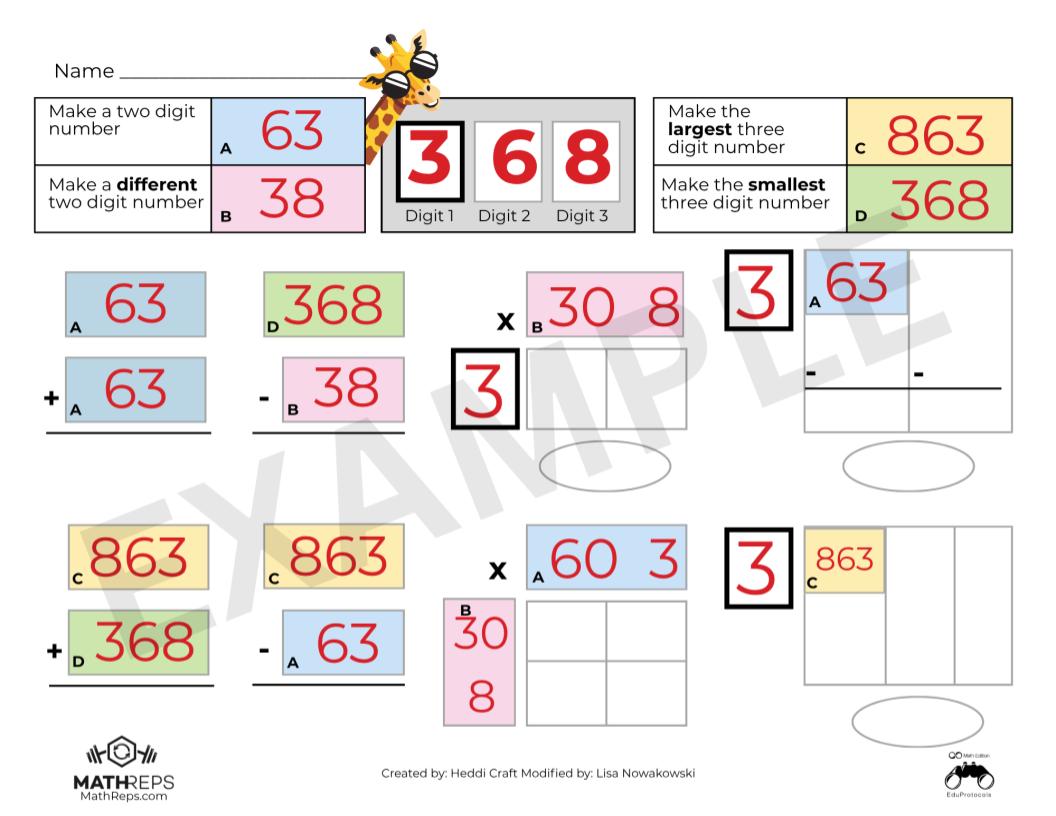
Mastering Elementary Math: The Power of MathReps and Math EduProtocols Series Finale Pt. 10

MathReps and Math EduProtocols have been an incredible journey! We’ve delved into a plethora of aspects, ranging from understanding and implementation to assessing and monitoring, all while uncovering inspiring success stories. And guess what? The evidence is crystal clear – these strategies are absolute game-changers! Brace yourself for mind-blowing results in record time! Picture this: classes effortlessly grasping concepts and expanding their knowledge bank in the blink of an eye! Not to mention, students gaining solid confidence and forging natural connections left, right, and center! If you’re a fan of John Hattie and his work on Effect Size, get ready to be blown away because Deliberate Practice registers an awe-inspiring 0.79 Effect Size! And wait, there’s more: Rehearsal and memorization follow closely behind with an impressive 0.73 Effect Size! So, dear reader, don’t wait a second longer – dive into the world of MathReps and Math EduProtocols and revolutionize your classroom experience, starting today!

If you’re excited to explore more and take advantage of all the amazing resources available, you’re in for a treat! Dive deeper into the world of MathReps and Math EduProtocols by checking out the complete series starting with Pt. 1 or jump to getting started with MathReps in Pt. 4. For those who prefer a slower start with Math EduProtocols, be sure to jump into Pt. 7 of the series. But that’s not all! Visit mathreps.com for all templates and be sure to join our math-focused Facebook group to engage with a vibrant community of educators. Don’t forget to join the EduProtocols Community Facebook group too. You can also find us on various social media platforms like Instagram and TikTok, using the hashtags #MathReps and #EduProtocols. Excited for more? We’ve got you covered with a fantastic range of books to explore, including my personal favorite, The EduProtocols Field Guide Math Edition! The possibilities are limitless, so don’t miss out on this incredible opportunity to enhance your mathematical journey. Happy exploring!

Mastering Elementary Math: The Power of MathReps and Math Eduprotocols Success Stories Pt. 9

After creating MathReps in 2016, I quickly saw the benefits. One of the first ones I created dealt with 5th-grade multiplication and division. That year, I saw many students succeed in connecting the area model of multiplication to the traditional algorithm. In addition, there was a student who connected the partial quotient to the traditional algorithm in division. I can still see where the student was sitting and the conversation that we had.
Me: (pointing to the division problem done using the traditional algorithm) Can you tell me about this?
Student: Sure, I used the toolbox area to do some additional multiplication to help me.

Me: Did someone show you how to do this?
Student: No, I noticed that I could come close to the first two digits of the dividend if I multiplied the divisor. Then, I could subtract and do it all over again using the next two digits [the traditional remainder plus bringing down the next digit].
Me: 😲

Yeah, that was a mind-blowing moment. The student had made connections on their own based on repeated exposure and naturally made the leap to the traditional algorithm. I was blown away!

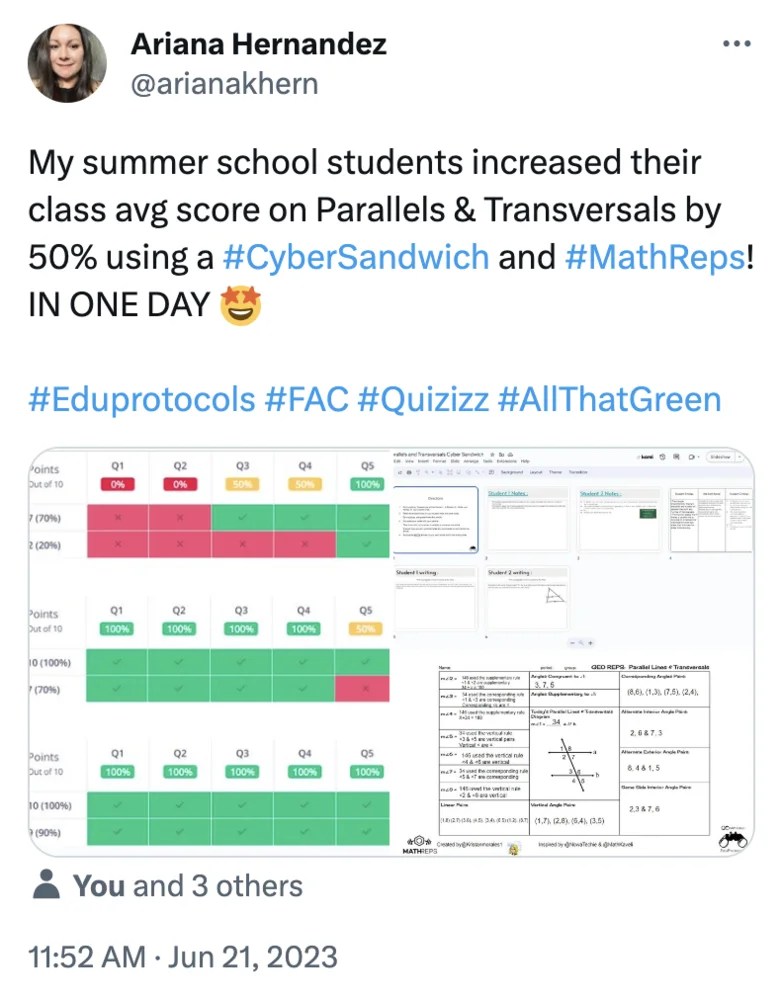
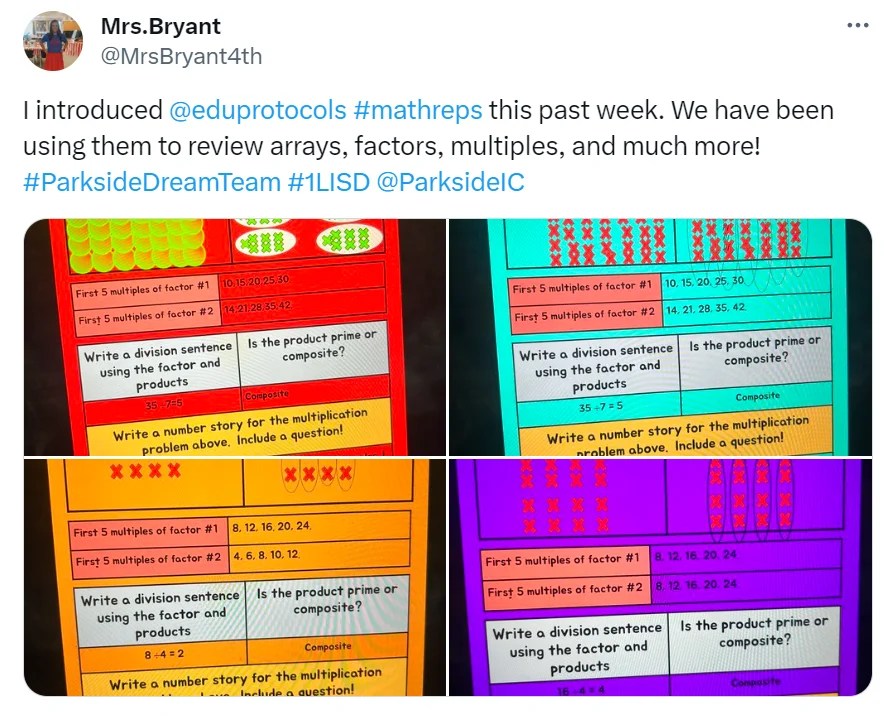
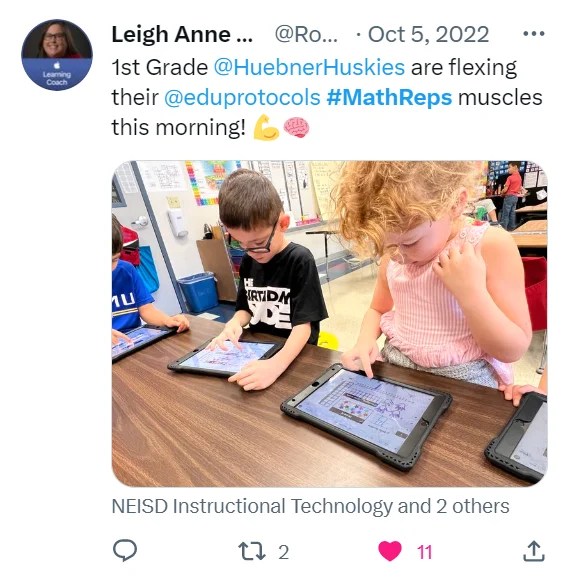
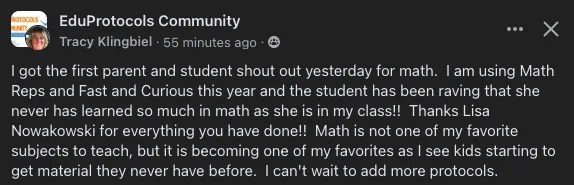
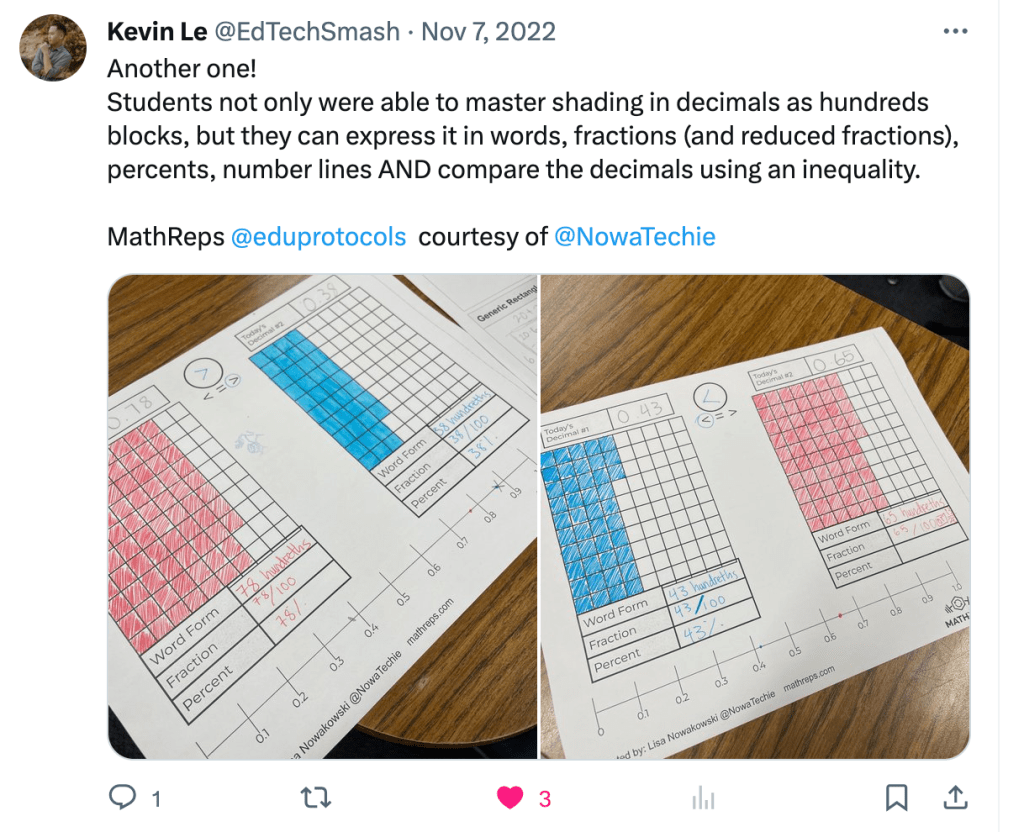
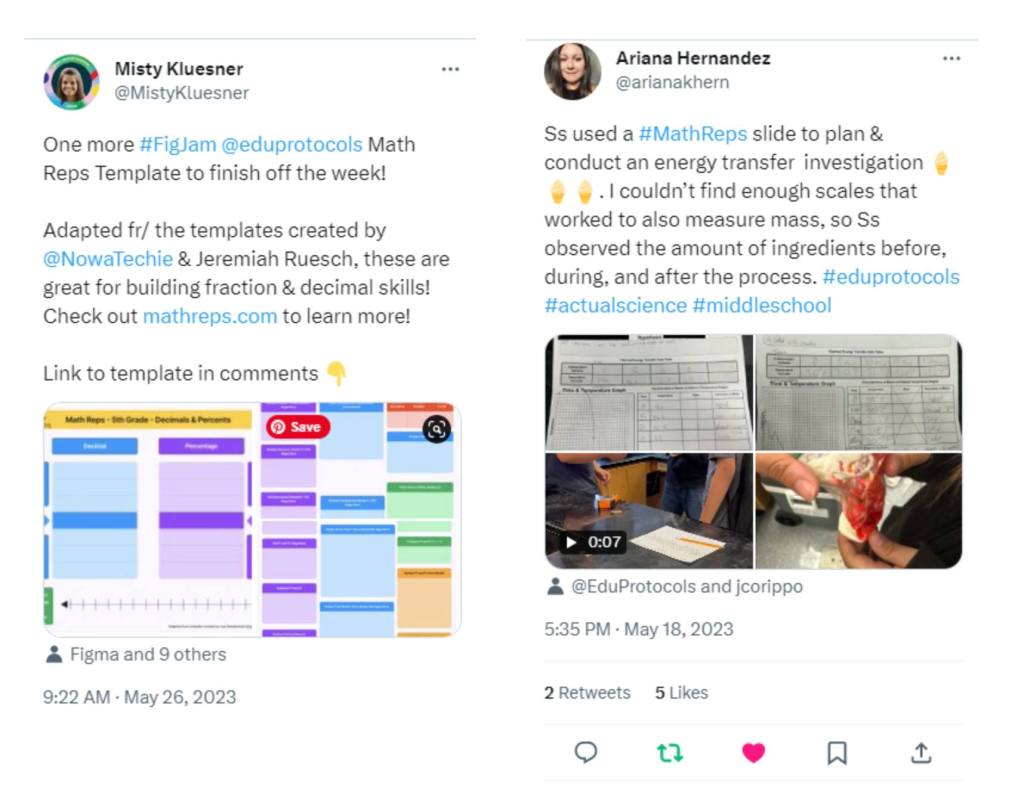
After that, I have been truly amazed by the countless teachers who have found great success using MathReps and Math EduProtocols in their classrooms. What started as a resource created solely for my own students has turned into something much bigger. I love to share, and it’s been incredible to see teachers from all over reaching out with their own success stories. One example that stands out is a 3rd-grade team who saw amazing results with MathReps. Join the growing community and discover the power of MathReps and Math EduProtocols for yourself!

I have compiled a few postings of what others have to say. If you’d like to see more, you can see them on this Wakelet.

Mastering Elementary Math: The Power of MathReps and Math Eduprotocols Assessing Progress Pt. 8

In today’s rapidly evolving educational landscape, tracking student progress is not only crucial but also an empowering tool for both teachers and students alike. In a previous post, we delved into the remarkable results achieved by a 3rd-grade team that implemented effective data tracking methods. However, we barely scratched the surface of the “how.” So, let’s take some time to explore the intricacies of tracking student data and discover how you can leverage these strategies in your own classroom. By examining the practices of the 3rd-grade team, who expertly utilized a combination of pre and post-tests, spreadsheets, and repetition, we’ll uncover the power of John Hattie’s work and the Achievement Teams framework pioneered by Steve Ventura. With a focus on MathReps and Math EduProtocols, these methodologies not only lower student anxiety but also provide invaluable insights to drive targeted instruction. Join us on this journey as we unravel the secrets of effective data tracking and witness the profound impact it can have on the learning process.

To effectively track data and student progress, we will discuss the first method utilized by the 3rd-grade team.

  1. Begin by selecting a MathReps or Math EduProtocol activity that aligns with the learning objective. Choose the most appropriate one that suits the needs of the students.
  2. To ensure that students feel more confident and less intimidated by the material, engage in some pre-teaching before conducting the pre-test. This will help familiarize them with the concepts and reduce anxiety.
  3. After administering the pre-test, log the data obtained from each student in a spreadsheet. This spreadsheet can help calculate a goal and later reassess their progress.
  4. After completing the MathReps or Math EduProtocol activity, encourage the teachers to post the group’s pre-test scores, along with a pie chart and percentage goal, in a visible location for the entire class to see. This allows students to be a partner in the learning and growing process.
  5. Once the pre-test data is collected, it is time to get in those reps! The cycle the teachers used in this case was roughly 10 days.

By following these clear steps, the data collected from the pre-test, as well as the subsequent activities, will help guide the teachers’ instruction and provide the students with a clear sense of purpose in their learning journey.

The guide below is a second method of tracking data and leveraging strategies:

  1. Select a MathRep or Math EduProtocol: Choose a suitable MathRep or Math EduProtocol that aligns with the learning objective.
  2. Introduce the Reflection Sheet: Provide students with a reflection sheet, either for daily or weekly use, to empower them in driving their own learning.
  3. Track Group Progress: Collect assessment data at the end of the week to monitor the progress of the entire group.
  4. Display Progress Openly: Create a visible display in the classroom to showcase the group’s progress based on the assessment data.
  5. Establish Goals: Collaborate with the class to define goals to strive for. These goals should include a specific percentage of proficiency and a target date for achieving them.

Using either of these methods can empower your students, unlock their full potential, and cultivate a strong sense of fulfillment in their own learning journey. With teachers equipped to personalize instruction and address individual needs, the path to student triumph becomes clear. Which approach will you take?

Mastering Elementary Math: The Power of MathReps and Math Eduprotocols Implementing Math EduProtocols Pt. 7

Implementing Math EduProtocols requires a unique approach compared to implementing MathReps or other EduProtocols. While with MathReps, we adopted a gradual approach and collaborated daily, and with traditional EduProtocols, it is advised to kickstart with a non-academic activity; neither of these methods aligns perfectly with Math EduProtocols. To ensure a smooth process, I recommend starting with a math skill that is slightly below the current grade level. This will allow students to fully engage in the new protocol without feeling overwhelmed by having to learn a new math concept. Another distinction from MathReps is that Math EduProtocols are not designed for daily use. Depending on the chosen Math EduProtocol, it may be implemented once a week to up to three times per week.

Implementing Math EduProtocols in the classroom can greatly enhance student engagement and creativity in math. Here are some important points to consider when introducing these protocols:

  1. Choose a New Math EduProtocol: Start by selecting one new Math EduProtocol to implement in your classroom. For example, you can begin with “Sous Chef” or “Curiosity Creator”.
  2. Start with Familiar Skills: It’s crucial to start with a math skill that is already known to the students, but perhaps below grade level. This will help them establish a foundation and build confidence in using the Math EduProtocols effectively.
  3. Master One Protocol at a Time: It’s essential to focus on mastering one Math EduProtocol before introducing a new one. Allow students ample time to practice and become comfortable with the chosen protocol. This approach ensures a solid understanding and implementation of each Math EduProtocol.
  4. Similarities to Non-Math EduProtocols: Note that some Math EduProtocols share similarities with non-math EduProtocols. For instance, “Sous Chef” is a math version of “Iron Chef.” Highlighting these connections can help students transfer their knowledge and skills from non-math subjects to the math classroom.

Remember, there are several Math EduProtocols to choose from, each providing a unique function in making math more engaging and creative. By following these guidelines, you can effectively implement Math EduProtocols and foster an environment conducive to active learning and mathematical exploration in the classroom.

To find out about more Math EduProtocols visit mathreps.com or purchase The EduProtocols Field Guide: Math Edition.

Mastering Elementary Math: The Power of MathReps and Math Eduprotocols The Benefits of Math Eduprotocols Pt. 6

Using Math EduProtocols in your math class offers numerous benefits. These protocols not only provide a consistent format but also foster collaboration, problem-solving, and critical thinking. By incorporating Math EduProtocols, you can engage your students in a systematic approach to problem-solving and encourage them to record their thoughts using Comic Strip Math. Furthermore, EduProtocols like Nacho Problem promote critical thinking by analyzing errors, while Sous Chef and Chatterbox encourage student collaboration. These protocols provide a refreshing and engaging alternative to traditional math lessons that often lack consistency and creativity. By using Math EduProtocols, you can transform your math class into an exciting and stimulating learning environment.

Mastering Elementary Math: The Power of MathReps and Math EduProtocols Pt. 5 Understanding Math EduProtocols

MathReps is the foundation of my daily math class activities. It serves as the basis for what I do, but I believe in the importance of incorporating variety. That’s why I decided to expand my usage of EduProtocols into the realm of math.

While MathReps are considered an EduProtocols, they have a broader scope. MathReps are specific to standards and skills, while EduProtocols offer a framework that can be used with any standard, grade level, or curriculum. As a result, Math EduProtocols are math-focused frameworks that can be applied across various standards, grade levels, and curricula.

There are several engaging Math EduProtocols available to enhance math education. These EduProtocols provide structured activities that engage students and promote critical thinking and problem-solving skills. Let’s take a closer look at two popular protocols: Comic Strip Math and Nacho Problem.

  1. Comic Strip Math: This protocol introduces a narrative element to math problems, making them more relatable and enjoyable for students. In Comic Strip Math, students are presented with a problem to solve or an opportunity to practice error analysis. The protocol includes a villain character called “Master of Dark” and a hero character representing the student. The problem is broken down into different cells, allowing students to systematically work through the steps or explain their thought process. By utilizing this protocol, students not only solve math problems, but also develop storytelling skills and learn to break down complex tasks effectively.
  2. Nacho Problem by Ligia Ayala-Rodriguez: Based on the popular writing strategy “Nacho Paragraph,” Nacho Problem is designed to enhance error analysis and problem-solving abilities. Students are given a problem that has been solved incorrectly, and their task is to record their problem-solving process and identify the error in the original solution. By engaging in Nacho Problem, students learn to analyze mistakes, strengthen their critical thinking skills, and develop a deeper understanding of mathematical concepts. This protocol encourages students to think beyond correct answers and promotes a growth mindset towards learning.

Integrating these exciting Math EduProtocols into the classroom can have several benefits. Firstly, they make math more engaging and interactive, capturing students’ attention and motivating them to actively participate in learning. Secondly, these protocols promote collaboration and communication among students as they discuss their problem-solving strategies and compare their comic strips or error analysis. Thirdly, by breaking down problems into smaller steps or analyzing errors, students develop problem-solving skills, critical thinking abilities, and a deeper conceptual understanding of math. Overall, the use of Math EduProtocols fosters a positive learning environment and enhances students’ mathematical proficiency.

Mastering Elementary Math: The Power of MathReps and Math EduProtocols Pt. 4 Implementing MathReps

Getting Started with MathReps in Your Classroom

Here’s a suggested way to get started:

  1. Choose the Best Template:

    • Browse through the available MathRep templates and select the one that aligns with the specific skills your students need to practice.
    • Consider their proficiency level and the learning objectives you want to achieve.
  2. Introduce the Template and Work Through It Together:

    • Start by providing a brief explanation of the MathRep template to the class.
    • Guide your students through the process of completing the MathRep a few times together.
    • Break down the steps and demonstrate how to approach each section of the template.
    • Encourage students to ask questions and clarify any doubts they may have.
  3. Daily Practice for the First Week:

    • During the initial week, make MathReps a part of your daily math routine.
    • Assign the MathRep as a class activity and have students complete it with you.
    • Spend time reviewing and discussing the answers as a class, this emphasizes immediate feedback.
    • Use this opportunity to address misconceptions and reinforce problem-solving strategies.
  4. Independent Completion in Subsequent Weeks:

    • After the first week, assign MathReps for independent completion by each student.
    • Encourage students to work on MathReps at their own pace, within a given timeframe (following Parkinson’s Law).
    • Provide support to struggling students while encouraging higher achievers to challenge themselves.
    • Checking immediately with students provides crucial feedback.
  5. Weekly Assessment to Track Class Mastery:

    • Every Friday, use the MathRep template as a weekly assessment tool.
    • Collect and review completed MathReps to assess student progress and understanding.
    • This will help you identify areas where the class as a whole may need additional support or where mastery has been achieved.
  6. Transitioning to New Templates:

    • Once your class has demonstrated mastery of the current MathRep template, consider introducing a new template with new skills.
    • Gradually increase the complexity and challenge of the MathReps to keep students engaged and continually progressing.
  7. Review
    • Spend time reviewing previously used MathReps templates.
    • After students have become familiar, but not proficient, with a new template, spend a week reviewing a previous template.
    • This allows for the learning to ‘stick’.

Remember, adapt these steps as needed to suit the unique needs and learning environment of your classroom. MathReps can be a powerful tool for promoting mathematical proficiency and fostering student growth. Happy math practicing!

Mastering Elementary Math: The Power of MathReps and Math EduProtocols Pt. 3 Benefits

MathReps offers several clear advantages for students:

  1. Consistent Format: Unlike many curriculums, MathReps provides a consistent format for practice. This ensures that students know what to expect and can focus on mastering the skills without being distracted by changing formats.
  2. Repetition and Practice: Just like any new skill, math requires time and practice to master. MathReps offers repeated daily practice of multiple connecting skills, allowing students to spend sufficient time on each concept and develop a strong foundation.
  3. Reduced Anxiety: The combination of consistent format and ample practice time provided by MathReps helps to alleviate anxiety around math. With regular exposure to the material and opportunities for reinforcement, students become more confident in their abilities and feel less overwhelmed by math challenges.

MathReps offers a consistent and effective approach to math practice, allowing students to confidently develop their skills and reduce anxiety. It is important to note that MathReps is not a curriculum but an enhancement to any curriculum being used. This means it complements and supplements existing math curricula, providing additional resources and support to further strengthen students’ understanding and mastery of mathematical concepts. By incorporating MathReps into the learning environment, educators can optimize the educational experience and empower students to excel in mathematics.

Proof

MathReps has proven to be incredibly beneficial for teachers and students alike. One 3rd-grade team saw a remarkable improvement in their students’ proficiency in fractions, increasing from 19% to an impressive 82.67%. This success was so significant that they decided to continue incorporating MathReps into their routine the following year. In their first focused cycle on multiplication strategies, they observed substantial growth, going from 23% to 70.59%. The teachers plan to continue using MathReps throughout the year because they recognize its contribution to their students’ growth. MathReps is an easy-to-implement tool that offers significant improvement rates, making it an invaluable asset in the classroom.