For those unfamiliar with clothesline math, think of it as an interactive number line. Chris Shore is an outspoken champion of this hands-on teaching tool that helps students better understand Number Sense. This tool goes beyond placing numbers on a number line. It can be incorporated into most math concepts.
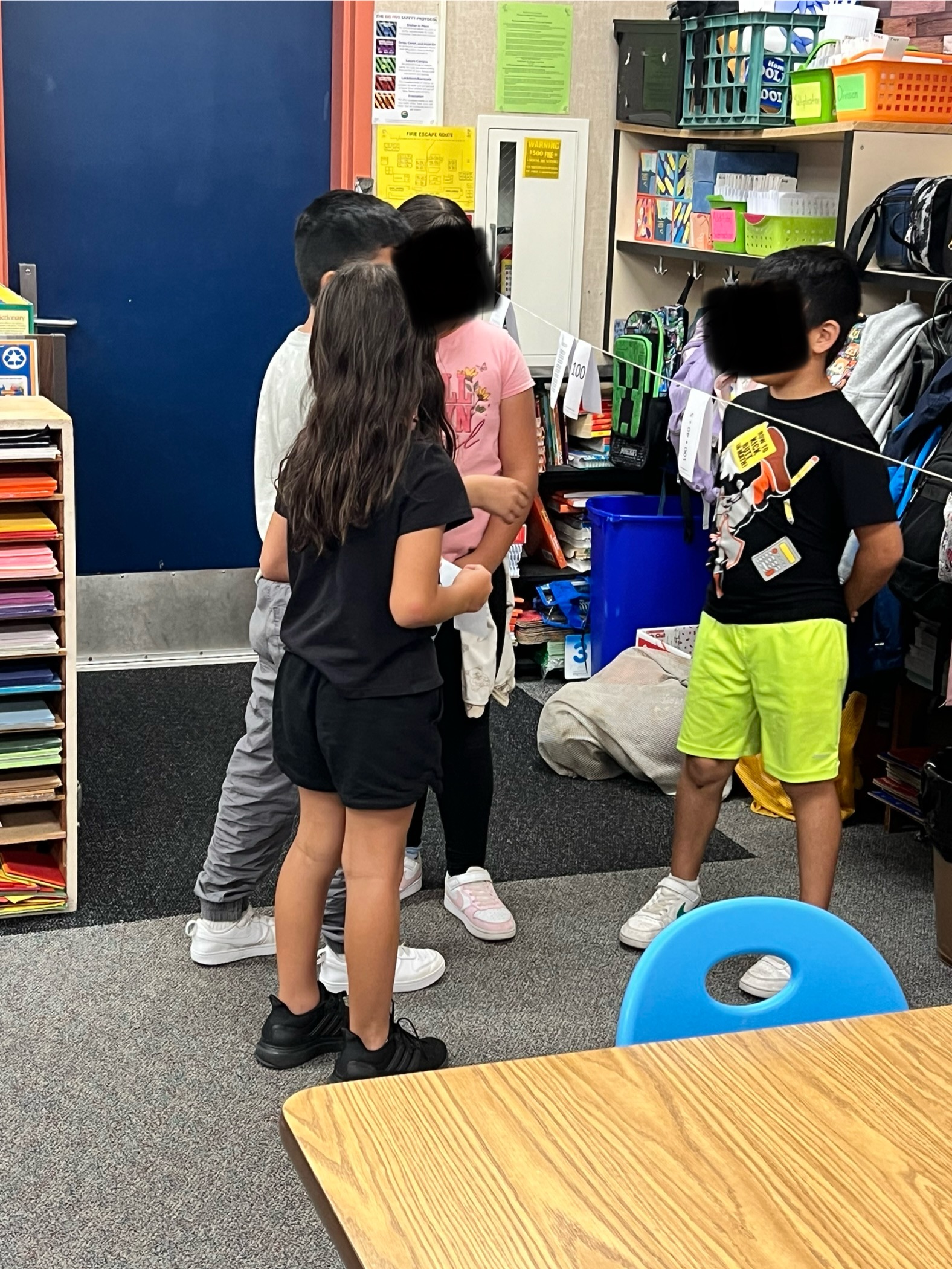
Earlier this year, I introduced a group of 3rd-grade teachers to this concept. We started with a relatively simple concept to acclimate the students to the task. I copied Kristen Acosta’s 2nd Base 10 activity. In it, students were given a card and were tasked with understanding the number being represented. The example below (Kristen Acosta) shows different ways the numbers were represented. The students were then placed in groups of 3-4 and ordered their numbers. Then, each group went to the large number line (literal clothesline stretched from one end of the room to the other) and placed their numbers on the class number line. The slip of paper was folded so that the number ‘hung’ on the number line. You can also use clothes pins to secure the numbers in place. This led to many rich discussions on placement and spacing.

Create Your Own
This was a huge hit with the students and teachers. This led to teachers asking for others. We found a multiplication activity (Kristen Acosta). Then teachers wanted division, area and perimeter. Try as I might, I couldn’t find anything online that was already created. This, then, led to me creating them. This became a labor of love.
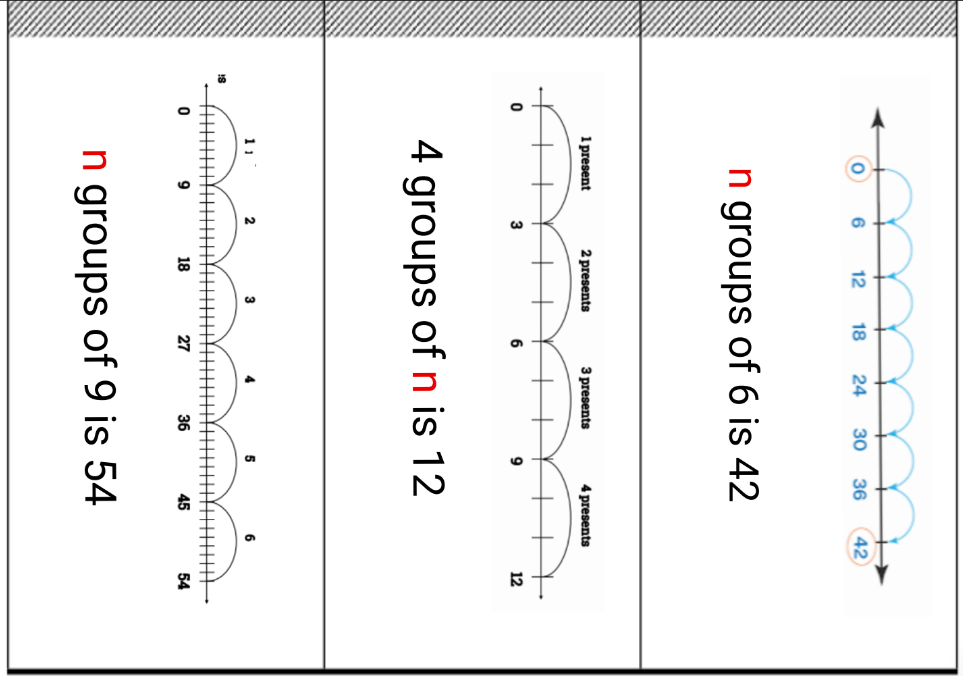
Like other math resources I create, I looked at the standard and the framework when I created these. The division clothesline has various representations of division: standard form, number line, and images. In each the missing number could have been the quotient, dividend, or divisor. The missing number (n) is the number that is placed on the number line.


It took me a bit to decide how to approach the area/perimeter. Ultimately, I decided that students should find either the area or the perimeter. I made sure that the students were exposed to a variety of images and challenges in order to find each. Some had a missing side, others only gave two side measurements to find the area or perimeter of a rectangle.


 Nowa Techie