Mastering Elementary Math: The Power of MathReps and Math EduProtocols Series Finale Pt. 10

MathReps and Math EduProtocols have been an incredible journey! We’ve delved into a plethora of aspects, ranging from understanding and implementation to assessing and monitoring, all while uncovering inspiring success stories. And guess what? The evidence is crystal clear – these strategies are absolute game-changers! Brace yourself for mind-blowing results in record time! Picture this: classes effortlessly grasping concepts and expanding their knowledge bank in the blink of an eye! Not to mention, students gaining solid confidence and forging natural connections left, right, and center! If you’re a fan of John Hattie and his work on Effect Size, get ready to be blown away because Deliberate Practice registers an awe-inspiring 0.79 Effect Size! And wait, there’s more: Rehearsal and memorization follow closely behind with an impressive 0.73 Effect Size! So, dear reader, don’t wait a second longer – dive into the world of MathReps and Math EduProtocols and revolutionize your classroom experience, starting today!

If you’re excited to explore more and take advantage of all the amazing resources available, you’re in for a treat! Dive deeper into the world of MathReps and Math EduProtocols by checking out the complete series starting with Pt. 1 or jump to getting started with MathReps in Pt. 4. For those who prefer a slower start with Math EduProtocols, be sure to jump into Pt. 7 of the series. But that’s not all! Visit mathreps.com for all templates and be sure to join our math-focused Facebook group to engage with a vibrant community of educators. Don’t forget to join the EduProtocols Community Facebook group too. You can also find us on various social media platforms like Instagram and TikTok, using the hashtags #MathReps and #EduProtocols. Excited for more? We’ve got you covered with a fantastic range of books to explore, including my personal favorite, The EduProtocols Field Guide Math Edition! The possibilities are limitless, so don’t miss out on this incredible opportunity to enhance your mathematical journey. Happy exploring!
Mastering Elementary Math: The Power of MathReps and Math Eduprotocols Success Stories Pt. 9

After creating MathReps in 2016, I quickly saw the benefits. One of the first ones I created dealt with 5th-grade multiplication and division. That year, I saw many students succeed in connecting the area model of multiplication to the traditional algorithm. In addition, there was a student who connected the partial quotient to the traditional algorithm in division. I can still see where the student was sitting and the conversation that we had.
Me: (pointing to the division problem done using the traditional algorithm) Can you tell me about this?
Student: Sure, I used the toolbox area to do some additional multiplication to help me.
Me: Did someone show you how to do this?
Student: No, I noticed that I could come close to the first two digits of the dividend if I multiplied the divisor. Then, I could subtract and do it all over again using the next two digits [the traditional remainder plus bringing down the next digit].
Me: 😲

Yeah, that was a mind-blowing moment. The student had made connections on their own based on repeated exposure and naturally made the leap to the traditional algorithm. I was blown away!

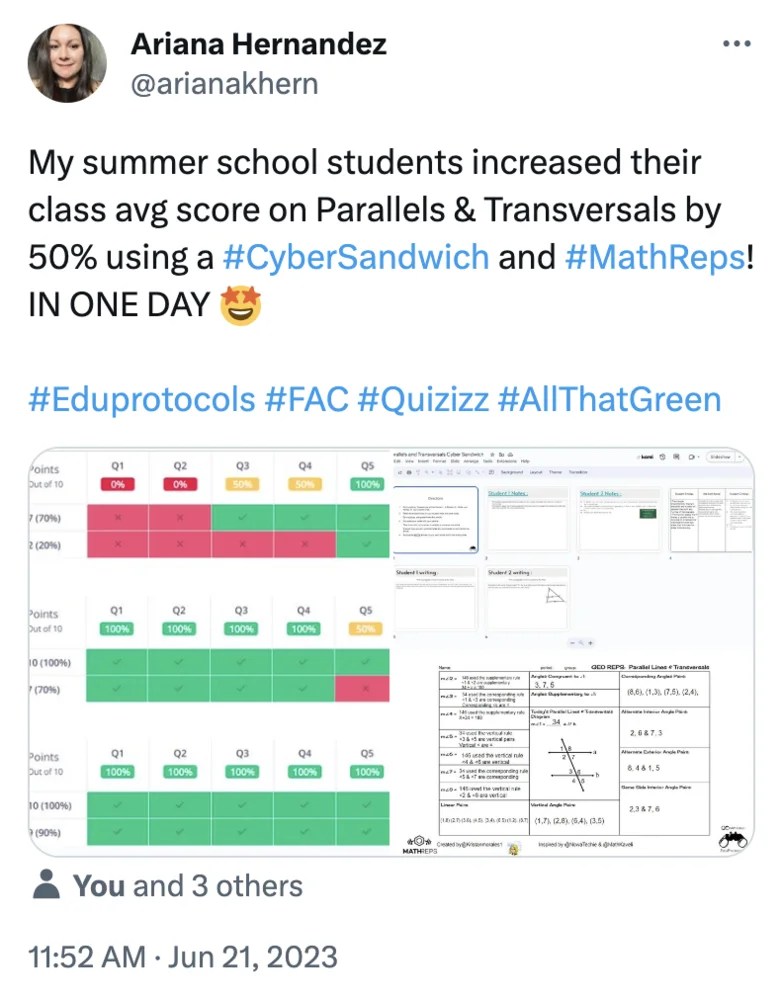
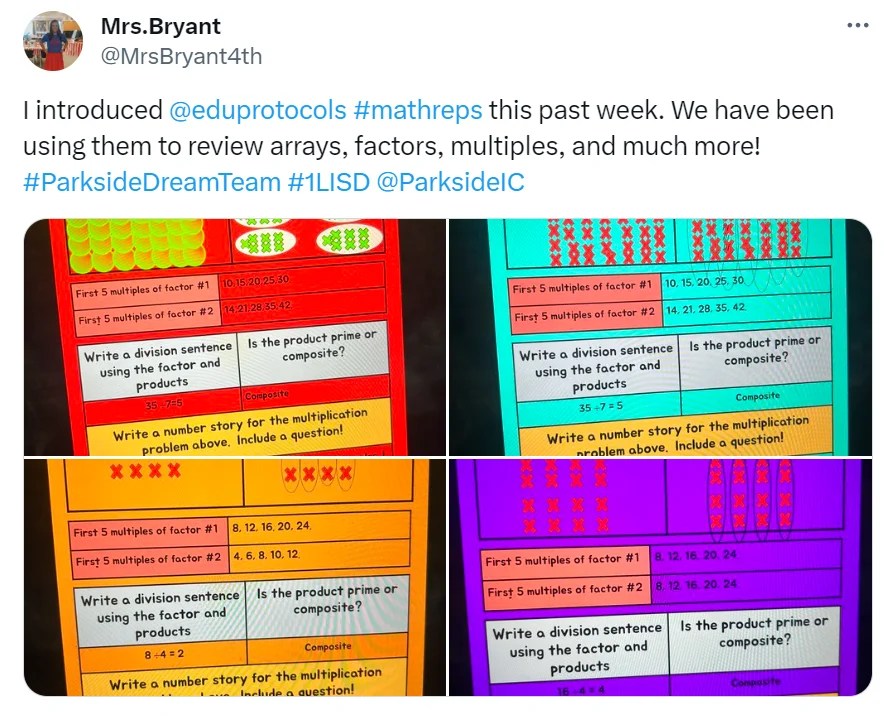
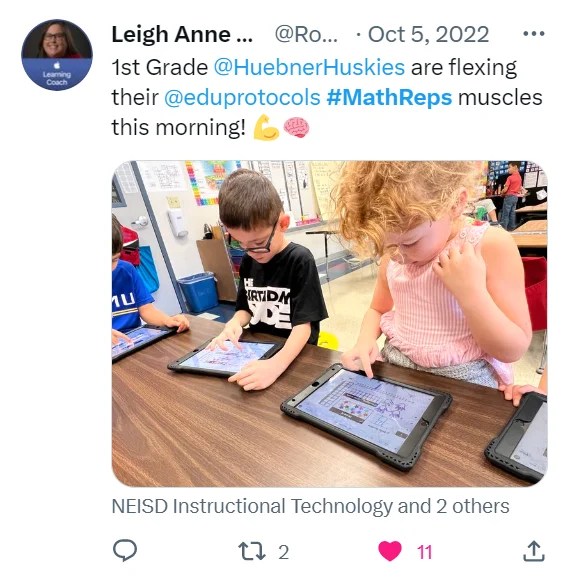
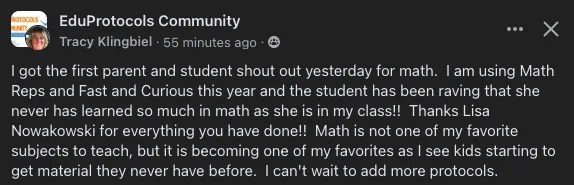
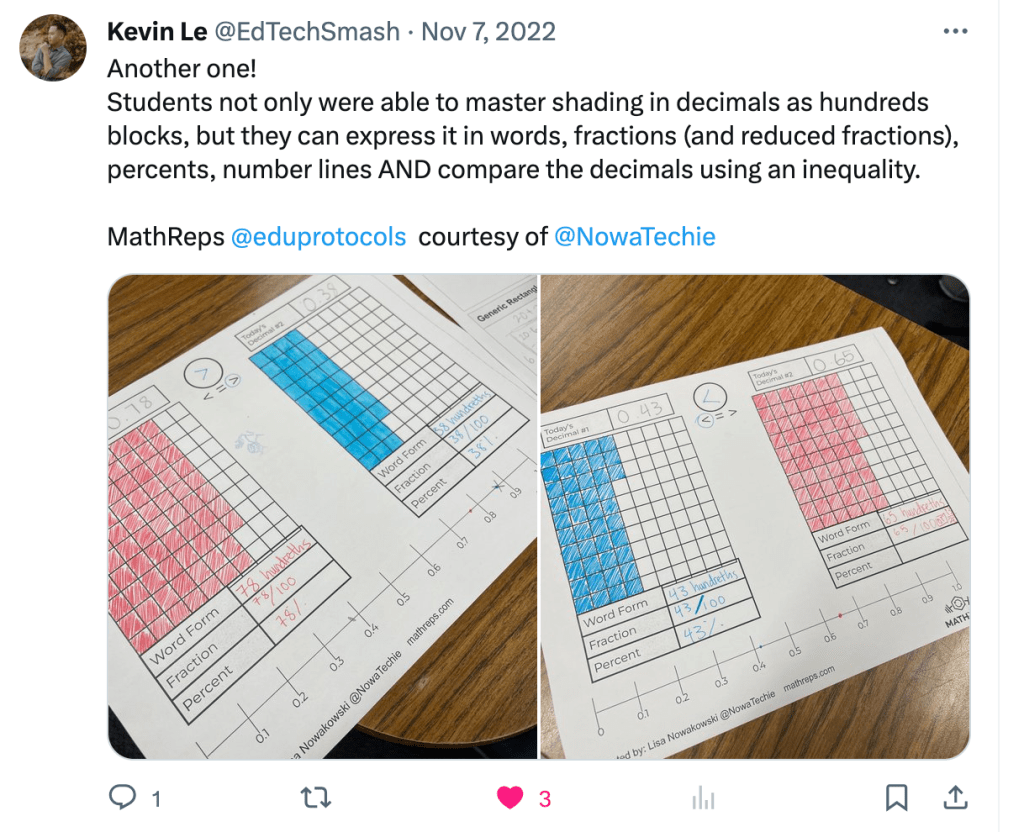
After that, I have been truly amazed by the countless teachers who have found great success using MathReps and Math EduProtocols in their classrooms. What started as a resource created solely for my own students has turned into something much bigger. I love to share, and it’s been incredible to see teachers from all over reaching out with their own success stories. One example that stands out is a 3rd-grade team who saw amazing results with MathReps. Join the growing community and discover the power of MathReps and Math EduProtocols for yourself!

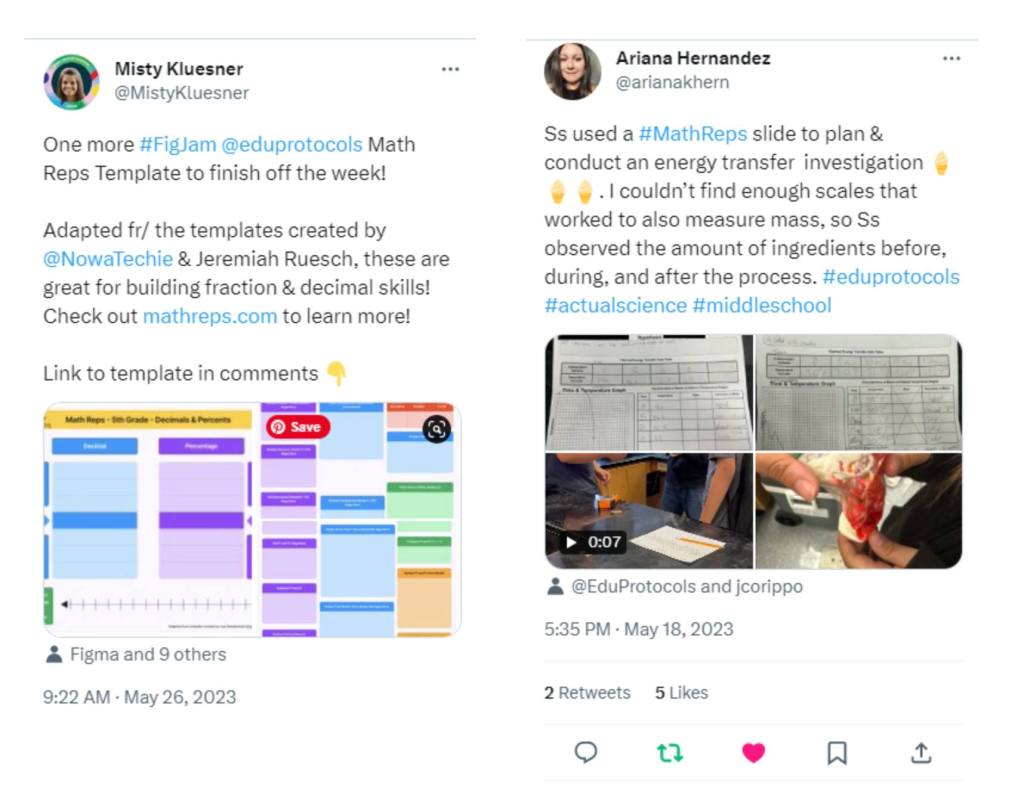
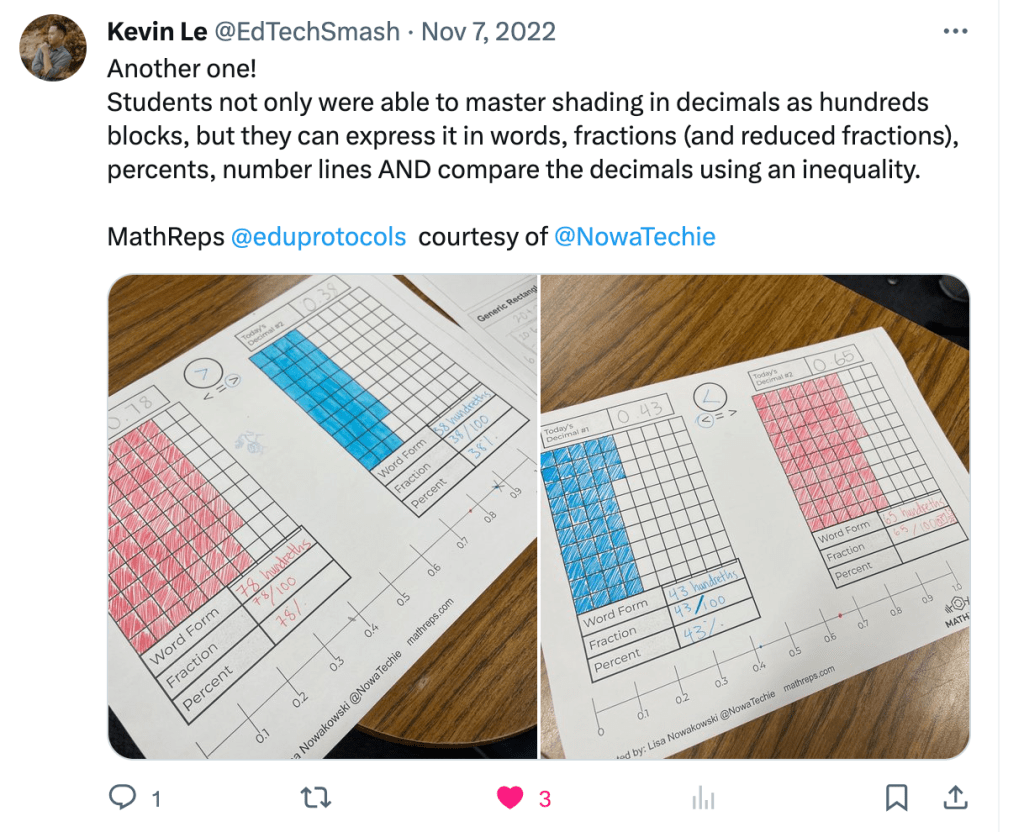
I have compiled a few postings of what others have to say. If you’d like to see more, you can see them on this Wakelet.

Mastering Elementary Math: The Power of MathReps and Math Eduprotocols Assessing Progress Pt. 8

In today’s rapidly evolving educational landscape, tracking student progress is not only crucial but also an empowering tool for both teachers and students alike. In a previous post, we delved into the remarkable results achieved by a 3rd-grade team that implemented effective data tracking methods. However, we barely scratched the surface of the “how.” So, let’s take some time to explore the intricacies of tracking student data and discover how you can leverage these strategies in your own classroom. By examining the practices of the 3rd-grade team, who expertly utilized a combination of pre and post-tests, spreadsheets, and repetition, we’ll uncover the power of John Hattie’s work and the Achievement Teams framework pioneered by Steve Ventura. With a focus on MathReps and Math EduProtocols, these methodologies not only lower student anxiety but also provide invaluable insights to drive targeted instruction. Join us on this journey as we unravel the secrets of effective data tracking and witness the profound impact it can have on the learning process.

To effectively track data and student progress, we will discuss the first method utilized by the 3rd-grade team.

  1. Begin by selecting a MathReps or Math EduProtocol activity that aligns with the learning objective. Choose the most appropriate one that suits the needs of the students.
  2. To ensure that students feel more confident and less intimidated by the material, engage in some pre-teaching before conducting the pre-test. This will help familiarize them with the concepts and reduce anxiety.
  3. After administering the pre-test, log the data obtained from each student in a spreadsheet. This spreadsheet can help calculate a goal and later reassess their progress.
  4. After completing the MathReps or Math EduProtocol activity, encourage the teachers to post the group’s pre-test scores, along with a pie chart and percentage goal, in a visible location for the entire class to see. This allows students to be a partner in the learning and growing process.
  5. Once the pre-test data is collected, it is time to get in those reps! The cycle the teachers used in this case was roughly 10 days.

By following these clear steps, the data collected from the pre-test, as well as the subsequent activities, will help guide the teachers’ instruction and provide the students with a clear sense of purpose in their learning journey.

The guide below is a second method of tracking data and leveraging strategies:

  1. Select a MathRep or Math EduProtocol: Choose a suitable MathRep or Math EduProtocol that aligns with the learning objective.
  2. Introduce the Reflection Sheet: Provide students with a reflection sheet, either for daily or weekly use, to empower them in driving their own learning.
  3. Track Group Progress: Collect assessment data at the end of the week to monitor the progress of the entire group.
  4. Display Progress Openly: Create a visible display in the classroom to showcase the group’s progress based on the assessment data.
  5. Establish Goals: Collaborate with the class to define goals to strive for. These goals should include a specific percentage of proficiency and a target date for achieving them.

Using either of these methods can empower your students, unlock their full potential, and cultivate a strong sense of fulfillment in their own learning journey. With teachers equipped to personalize instruction and address individual needs, the path to student triumph becomes clear. Which approach will you take?

Mastering Elementary Math: The Power of MathReps and Math Eduprotocols Implementing Math EduProtocols Pt. 7

Implementing Math EduProtocols requires a unique approach compared to implementing MathReps or other EduProtocols. While with MathReps, we adopted a gradual approach and collaborated daily, and with traditional EduProtocols, it is advised to kickstart with a non-academic activity; neither of these methods aligns perfectly with Math EduProtocols. To ensure a smooth process, I recommend starting with a math skill that is slightly below the current grade level. This will allow students to fully engage in the new protocol without feeling overwhelmed by having to learn a new math concept. Another distinction from MathReps is that Math EduProtocols are not designed for daily use. Depending on the chosen Math EduProtocol, it may be implemented once a week to up to three times per week.

Implementing Math EduProtocols in the classroom can greatly enhance student engagement and creativity in math. Here are some important points to consider when introducing these protocols:

  1. Choose a New Math EduProtocol: Start by selecting one new Math EduProtocol to implement in your classroom. For example, you can begin with “Sous Chef” or “Curiosity Creator”.
  2. Start with Familiar Skills: It’s crucial to start with a math skill that is already known to the students, but perhaps below grade level. This will help them establish a foundation and build confidence in using the Math EduProtocols effectively.
  3. Master One Protocol at a Time: It’s essential to focus on mastering one Math EduProtocol before introducing a new one. Allow students ample time to practice and become comfortable with the chosen protocol. This approach ensures a solid understanding and implementation of each Math EduProtocol.
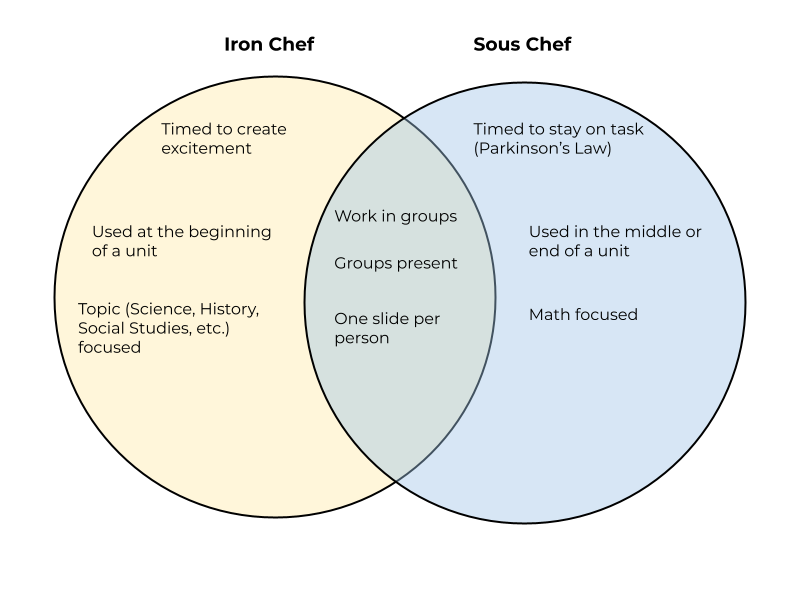
  4. Similarities to Non-Math EduProtocols: Note that some Math EduProtocols share similarities with non-math EduProtocols. For instance, “Sous Chef” is a math version of “Iron Chef.” Highlighting these connections can help students transfer their knowledge and skills from non-math subjects to the math classroom.

Remember, there are several Math EduProtocols to choose from, each providing a unique function in making math more engaging and creative. By following these guidelines, you can effectively implement Math EduProtocols and foster an environment conducive to active learning and mathematical exploration in the classroom.

To find out about more Math EduProtocols visit mathreps.com or purchase The EduProtocols Field Guide: Math Edition.

Mastering Elementary Math: The Power of MathReps and Math Eduprotocols The Benefits of Math Eduprotocols Pt. 6

Using Math EduProtocols in your math class offers numerous benefits. These protocols not only provide a consistent format but also foster collaboration, problem-solving, and critical thinking. By incorporating Math EduProtocols, you can engage your students in a systematic approach to problem-solving and encourage them to record their thoughts using Comic Strip Math. Furthermore, EduProtocols like Nacho Problem promote critical thinking by analyzing errors, while Sous Chef and Chatterbox encourage student collaboration. These protocols provide a refreshing and engaging alternative to traditional math lessons that often lack consistency and creativity. By using Math EduProtocols, you can transform your math class into an exciting and stimulating learning environment.

Mastering Elementary Math: The Power of MathReps and Math EduProtocols Pt. 5 Understanding Math EduProtocols

MathReps is the foundation of my daily math class activities. It serves as the basis for what I do, but I believe in the importance of incorporating variety. That’s why I decided to expand my usage of EduProtocols into the realm of math.

While MathReps are considered an EduProtocols, they have a broader scope. MathReps are specific to standards and skills, while EduProtocols offer a framework that can be used with any standard, grade level, or curriculum. As a result, Math EduProtocols are math-focused frameworks that can be applied across various standards, grade levels, and curricula.

There are several engaging Math EduProtocols available to enhance math education. These EduProtocols provide structured activities that engage students and promote critical thinking and problem-solving skills. Let’s take a closer look at two popular protocols: Comic Strip Math and Nacho Problem.

  1. Comic Strip Math: This protocol introduces a narrative element to math problems, making them more relatable and enjoyable for students. In Comic Strip Math, students are presented with a problem to solve or an opportunity to practice error analysis. The protocol includes a villain character called “Master of Dark” and a hero character representing the student. The problem is broken down into different cells, allowing students to systematically work through the steps or explain their thought process. By utilizing this protocol, students not only solve math problems, but also develop storytelling skills and learn to break down complex tasks effectively.
  2. Nacho Problem by Ligia Ayala-Rodriguez: Based on the popular writing strategy “Nacho Paragraph,” Nacho Problem is designed to enhance error analysis and problem-solving abilities. Students are given a problem that has been solved incorrectly, and their task is to record their problem-solving process and identify the error in the original solution. By engaging in Nacho Problem, students learn to analyze mistakes, strengthen their critical thinking skills, and develop a deeper understanding of mathematical concepts. This protocol encourages students to think beyond correct answers and promotes a growth mindset towards learning.

Integrating these exciting Math EduProtocols into the classroom can have several benefits. Firstly, they make math more engaging and interactive, capturing students’ attention and motivating them to actively participate in learning. Secondly, these protocols promote collaboration and communication among students as they discuss their problem-solving strategies and compare their comic strips or error analysis. Thirdly, by breaking down problems into smaller steps or analyzing errors, students develop problem-solving skills, critical thinking abilities, and a deeper conceptual understanding of math. Overall, the use of Math EduProtocols fosters a positive learning environment and enhances students’ mathematical proficiency.

Mastering Elementary Math: The Power of MathReps and Math EduProtocols Pt. 4 Implementing MathReps

Getting Started with MathReps in Your Classroom

Here’s a suggested way to get started:

  1. Choose the Best Template:

    • Browse through the available MathRep templates and select the one that aligns with the specific skills your students need to practice.
    • Consider their proficiency level and the learning objectives you want to achieve.
  2. Introduce the Template and Work Through It Together:

    • Start by providing a brief explanation of the MathRep template to the class.
    • Guide your students through the process of completing the MathRep a few times together.
    • Break down the steps and demonstrate how to approach each section of the template.
    • Encourage students to ask questions and clarify any doubts they may have.
  3. Daily Practice for the First Week:

    • During the initial week, make MathReps a part of your daily math routine.
    • Assign the MathRep as a class activity and have students complete it with you.
    • Spend time reviewing and discussing the answers as a class, this emphasizes immediate feedback.
    • Use this opportunity to address misconceptions and reinforce problem-solving strategies.
  4. Independent Completion in Subsequent Weeks:

    • After the first week, assign MathReps for independent completion by each student.
    • Encourage students to work on MathReps at their own pace, within a given timeframe (following Parkinson’s Law).
    • Provide support to struggling students while encouraging higher achievers to challenge themselves.
    • Checking immediately with students provides crucial feedback.
  5. Weekly Assessment to Track Class Mastery:

    • Every Friday, use the MathRep template as a weekly assessment tool.
    • Collect and review completed MathReps to assess student progress and understanding.
    • This will help you identify areas where the class as a whole may need additional support or where mastery has been achieved.
  6. Transitioning to New Templates:

    • Once your class has demonstrated mastery of the current MathRep template, consider introducing a new template with new skills.
    • Gradually increase the complexity and challenge of the MathReps to keep students engaged and continually progressing.
  7. Review
    • Spend time reviewing previously used MathReps templates.
    • After students have become familiar, but not proficient, with a new template, spend a week reviewing a previous template.
    • This allows for the learning to ‘stick’.

Remember, adapt these steps as needed to suit the unique needs and learning environment of your classroom. MathReps can be a powerful tool for promoting mathematical proficiency and fostering student growth. Happy math practicing!

Mastering Elementary Math: The Power of MathReps and Math Eduprotocols Pt. 2 Understanding MathReps

MathReps are thoughtfully designed templates teachers use for strategic and targeted math practices. These templates incorporate multiple related math skills and aim to help students make connections and bridge new concepts and strategies with previously learned ones. With MathReps, students can strengthen their understanding of mathematics in a structured and effective way.

MathReps is a powerful classroom tool that enhances learning. It offers ready-made templates, allowing teachers to focus on specific skills in order to gain mastery. One of the key benefits of MathReps is the immediate feedback it provides. In the classroom, teachers can give individual feedback as they move around, evaluate progress as a whole group, or employ a combination of both methods. Another advantage is the flexibility of MathReps, as it can be used with various platforms, ranging from simple paper and pencil or Wipebook to more advanced tools like Desmos, Nearpod, Pear Deck, or Figjam. It is recommended to use MathReps for at least three days a week to achieve the best results.

A Few Examples

Incorporating mathreps into a daily routine can be incredibly valuable for teachers. These short exercises provide repetitive practice and reinforcement for students, ensuring that concepts are deeply rooted in their minds. This approach helps to solidify connections between different mathematical concepts and builds fluency and flexibility in problem-solving.

Let’s take a closer look at the examples mentioned:

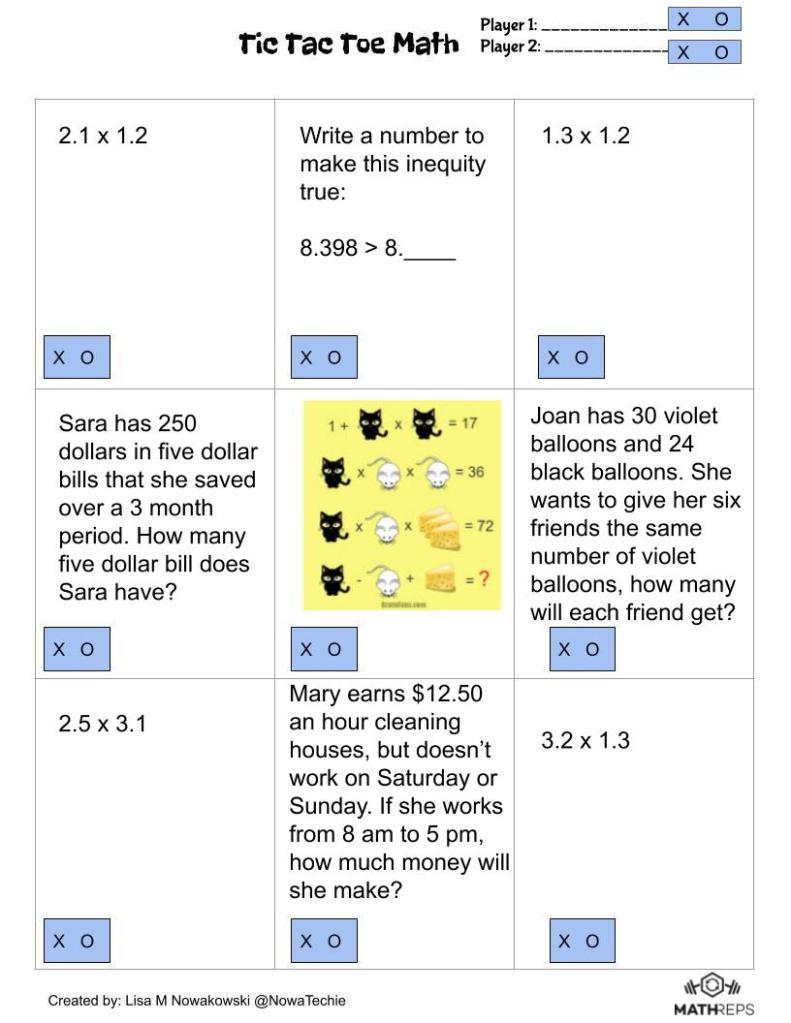
  • Second-grade counting money template: By using a template that incorporates word form and flexibility in handling money, students can develop a strong understanding of the concept of money in both dollars and cents. This repetitive practice allows them to become comfortable and confident in working with money.
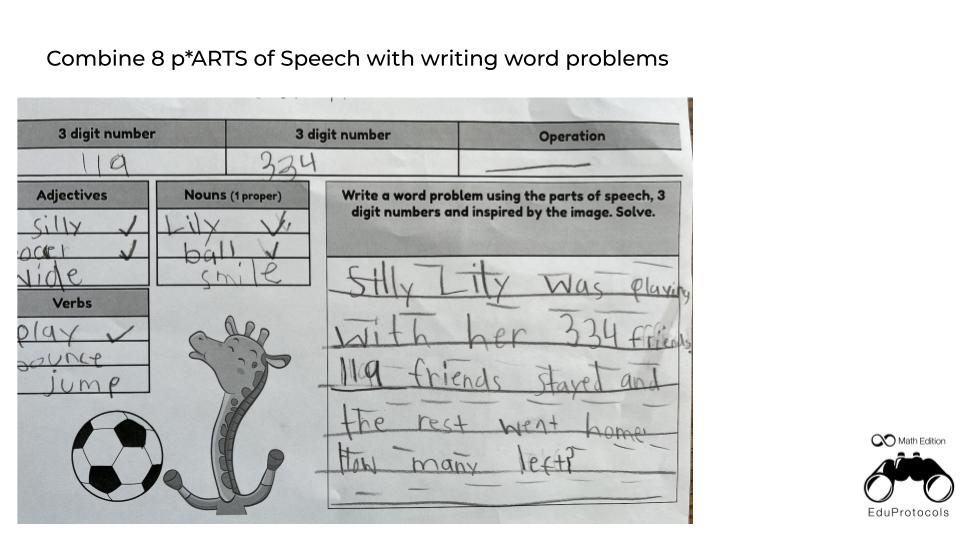
  • Fifth-grade area model, partial products, and partial quotients: By combining these different techniques, students can see the connections between them and develop a more comprehensive understanding of the underlying mathematical principles. This approach encourages critical thinking and problem-solving skills.
  • Eighth-grade equations and expressions: Through repetitive practice, students can become proficient in solving various equations and working with different expressions. This builds their confidence and competence in tackling more complex mathematical problems.
  • High school trigonometry example: Running through several procedures in trigonometry enables students to make connections between different concepts and techniques. This helps them develop a deeper understanding of trigonometry and its applications.

Incorporating mathreps into the daily routine can ultimately enhance student learning by strengthening their mathematical foundation, connecting concepts, and fostering competence and confidence in problem-solving. It is an effective teaching strategy that greatly benefits teachers and students.

You can find the full collection at MathReps.com

What others are saying

Free Bingo Cards

Recently I had a teacher ask me about some review games. Bingo is always a hit so I went on the search for a 3rd-grade Geometry Bingo game. Sadly, I couldn’t find what I wanted. Which then led to a search for Bingo card creators. I was not about to sit and recreate 25 Bingo cards. I like to use my time a bit more efficiently. And that’s when I found it! My Free Bingo Cards

This awesome sight creates simple Bingo Cards. They have several ready-to-go, broken down by categories. There is also the option to create your own. I opted to create my own. The process was simple. I plugged in all the words the students were to review. I then pressed one button for the program to create 30 unique Bingo cards. I did play around with it to see if I could insert images via copy/paste. No such luck. That was okay; I had a backup plan. The program also created a sheet for me to track which words were used and calling cards. I opted NOT to use the calling cards.

What did I use instead of the calling cards?

Instead of the calling cards I created a wheel on Wheel of Names. This was part of my backup plan: I used images. I could have also opted for the definitions, but I felt the images were more engaging and less repeating. This game was a big hit!

If you’re a 3rd-grade teacher and would like to play this here are the cards and here is the wheel.

If you’ve never used Wheel of Names before, you’re going to love it! There’s no need to guess where the spinner landed. The program tells you which one. Then you have the option to remove the selected item from the wheel to avoid mishaps.

#BookSnaps

If you’re not familiar with #BookSnaps, go to Tara M Martin’s site. In short, students connect with a reading with thoughts, graphics, and images. This year, our district has been virtual (we will be going back the week of April 12, 2021) and this has given us the opportunity to explore different ways of delivering instruction.

NOTE: It has been so nice getting away from curriculum and helping teachers find what works for them and their students. Hello EduProtocols, MathReps, BookSnaps. I hope this trend of giving teachers autonomy continues.

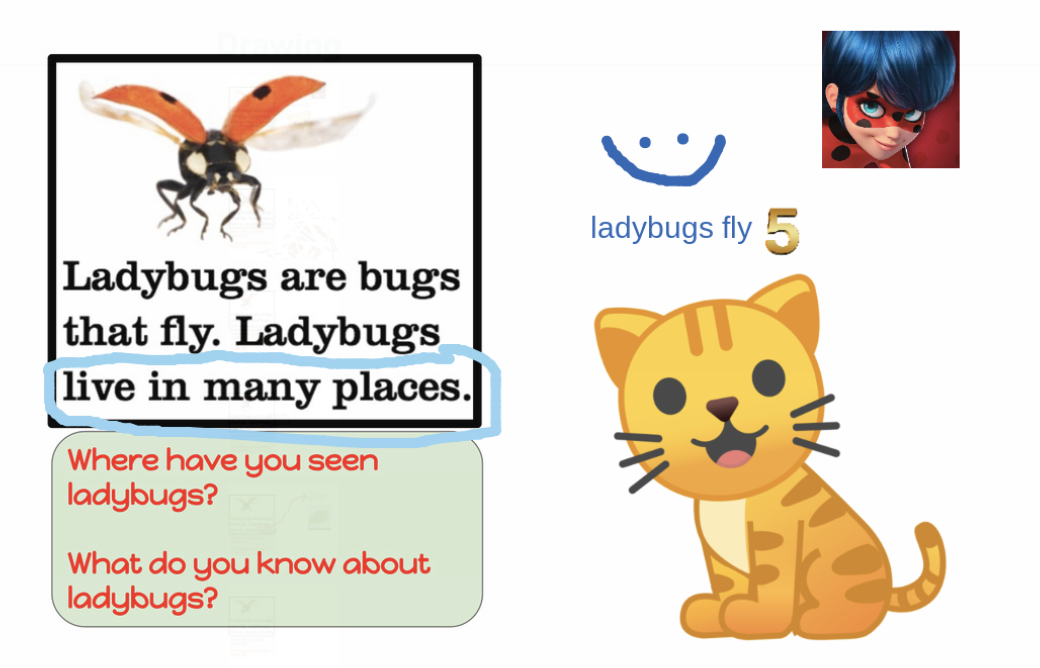
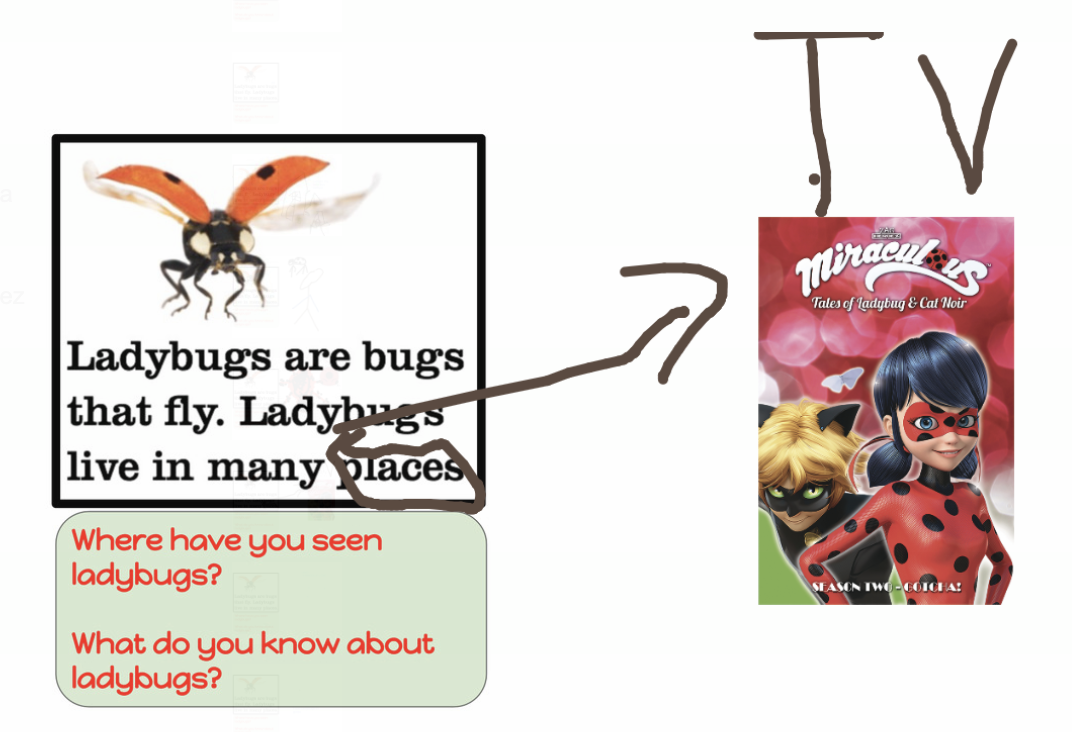
Well, as a TOSA I am often invited into classes to help develop lessons and model some of the new pedagogy. Which I totally love! On Friday, I went to a 1st-grade class to do a #BookSnap. The kiddos did awesome! First, we read a book about ladybugs 🐞 . Then, using Nearpod the students annotated and connected with the reading. I chose a page to upload the image for them. I gave them a few prompts they could answer. And this was the result!

I want you to think about this. How often have we said or heard that 1st-graders can’t do (fill in the blank). They are too young. If anything, this past year proves that students of all ages can do whatever. We need to stop underestimating them. I’d also like to point out, that these students ARE NOT BEHIND. They have acquired different skills than they have in past years. In many ways they are AHEAD.